Loading [Contrib]/a11y/accessibility-menu.js
1.
Richards D, Grace S. STATISTICAL ANALYSIS OF THE RESULTS OF A SURVEY ON THE MEANING AND VALUE OF VITALISM IN CHIROPRACTIC. JCC. 2026;9(1):142-157.
Download all (6)
  • Figure 1. Agreement with the offered viewpoint on vitalism
  • Figure 2. Agreement with the use of traditional chiropractic terms such as universal intelligence and innate intelligence
  • Figure 3. Advice given in practice to guide patients towards a good life
  • Figure 4. Vitalism has no place in contemporary chiropractic practice
  • Figure 5. Vitalism and neo-vitalism are essentially the same thing
  • Figure 6. Agreement that neo-vitalism was a more relevant concept than vitalism

Abstract

Objective

Although vitalism is controversial in chiropractic, discussions about it have largely been opinion-based. Only a limited amount of research has explored the meaning and value of vitalism to the profession. This paper investigates whether the findings of initial research on the meaning and value of vitalism might be generalized to a broader sample of the profession.

Method

A quantitative research design involved an online survey of the chiropractor members of the Chiropractors’ Association of Australia and of the New Zealand Chiropractors’ Association. Invitations to participate were issued by these organizations. Respondent data were analysed via the IBM SPSS statistics package and involved respondent demographics; confirmatory factor analysis of the 3 constructs belief in vitalism, belief in neo-vitalism, and value of vitalism; and whether the mean scores for each construct were significantly affected by demographic variables.

Result

Respondent demographics broadly matched the demographics of registered chiropractors in Australia and New Zealand. Significant majorities of respondents endorsed traditional chiropractic meanings of vitalism as representing a positive, legitimate, and valuable essence of the profession’s identity and services. Majorities also disagreed that vitalism has no place in contemporary or evidence-based practice. Vitalism was endorsed statistically significantly more or endorsed less by several different groups of respondents. Much smaller minorities held views different from the majorities.

Conclusion

Majorities of respondents supported the findings of the previous research on the meaning and value of vitalism, while minorities did not. While these results suggest that the findings of the previous research might be cautiously generalized to the broader sample of the profession, such generalizability is limited by sample selection and size.

INTRODUCTION

Vitalism is a philosophical school of thought of ancient origin1–3 and ongoing influence.4–10 In essence, it posits that living organisms and non-living things differ fundamentally in that the former possess some principle, force, or energy which the latter do not.11 The use of vitalistic terms such as “vital force” by D.D. Palmer, the founder of chiropractic, placed vitalism at the ontological core of the profession as a system for the preservation of health.12–14

Some chiropractors believe that vitalism contributes positively to a strong sense of coherence and guidance in understanding life, health, and practice and so is an essential core value of the profession and its unique identity.15–20 In contrast, others see vitalism negatively, as a controversial, unorthodox, and obsolete religious dogma or ideology21–26 believed by a minority of the profession24,27 and associated with unethical behaviour.24,28 They posit that this belief has for decades maintained the profession in a state of divisive crisis,29,30 excluded it from acceptance by science and society23,24,31 and threatened its future existence.24,31,32 Yet another group has described a “new” chiropractic vitalism (or neo-vitalism) as “a recognition and respect for the inherent self-organizing self-maintaining, self-healing abilities of every individual.”33 However, all these perspectives are based on opinions, which can be prone to bias.34,35

Only limited empirical research has explored vitalism in chiropractic. One small qualitative study found that most of the interviewed New Zealand College of Chiropractic (NZCC) lecturers perceived vitalism as an understanding of the body as a self-healing, self-organising and self-regulating organism.36 They believed that this understanding offered value in guiding the teaching, learning, and practice of chiropractic.

Other mixed methods research explored 2 research questions.37 The first asked what chiropractors mean when they speak about vitalism. The second asked what value do chiropractors believe that chiropractic thinking and practices based on vitalism might offer in addressing current global prevalence of non-communicable lifestyle-related conditions. To a majority of 18 purposively selected interviewed chiropractors from 8 countries, vitalism meant the chiropractic concept of innate intelligence, a guide to a good life, and an essential part of the identity of the profession.37 To separate minorities, vitalism meant either neo-vitalism or an obsolete unscientific doctrine. Most interviewees strongly maintained that vitalistic thinking and practices by chiropractors could offer value in addressing current global prevalence of non-communicable lifestyle-related conditions.37 As many individuals lack connection with the order of the universe and the innate intelligence of their bodies, vitalistic chiropractic could offer a conceptual gateway to self-empowering reconnection and realignment to that order, that intelligence, and to health.38 A vitalistic practice model was described as chiropractic care to keep individuals free of chiropractic subluxations (considered interferences to that connection and order), by adjustments (to facilitate removal of those interferences), plus the offering of healthy lifestyle advice.37

However, it is not known whether these findings might be generalizable to the wider profession. The aim of this present study was to survey a broader section of the profession to test such generalizability39,40 with respect to the above research questions about the meaning and value of vitalism. This article presents the methods and demographic results of that survey, statistical analysis of the responses to the survey’s closed-ended questions, and factor analysis of them.

METHODS

Survey Development

The Qualtrics online survey was used for data collection.41 The findings of a review of the relevant literature37 and of the above-mentioned interviews26 informed the development of the content of the survey questionnaire, which was pilot-tested. Apart from some items concerning demographics, all survey items were novel and developed by us. The survey was composed of up to 82 items, and the use of the Qualtrics display logic feature meant that the number of items presented to each participant depended on their answers to previous items. Up to 62 items were closed-ended and up to 22 were open-ended. Question types included 43 which involved Likert scale responses (with possible responses as follows: Strongly disagree/Somewhat disagree/Neither agree nor disagree/Agree/Strongly agree) and 10 which involved Boolean responses (Yes/No/Don’t know). The survey, the documents associated with it, and their use were approved by the Southern Cross University Human Research Ethics Committee (Approval Number ECN-16-161).

The first research question asked what chiropractors mean when they speak about vitalism. There are many varying understandings and descriptions of vitalism.4,42 So, to focus these meanings into a clearer concept, the first relevant survey item about vitalism was:

Proponents of the concept of vitalism argue that living organisms are fundamentally different from non-living entities in that the phenomenon of life involves a force or energy in addition to the physical or chemical. How strongly do you agree or disagree with this viewpoint?

This wording was derived from sources we considered authoritative,11,43 to offer respondents a general descriptive meaning of vitalism on which their levels of agreement could be determined. This wording was broadly congruent with the meanings given to vitalism by most interview participants.28

Recruitment

At the time of the survey there were 5,420 chiropractors registered in Australia and 606 in New Zealand. The largest potential sample accessible was the 2,174 chiropractor members of the Chiropractors’ Association of Australia (CAA) and the 440 chiropractor members of the New Zealand Chiropractors’ Association (NZCC), as these associations agreed to publicize and distribute email invitations to the survey. The survey was publicized by the CAA and the NZCA in their newsletters and via emails to potential respondents before these organizations issued email invitations to participate. These emails explained the study, the survey, and related ethics considerations, and invited these persons to use a link embedded in the email to access the survey.44 The invitations were then issued weekly while the survey was open for a month.

Data Preparation

The minimum sample size needed to detect an effect in the population at a prescribed statistical power was calculated45 based on a confidence level of 95%, a margin of error of 5% and an estimated effect size46 of 20.1%.47 The calculated minimum sample size was 226.48

The IBM SPSS statistics program was used to analyse the data into descriptive statistics to summarize and present the main data features and results.49 Then, based on the research questions noted above and responses to them,28,37,38 the constructs belief in vitalism (labelled Construct 1), belief in neo-vitalism (Construct 2), and value of vitalism (Construct 3) were devised to be addressed by confirmatory factor analysis.50,51 This process enabled investigation of the underlying structures of 3 groups of survey items by confirming a lesser number of more significant latent variables termed factors. The construct of belief in neo-vitalism was not included as there were only 27 responses to items concerning it.

The pre-factoring criteria of independence, sample size, normality, and linearity were met.50 Missing responses after data cleaning were replaced with the mean for that question to enable the use of those incomplete response sets in the factor analysis. Determinant values were calculated to assess whether collinearity was a concern, as were Kaiser-Meyer-Olkin (KMO) measures of sampling adequacy to assess factorability of the data. As all determinants were greater than .00001 there was no concern with multicollinearity, and as all KMO measures were above .6, all data were suitable for factor analysis.50

Factor analysis was then performed on each construct using principal axis factoring. For each construct, only 1 factor with an eigenvalue > 1 was identified, with such factors explaining enough variance to be retained.50 For all constructs the calculated factor explained substantial amounts of variance in the questionnaire data. See Table 1.

Table 1.Factor analysis results
Name of Construct Initial Eigenvalue Initial Variance Explained
1. Belief in vitalism 4.89 81.5%
2. Belief in neo-vitalism 3.55 71.5%
3. Value of vitalism 5.35 89.1%

Note. Initial Eigenvalues are those which exceeded 1.

These results supported the use of the selected constructs in dimensional reduction to simplify and facilitate further data analysis. Because each factor was unidimensional, the items within each construct could later be averaged to compute mean scale scores. These scores were then used in calculating relationships between other variables in the survey data.

Factor loadings were calculated for the questions associated with each factor to indicate the relative amount each question involved with a factor correlated with that factor.46 This process aimed to improve the quality of the constructs by identifying questions that contribute poorly to the calculated factors. Results are shown in Appendix A. No items were excluded because of low loadings. All questions loaded highly onto their relevant related factors termed belief in vitalism, belief in neo-vitalism, and value of vitalism and these factors were highly correlated. This is strong evidence that these constructs could be legitimately used in factor analysis and statistical analysis based on them.

Factor analysis scale reliability was measured using Cronbach’s alpha.46,52 This was done separately for the 3 subscales, each comprising the original questions of the factors. For belief in vitalism Cronbach’s alpha was calculated to be .96; for belief in neo-vitalism .89; and for value of vitalism .98. All subscales therefore had very high reliabilities and all questions were highly correlated with an overall correlation between every possible pair of questions.

To simplify the data set for further analysis, mean scale scores were calculated for each respondent for each of the factors. This reduced the group of responses to each question within each construct into a single score. The score was computed as the mean of the responses for the questions within each construct. If not all questions within a construct had a response, the mean was computed using the subset that was available.

The direction and strength of the linear association between the mean factor scale scores of belief in vitalism, of belief in neo-vitalism and of value of vitalism were assessed by calculating a bivariate Pearson’s product-moment correlation coefficient (r).46 The results are shown in Table 2. These data showed highly significant correlation between these mean factor scale scores at the 0.01 level.

Table 2.Correlations between mean scale scores of constructs 1, 2 and 3
N Belief in Vitalism Belief in Neo-vitalism Value of Vitalism
Belief in vitalism 305-307 r 1 .68* .92*
p <.001 <.001
Belief in neo-vitalism 305 r .68* 1 .68*
p <.001 <.001
Value of vitalism 305-307 r .92* .68** 1
p <.001 <.001

Note. * Correlation p is significant at the 0.01 level (2-tailed). N = number of respondents.

Calculations were also performed to determine whether the mean scores for each of the three constructs were significantly affected by demographic variables. The Kruskal-Wallis test was chosen to determine whether there were statistically significant differences between the mean scale scores of the factors for all but one of the demographic question.46,50 This test was done as the variables were not normally distributed.

When a significant outcome was determined by the Kruskal-Wallis test, it was followed up by a pairwise comparison to determine which groups differ from the others.46 In one case, the Jonckheere-Terpstra test was used to discern a trend across ordered groups. The independent-samples Mann-Whitney test was also used for responses to the question concerning roles in the profession, as there were only 2 independent samples (i.e. the respondents reported either participating or not participating in that role) involved for each response.46,50 See Appendix B.

In calculations concerning levels of agreement or disagreement placed on Likert scales, responses were numbered from one for Strongly disagreed through to five for Strongly agreed. In calculations concerning Yes/No/Don’t know responses, those responses were numbered from one to three respectively.

RESULTS

The survey yield of 411 responses represented 15.72% of the members of the CAA and the NZCA and was within the 10% - 20% response rate common for online surveys of this type.53 The raw data were cleaned54 to remove data from respondents who had failed to answer more than 3 survey questions. This resulted in 307 responses, which exceeded the minimum sample size of 226. Details of responses by country can be seen for Australia and New Zealand in Table 3.

Table 3.Response data by country
Australia New Zealand
Percentage of registered chiropractors in analysed data 3.8% 12.2%
Percentage of national association members in analysed data 9.6% 16.8%
Percentage of respondents from each country in analysed data 67.8% 24.1%

Detailed sample group demographics can be seen in Appendix C. Of the survey sample, 72.6% were male and 27.0% female. The largest of the 4 amalgamated age categories was 30-44 years old (40.2%). Over half of respondents were under 44 years old. The largest single category for principal place of practice was the Australian state of New South Wales (24.4%). However, the response rate from New Zealand (24.1%) was proportionally the highest category as New Zealand practitioners represented 16.8% of potential respondents to the survey. The vast majority of respondents (89.3%) were in practice, with 69.4% in full-time practice and 24.4% in part-time practice. Some respondents reported multiple roles, such as practice and university clinical supervision.

While the largest single category of patients/clients/practice members per week was 50-100 (37.9%) patients visits per week, a majority (64.6%) of respondents saw between 50 and 150 patients per week. The largest categories of responses for institution of graduation were Phillip Institute of Technology/Royal Melbourne Institute of Technology University (28.8%) and Sydney’s Macquarie University (23.9%), reflecting that these are the largest and longest-established programs in Australia and New Zealand. Responses for the United Kingdom (n = 5), Europe (n = 3) and South Africa (n = 2) were small and were amalgamated into the ‘Other’ category.

The Meaning of Vitalism

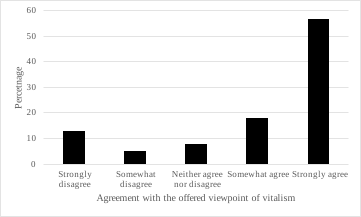
As noted above, the survey section which addressed the meaning of vitalism offered a viewpoint on vitalism devised by the authors. With percentages rounded to 1 decimal point, a substantial majority (74.2%) agreed with this viewpoint, including 55.2% who strongly agreed. In contrast, 19.6% disagreed to some extent, including 15.0% who strongly disagreed. There was 1 missing response to this question (and 0-3 missing responses to most other questions). As can be seen in Figure 1, survey responses to this item formed the first of many similar asymmetrical bimodal distribution patterns throughout the results of this survey.
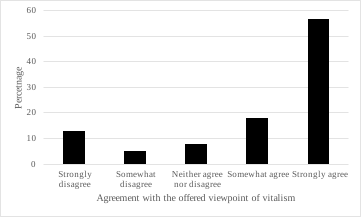
Figure 1
Figure 1.Agreement with the offered viewpoint on vitalism

Universal and Innate Intelligence

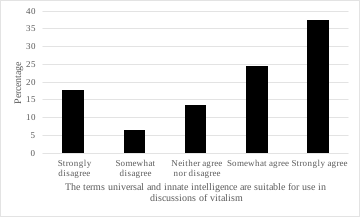
Survey respondents were also asked for their level of agreement with terms interview participants had suggested for use in discussions of vitalism.28 These terms were universal intelligence, innate intelligence, organised energy, consciousness, interconnectedness, and vibration. Agreement (at 61.6%) was strongest for the use of the traditional chiropractic terms universal intelligence (UI) and innate intelligence (II). The term interconnectedness also received majority support (52.4%). The other terms, organized energy, consciousness, and vibration received less than 50% support, with the largest individual category of response in each being neither agree nor disagree.
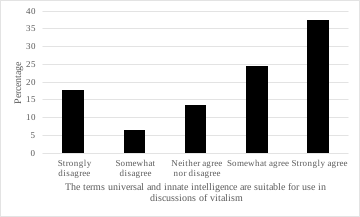
Figure 2
Figure 2.Agreement with the use of traditional chiropractic terms such as universal intelligence and innate intelligence

A Guide to a Good Life

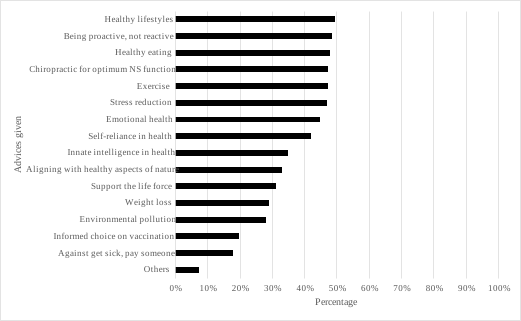
To investigate how respondents might use vitalism in guiding patients toward a good life, respondents were asked to select from a list of types of advice they offered in their practices. No advice was offered by more than 50% of respondents. The 8 most commonly selected types of advice were offered by between 40% and 50% of respondents. See Figure 3.
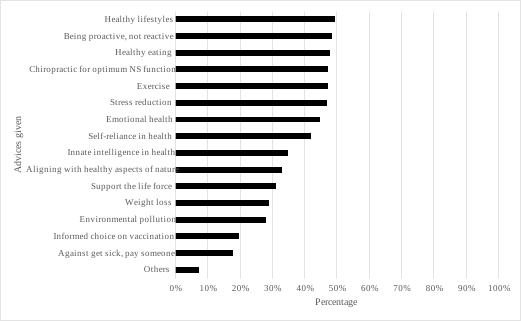
Figure 3
Figure 3.Advice given in practice to guide patients towards a good life

Note. NS means nervous system.

Vitalism as an Essence of the Identity of Chiropractic

A survey item asked whether vitalism is of essential importance to the identity of chiropractic as a distinct profession. In another distinct asymmetrical bi-modal pattern, 57.8% of survey respondents agreed, while 32.5% disagreed.

Vitalism as an Obsolete Historical Doctrine

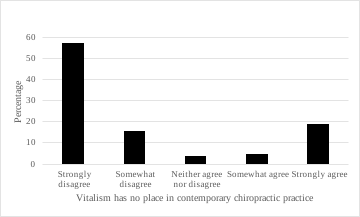
As many interview participants had strongly supported the current existence of vitalism in chiropractic, survey respondents were asked whether they thought there was an ongoing stream of vitalistic thinking in chiropractic. This proposition was endorsed by 78.2% of survey respondents, while 12.7% disagreed. It was then agreed by 67.8% that this stream was a positive for the profession, while 25.8% disagreed. Why there were 67 missing responses to this question is not clear. In addition, 62.0% of survey respondents agreed that vitalism was a legitimate school of thought in chiropractic, while 34.6% of respondents disagreed to some extent. A majority (72.6%) disagreed that vitalism had no place in contemporary chiropractic practice, while 23.7% agreed. See Figure 4.
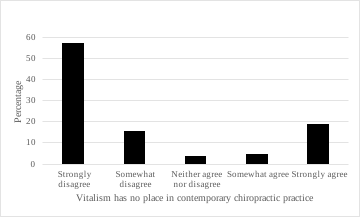
Figure 4
Figure 4.Vitalism has no place in contemporary chiropractic practice

Similarly, a majority (65.4%) disagreed that vitalism had no place in evidence-based chiropractic practice, while 28.8% agreed. Indeed, when survey respondents were asked whether vitalistic thinking should be emphasised in all aspects of chiropractic, 60.0% agreed and 31.2% disagreed.

Vitalism and Neo-Vitalism

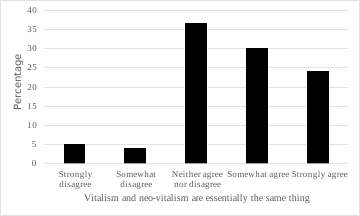
A total of 61.9% of respondents agreed with a description of neo-vitalism as a recognition and respect for the inherent self-organizing, self-maintaining, self-healing abilities of every individual. The 24.1% of respondents who neither agreed nor disagreed formed a larger group than those recorded in this response category for most questions on vitalism. However, the marked asymmetrical bimodal patterns of responses which were present in many questions about vitalism were not seen in other responses concerning neo-vitalism. When respondents were asked how strongly they agreed or disagreed that vitalism and neo-vitalism were essentially the same thing, 54.3% agreed and 36.7% neither agreed nor disagreed. Only 9.0% of respondents disagreed that vitalism and neo-vitalism were the same thing (i.e. believed that they were different), See Figure 5.
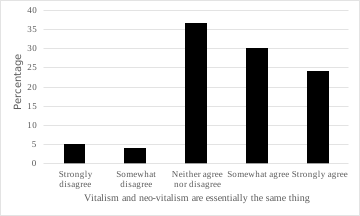
Figure 5
Figure 5.Vitalism and neo-vitalism are essentially the same thing

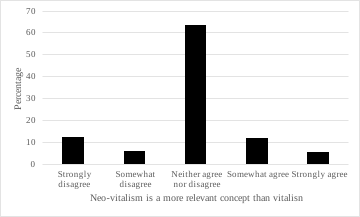
When respondents were asked whether they agreed that neo-vitalism was a more relevant concept than vitalism, by far the largest single response category, at 63.8%, was neither agree nor disagree. The disagreed categories totalled 18.8% and agreed 17.5%. See Figure 6. A similar result occurred when 57.3% of respondents neither agreed nor disagreed that neo-vitalism was a more acceptable concept than vitalism, while 13.5% disagreed and 19.2% agreed.
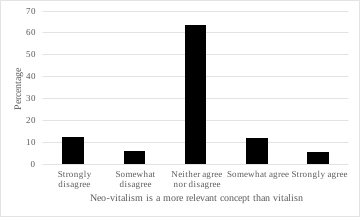
Figure 6
Figure 6.Agreement that neo-vitalism was a more relevant concept than vitalism

The Value of Vitalism

Responses concerning the value of vitalism also formed asymmetrical bimodal distribution patterns, with 72.5% of respondents somewhat or strongly agreeing that vitalism could offer value to the services chiropractors offer. This figure included 50.5% of respondents who strongly agreed. In contrast, 21.4% of respondents disagreed to some extent. When survey respondents were asked whether they agreed that activities based on vitalistic thinking and used in chiropractic practice could help address current global prevalence of chronic non-communicable conditions, 62.0% agreed and 25.9% disagreed.

Factor Analysis and Effects on Demographic Variables

These calculations indicated that none of the 4 amalgamated age groups differed significantly from the others with respect to endorsement of the 3 constructs. There was similarly no difference between how much respondents in the roles of full-time practice, or part-time practice, or university clinical supervising endorsed the constructs, and how much the other respondents did.

In contrast, female respondents had a statistically significant higher level of endorsement of belief in vitalism and of value of vitalism than males. Respondents practicing in New Zealand had a higher level of endorsement of belief in vitalism than did other respondents and New Zealand College of Chiropractic graduates had a higher level of endorsement of belief in vitalism and of value of vitalism.

However, university lecturers and researchers endorsed belief in vitalism and value of vitalism much less than other respondents did. Higher levels of belief in all constructs were associated with reported higher numbers of patients seen each week and lower levels of belief were associated with lower numbers. Overall, respondents with high belief in vitalism were proportionately much more likely to say that they give advice on healthy lifestyle specifically, or to give any of the forms of advice offered, than those with low belief.

DISCUSSION

This present research sought to test the generalizability to a broader sample of the profession of opinions expressed in the literature and the findings of previous research concerning the meaning and value of vitalism in chiropractic.28,38 Survey respondent demographics closely matched those of registered chiropractors in Australia55 and New Zealand,56 except for some variation in gender. While the age data were similar to that of chiropractors registered in Australia,55 corresponding data for New Zealand were not available. The data for principle place of practice in Australia were similar to those of chiropractors registered in Australia.55 The percentages of respondents who reported participating in the roles of practice, university lecturing, university clinical supervision and/or research were similar to those reported in a 2015 Australian survey.57 The data for number of patient visits per week were in accordance with the finding of a workforce survey57 that Australian chiropractors each see an average of 87 patients visits per week.

The similarities between the survey demographic results and the demographic characteristics from these other sources suggest that the survey’s results can be cautiously generalized more broadly to the profession in these countries. This is a key finding of this present research.

Overall, there was substantial majority support for the pro-vitalism literature and interview content.15,17–20,28,38 Specifically, majorities supported that an ongoing stream of traditional vitalism in the profession expressed in traditional terms was a positive and legitimate core value which was essential for the identity of chiropractic as a separate profession and which should be emphasised in all aspects of it.

In contrast, there was minority support for anti-vitalism opinions in the literature and interviews. Specifically, minorities supported opinions that vitalism was a negative, an obsolete dogma held by a minority of the profession and which should be eliminated because it excluded chiropractic from acceptance by science and society.21–28,31 However, only minorities supported opinions that vitalism had no place in contemporary and evidence-based chiropractic.21,24,27 Another important finding is that, for respondents to this survey, vitalism is the majority perspective and anti-vitalism is the minority perspective. This finding does not support literature that places vitalism in the minority position.21,27

While a majority of respondents agreed with the offered description of neo-vitalism, very few felt that it differed from vitalism and a substantial majority neither agreed nor disagreed that neo-vitalism was a more relevant concept than vitalism. Developments to replace traditional chiropractic meanings of vitalism with a new meaning33 therefore appear to have had little effect in Australia and New Zealand except perhaps among NZCC faculty.36

As noted above, the 3 constructs of belief in vitalism, belief in neo-vitalism, and value of vitalism were confirmed by factor analysis. Further calculations mostly showed no statistically significant differences between most demographic groups with respect to endorsement of these concepts. This consistent level of endorsement, regardless of age, is an important finding in light of previous results which found majority support for the meaning and value of vitalism and also suggests that the results of other research28,38 may be generalizable across a broader section of the profession.

However, there were some statistically significant differences between some demographic groups and the other respondents. Why female respondents endorsed vitalism more strongly than did respondents as a whole is not clear. However, as the percentage of the profession composed of female students and practitioners has been increasing for some time,58,59 vitalism may become even more deeply supported within the profession. The higher endorsement of vitalism by New Zealand graduates and practitioners probably reflects the vitalistic teachings of the NZCC.36,60,61

While just over 50% of respondents reported giving no healthy lifestyle advice to patients (including exercise), higher endorsement of vitalism was related to higher levels of giving such advice and to reporting seeing higher numbers of patient visits per week. This latter finding may support previous similar research.62 In contrast, lower levels of endorsement of vitalism were related to very low levels of giving such advice and to reporting lower visit numbers. While some have opined that vitalism could be associated with unethical practices, such as overservicing,21,28 there may be multiple reasons for these findings. For example, it may be that the personalities, explanatory frameworks, and services offered by many vitalistic chiropractors are attractive to many people who seek chiropractic care.

Similarly, there was no difference between how much respondents in practice or university clinical supervision endorsed vitalism, and how much respondents overall did. In contrast, university lecturers and researchers endorsed vitalism much less. It appears that fundamental differences may exist between the implicit ontological and epistemological positions of many practitioners and the positions of many educators and researchers. If so, this may suggest a gap between the philosophical approaches common in the larger practice wing of the profession and the approaches of many in the much smaller educational and research wings. This may not be an optimal situation for the development of the profession, as some lecturers may not share with undergraduate students ways of thinking common in the broader profession. In addition, the philosophical foundations of some research may not be congruent with the philosophical foundations of much of practice.19,21,25,26

Limitations

A larger sample size may have increased the generalizability of the survey. However, the sample used in analysis after data cleaning easily exceeded the calculated minimum sample size needed. The replacement of missing responses after data cleaning with the mean for that question enabled the use of those incomplete response sets in the factor analysis. However, this replacement may also have boosted correlations and upwardly biased factor loadings. Nonetheless, the severity of the data cleaning criteria (i.e. the removal of data from participants who had failed to answer more than three survey questions) should lessen this concern. In addition, the restriction of survey participation to members of the peak professional associations in Australia and New Zealand may have introduced an element of sampling bias63 and limit the generalizability of the results to other chiropractors in these and other countries.

The repeated patterns of similar asymmetrical bimodal distribution patterns seen in survey responses (e.g. Figure 1), suggest that few chiropractors hold opinions on vitalism between the extremes. However, this appearance may be due to volunteer bias, which can occur when only people with strong opinions participate in a survey.64 Opinions may actually range across a continuum.62 Finally, the ability of this present article to document respondents’ beliefs may have been limited by its reporting of only the responses to closed-ended survey questions. Responses to open-ended questions will be presented in a future article.

CONCLUSION

This research tested the generalizability to a broader sample of the profession of the contents of the relevant literature and of previous research findings concerning the meaning and value of vitalism in chiropractic. It did so via an online survey of a sample of chiropractors in Australia and New Zealand. That the demographic profile of respondents broadly matched that of registered chiropractors in those countries suggests that these previous findings might be cautiously generalized more broadly. However, such generalizability is limited by the sample selection and size.

Substantial majorities of respondents supported the pro-vitalism literature while much smaller minorities supported anti-vitalism positions. These findings build on the limited existing literature by greatly expanding knowledge of these issues from small samples of academics and interview participants to a much larger sample of practitioners and academics. The findings make a valuable contribution by enabling a shift in discussions on vitalism from opinion-based to evidence-based.

Future research should test the generalizability of the survey to larger samples of chiropractors world-wide; explore why there is a gap between many practitioners and lecturers and researchers concerning vitalism; consider whether this is an optimum situation for the profession and the public; examine why vitalistic practitioners report more patient visits than do non-vitalists; identify relevant vitalistic and non-vitalistic practice models; and, perhaps most importantly, explore why vitalism seems to be a popular and orthodox ontological position for many chiropractors.


ACKNOWLEDGEMENTS

Elizabeth Emmanuel, B.Nurs., M.Nurs. Ph.D., for assistance in design and analysis.

Jackson Richards, B.Eng., B⁠.⁠Sc., for assistance in statistical analysis.

CONTRIBUTION LIST

DR: Contributed to conception, design, data acquisition, analysis, drafting, and review. SG: Contributed to design, analysis, review, and editing.

ETHICAL STATEMENT

The Southern Cross University Human Research Ethics Committee provided ethics approval (Number ECN-16-161) for the study. Voluntary participation in the study survey signified informed consent.

FUNDING STATEMENT

This research received no specific grant from any funding agency in the public, commercial, or not-for-profit sectors.

DECLARATION OF CONFLICTING INTERESTS

The Authors declare that there are no conflicts of interest.

Accepted: March 02, 2026 CDT

References

1.
Aristotle. De anima. In: Cohen SM, Curd P, Reeve CDC, eds. Readings in Ancient Greek Philosophy from Thales to Aristotle. 3rd ed. Hackett Publishing Company, Inc.; 2005:809-831.
Google Scholar
2.
Thornhill JT. A vitalism ethos and the chiropractic health care paradigm. J Chiropr Humanit. 2020;27:59-81. doi:10.1016/​j.echu.2020.10.004
Google Scholar
3.
Holmes B. Canguilhem and the Greeks: Vitalism between history and philosophy. In: Donohue C, Wolfe CT, eds. Vitalism and Its Legacy in Twentieth Century Life Cciences and Philosophy. Springer; 2023:107-129. doi:10.1007/​978-3-031-12604-8_7
Google Scholar
4.
Greco M. On the vitality of vitalism. Theory Cult Soc. 2005;22(1):15-27. doi:10.1177/​0263276405048432
Google Scholar
5.
Lash S. Life (Vitalism). Theory Cult Soc. 2016;23(2-3):323-329. doi:10.1177/​0263276406062697
Google Scholar
6.
Lloyd MG, Peel D. In search of a small city’s élan vital: Inverness: towards progressive change? Town Plann Rev. 2007;78(6):749-773. doi:10.3828/​tpr.78.6.5
Google Scholar
7.
Carlyle D. Re-energising the role of vitalism theory in child development, nature orientation and research. Contemp Issues Early Child. 2018;19(3):246-255. doi:10.1177/​14639491177159
Google Scholar
8.
Bognon C, Chen B, Wolfe CT. Metaphysics, function and the engineering of life: the problem of vitalism. Kairos: J Philos Sci. 2018;20(1):113-140. doi:10.2478/​kjps-2018-0006
Google Scholar
9.
Pollman I. Cinematic Vitalism. Amsterdam University Press; 2018. https:/​/​www.jstor.org/​stable/​j.ctv5nph05
Google Scholar
10.
Falkoff R. Lipstick Vitalism: On the beauty of a different modernity in Primo Levi’s Periodic Table. Configurations. 2021;29(1):53-72. doi:10.1353/​con.2021.0002
Google Scholar
11.
Bechtel W, Richardson RC. Vitalism. In: Craig E, ed. The Shorter Routledge Encyclopedia of Philosophy. Routledge Taylor & Francis Group; 2005:1051.
Google Scholar
12.
Palmer DD. The Chiropractor’s Adjustor. Text-Book of the Science, Art and Philosophy of Chiropractic for Students and Practitioners. Portland Printing House Company; 1966.
Google Scholar
13.
Senzon SA, Myers SP. The Morikubo trial: content analysis of a landmark chiropractic legal case. Chiropr Hist. 2019;39(1):42-116.
Google Scholar
14.
Richards D, Emmanuel E. Recovering chiropractic through systems thinking. Chiropr Hist. 2022;42(2):15-27.
Google Scholar
15.
Koch D. Has vitalism been a help or a hindrance to the science and art of chiropractic? J Chiropr Humanit. 1996;6(1):18-22. doi:10.1016/​S1556-3499(13)60065-0
Google Scholar
16.
Jolliot C. Vital force: An everlasting notion for the original stance of chiropractic. Chiropr J Aust. 2006;36:97-104.
Google Scholar
17.
Jolliot C. Chiropractic and vitalism: a strange conceptual encounter. Chiropr Hist. 2005;25(2):49-54.
Google Scholar
18.
Richards D. Agents of change: the CAA consensus process. Chiropr J Aust. 2008;38:42-44.
Google Scholar
19.
Hawk C. Commentary: Are we asking the right questions? Chiropr J Aust. 2007;37(2):15-18.
Google Scholar
20.
Gelardi TA. A brief history of chiropractic belief and values: The non-therapeutic approach. Presented at: Philosophy in Chiropractic Education Conference; 2000; Ft Lauderdale, FL.
21.
Walker BF. The new chiropractic. Chiropr Man Therap. 2016;24:1-6. doi:10.1186/​s12998-016-0108-9
Google Scholar
22.
Strahinjevich B, Simpson JK. The schism in chiropractic through the eyes of a 1st year chiropractic student. Chiropr Man Therap. 2018;26(2). doi:10.1186/​s12998-017-0171-x
Google Scholar
23.
Meeker WC, Haldeman S. Chiropractic: A profession at the crossroads of mainstream and alternative medicine. Ann Intern Med. 2002;136:216-227. doi:10.7326/​0003-4819-136-3-200202050-00010
Google Scholar
24.
Nelson CF, Lawrence DJ, Triano JJ, et al. Chiropractic as spine care: A model for the profession. Chiropr Osteopat. 2005;13(9):1-27. doi:10.1186/​1746-1340-13-9. PMID:16000175
Google ScholarPubMed CentralPubMed
25.
Coxon A. ACA Board Statement to Members by Dr Anthony Coxon, President. Australian Chiropractors’ Association; 2018.
26.
General Chiropractic Council. General Chiropractic Council Education Standards. How the Education Standards Are Used.; 2024:7. http:/​/​www.gcc-uk.org/​assets/​downloads/​GCC_How_the_Education_Standards_are_used_guide_2024.pdf
27.
Brosnan C. Alternative futures: fields, boundaries, and divergent professionalisation strategies within the chiropractic profession. Soc Sci & Med. 2017;190:83-91. doi:10.1016/​j.socscimed.2017.08.018
Google Scholar
28.
Richards D, Grace S, Emmanuel E. “So that life force, to me, is that expression of intelligence through matter”: A qualitative study of the meaning of vitalism in chiropractic. EXPLORE. 2023;19(3):383-388. doi:10.1016/​j.explore.2022.07.009
Google Scholar
29.
Donahue JH. D. D. Palmer and innate intelligence: development, division and derision. Chiropr Hist. 1986;6:31-36.
Google Scholar
30.
Morgan L. Innate intelligence: its origins and problems. J Can Chiropr Assoc. 1998;42(1):35-41.
Google Scholar
31.
Simpson JK, Young KJ. Vitalism in contemporary chiropractic: A help or a hinderance? Chiropr Man Ther. 2020;28(1). doi:10.1186/​s12998-020-00307-8
Google Scholar
32.
Reggars JW. Chiropractic at the crossroads or are we just going around in circles? Chiropr Man Therap. 2011;19(11). doi:10.1186/​2045-709X-19-11. PMID:21599991
Google ScholarPubMed CentralPubMed
33.
Life University. Proceedings of the Vitalism Conference. In: Exploring the New Vitalism. Life University; 2009.
Google Scholar
34.
Burns PB, Rohrich RJ, Chung KC. The levels of evidence and their role in evidence-based medicine. Plast Reconstr Surg. 2011;128(1):305-310. doi:10.1097/​PRS.0b013e318219c171
Google Scholar
35.
Pronin E, Schmidt K. Claims and denials of bias and their implications for policy. In: Shafir E, ed. The Behavioral Foundations of Public Policy. Princeton University Press; 2013:195-216. doi:10.2307/​j.ctv550cbm.17
Google Scholar
36.
Fox M. Vitalism in a Chiropractic Programme – A New Zealand Case Study. MEd thesis. Auckland University of Technology; 2017. Accessed January 20, 2020. https:/​/​openrepository.aut.ac.nz/​server/​api/​core/​bitstreams/​9f1898e9-3c1f-4a92-a8fc-1b09bea2e8ad/​content
37.
Richards D. The Meaning and Value of Vitalism in Chiropractic. PhD dissertation. Southern Cross University; 2020. Accessed March 14, 2024. https:/​/​researchportal.scu.edu.au/​esploro/​outputs/​doctoral/​The-meaning-and-value-of-vitalism/​991012904700402368
38.
Richards D, Grace S, Emmanuel E. A different approach to addressing prevalence of lifestyle-related conditions: a qualitative study of chiropractic thinking and practices based on vitalism. J Contemp Chiropr. 2025;8(1):97-108.
Google Scholar
39.
Leung L. Validity, reliability, and generalizability in qualitative research. J Family Med Prim Care. 2015;4(3):324-327. doi:10.4103/​2249-4863.161306
Google Scholar
40.
Shank GD. Qualitative Research. A Personal Skills Approach. 2nd ed. Pearson Merrell Prentice Hall; 2006.
Google Scholar
41.
Qualtrics. Survey Options. Qualtrics; 2018.
42.
Meechan JS. The Vitalist Metaphysics of Bergson and Nietzsche. PhD dissertation. Kingston University; 2018. Accessed April 1, 2022. https:/​/​www.academia.edu/​38315559/​The_Vitalist_Metaphysics_of_Bergson_and_Nietzsche_2018
43.
Vitalism. In: Macquarie Dictionary. 7th ed. Macquarie Library Pty Ltd; 2017.
Google Scholar
44.
Qualtrics. Published online 2017. https:/​/​scuau.ca1.qualtrics.com/​
45.
Creswell JW. Educational Research. Planning, Conducting, and Evaluating Quantitative and Qualitative Research. 3rd ed. Pearson Education International; 2008.
Google Scholar
46.
Field A. Discovering Statistics Using IBM SPSS Statistics. 4th ed. Sage Publications Ltd; 2013.
Google Scholar
47.
Gislason HF, Salminen JK, Sandhaugen L, et al. The shape of chiropractic in Europe: a cross sectional survey of chiropractor’s beliefs and practice. Chiropr Man Ther. 2019;27(16). doi:10.1186/​s12998-019-0237-z
Google Scholar
48.
Maple Tech International LLC. Sample size calculator. Maple Tech International LLC. https:/​/​www.calculator.net/​sample-size-calculator.html?type=1&cl=95&ci=5&pp=20&ps=2614&x=77&y=13
49.
IBM SPSS Statistics. Published online 2017.
50.
Allen P, Bennett K, Heritage B. SPSS Statistics Version 22: A Practical Guide. 3rd ed. Centrage Learning Australia; 2014.
Google Scholar
51.
Roos JM, Bauldry S. Confirmatory Factor Analysis. SAGE Publications, Inc.; 2024. Accessed September 16, 2025. https:/​/​methods-sagepub-com.ezproxy.scu.edu.au/​book/​mono/​confirmatory-factor-analysis/​toc
Google Scholar
52.
Laerd. Statistical tutorials and software guides. Laerd Statistics. Accessed August 18, 2018. https:/​/​statistics.laerd.com/​
53.
Bourque L, Fielder EP. How to Conduct Self-Administered and Mail Surveys. 2nd ed. Sage Publications, Inc.; 2003. doi:10.4135/​9781412984430
Google Scholar
54.
Shaughnessy JJ, Zechmeister EB, Zechmeister JS. Research Methods in Psychology. 10th ed. McGraw-Hill Education; 2015.
Google Scholar
55.
Chiropractic Board of Australia Registrant Data. Australian Health Practitioner Regulation Agency; 2018.
56.
Annual Report. New Zealand Chiropractic Board; 2017.
57.
Adams J, Lauche R, Peng W, et al. A workforce survey of Australian chiropractic: the profile and practice features of a nationally representative sample of 2,005 chiropractors. BMC Complement Altern Med. 2017;17(14). doi:10.1186/​s12906-016-1542-x
Google Scholar
58.
Chiropractic Board of Australia. Data Tables: March 2012. Chiropractic Board of Australia; 2012.
59.
Chiropractic Board of Australia. Chiropractic Board of Australia Registrant Data. Chiropractic Board of Australia; 2025.
60.
New Zealand College of Chiropractic. The Bachelor of Chiropractic (BChiro). New Zealand College of Chiropractic. Accessed November 30, 2025. https:/​/​chiropractic.ac.nz/​study-with-us/​programme/​
61.
New Zealand College of Chiropractic. Vitalism Definition. New Zealand College of Chiropractic; 2011.
Google Scholar
62.
Biggs L, Mierau D, Hay D. Measuring philosophy: a philosophy index. J Can Chiropr Assoc. 2002;46(3):171-184.
Google Scholar
63.
Jackson SL. Research Methods and Statistics. A Critical Thinking Approach. 5th ed. Cengage Learning; 2015.
Google Scholar
64.
Salkind NJ, ed. Volunteer bias. In: Encyclopedia of Research Design. SAGE; 2010. https:/​/​methods.sagepub.com/​reference/​encyc-of-research-design/​n492.xml
Google Scholar

Appendices

Appendix A

Factor Loadings

Factor 1 loadings: belief in vitalism
Question Loading
2.6 Some say that vitalism has no place in contemporary chiropractic practice. .95
2.4 Do you think this ongoing stream of vitalism is a positive or a negative for chiropractic? .94
2.2 Some people say that vitalism, as defined above, is a legitimate school of thought in chiropractic in 2018. .92
2.7 Some say that vitalism has no place in evidence-based chiropractic practice. .91
2.5 Some say that vitalism in chiropractic is a risk to the acceptance of the profession as a respected member of the health care system. .80
2.1 Proponents of the concept of vitalism argue that living organisms are fundamentally different from non-living entities in that the phenomenon of life involves a force or energy in addition to the physical or chemical. .77

Note. Extraction method: principal axis factoring. One factor extracted.

Factor 2 loadings: belief in neo-vitalism
Question Loading
3.5 Do you think this ongoing stream of neo-vitalistic thinking in chiropractic is a positive or a negative for chiropractic? .97
3.7 Some say that neo-vitalism has no place in contemporary chiropractic practice. .93
3.3 Some people say that neo-vitalism, as defined above, is a legitimate school of thought in chiropractic in 2018. .83
3.6 Some say that neo-vitalism in chiropractic is a risk to the acceptance of the profession as a respected member of the health care system. .75
3.1 Neo-vitalism has been described as a recognition and respect for the inherent self-organising, self-maintaining self-healing abilities of every individual. .50

Note. Extraction method: principal axis factoring. One factor extracted.

Factor 3 loadings: value of vitalism
Question Loading
2.24 Some say that chiropractors who think and practise in vitalistic ways can offer a unique contribution in global health care and wellness. .97
2.29 Some say that thinking and practising in a vitalistic way could add value to the services chiropractors offer. .94
2.8 Some say that practice activities based on vitalistic thinking could add value to the services chiropractors offer. .94
2.27 Some say that thinking and practising in vitalistic ways could add value to the services chiropractors offer by focusing on the creation of health, rather than fighting disease. .93
2.21 Some say that activities based on vitalistic thinking and used in chiropractic practice could help address the current global epidemics of chronic non-communicable diseases, which are mainly caused by unhealthy lifestyles. .89

Note. Extraction method: principal axis factoring. One factor extracted.

Appendix B

Effects of demographic variables on factors

Gender

Kruskal-Wallis test statistics are shown in Appendix B Table 1. Belief in vitalism showed a significant effect of gender (H = 21.67, p <.001), and for value of vitalism (H = 21.67, p <.001). As can also be seen in Appendix B Table 1, the mean scale scores for females were substantially higher than those for males. This indicated that females had a statistically significant higher level of endorsement of belief in vitalism and of value of vitalism than males. Endorsement of belief in neo-vitalism was not significantly different between male and female respondents.

Appendix B Table 1. Test statistics and median mean scale scores: gender
Belief in Vitalism Belief in Neo-vitalism Value of Vitalism
Kruskal-Wallis H 21.67 3.54 18.44
Asym. Sig. p <.001* .06 <.001*
Gender n
Male 221-223 Median 4.00 4.00 3.83
Female 83 Median 4.67* 4.00 4.60*
Total Median 4.25 4.00 4.00

Note. Degrees of freedom = 1 for each construct. * Indicates a statistically significant difference.

Age

Kruskal-Wallis test statistics and median mean scale scores are shown in Appendix B Table 2. These indicate that none of the four amalgamated age groups differed significantly from the others with respect to belief in vitalism, belief in neo-vitalism, and value of vitalism.

Appendix B Table 2. Test statistics and median mean scale scores: age
Belief in Vitalism Belief in Neo-vitalism Value of Vitalism
Kruskal-Wallis H 1.95 2.12 1.38
Asym. Sig. p .58 .55 .71
Age Categories n
<30 32 Median 4.42 3.29 4.10
30-44 122-123 Median 4.33 4.00 4.17
45-59 100-101 Median 4.00 4.00 4.00
60+ 50 Median 4.50 4.00 4.42
Total Median 4.25 4.00 4.00

Note. Degrees of freedom = 3 for each construct.

Principal place of practice

As noted above, for this question the small numbers of responses for the Australian Capital Territory (N = 6), the Northern Territory1 and Tasmania2 were re-coded to amalgamate them with the category of ‘No Principal Place of Practice’. Results of the Kruskal-Wallis tests for each of the three factors can be seen in Appendix B Table 3.

The Kruskal-Wallis test for belief in vitalism showed a significant effect of place of practice, H = 14.68, p = .02. This indicated that at least one of the groups differed significantly from the others. A subsequent multiple comparison test was used to determine which of the group/s differed significantly from the others. This was conducted using a pairwise step-down procedure in which the compared groups were combined until a difference was detected.46 As can be seen in Appendix B Table 3, the median mean scale scores for New Zealand were statistically significantly higher than for all the other institutions, indicating that these respondents had a higher level of endorsement of belief in vitalism. Median mean scale scores for the No Principal Place of Practice category were significantly lower than other scores, but the sample size24 was very small. The Kruskal-Wallis tests for belief in neo-vitalism and value of vitalism showed no significant effect of place of practice.

Appendix B Table 3. Test statistics and median mean scale scores: principal place of practice
Belief in Vitalism Belief in Neo-vitalism Value of Vitalism
Kruskal-Wallis H 14.68 9.15 10.79
Asym. Sig. p .02* .17 .10
PPP n
NSW 75 Median 4.00 3.67 3.67
QLD 38 Median 4.00 4.00 3.91
SA 14 Median 4.00 4.00 3.63
VIC 50 Median 4.00 4.00 4.00
WA 30-31 Median 4.00 4.00 4.33
NZ 74 Median 4.67* 3.78 4.37
NPPP 24 Median 2.75* 3.00 2.75
Total Median 4.17 4.00 4.00

Note. Degrees of freedom = 6 in each case. PPP = principal place of practice. NPPP = no principal place of practice. * Indicates a statistically significant difference.

Roles in the profession

The relevant survey question was a multiple response question. Each of the six roles in the profession was treated as a separate item and re-coded into a dichotomous variable. For example, the role of full-time practice was re-coded into ‘No’ for not in full-time practice and ‘Yes’ for in full-time practice. The resulting scores were then used as independent variables to ask what influence each role had on the factor mean scale scores. This was performed using the independent-samples Mann-Whitney test as there were only two independent samples (i.e. the respondents reported either participating or not participating in that role) involved for each response.46,50

Role: full-time practice

Mann-Whitney test statistics and median mean scale scores for the role of full-time practice are shown in Appendix B Table 4. There was no significant difference between how much chiropractors in full-time practice endorsed belief in vitalism, belief in neo-vitalism, and value of vitalism, and how much other respondents did.

Appendix B Table 4. Test statistics and median mean scale scores: role of full-time practice
Belief in Vitalism Belief in Neo-vitalism Value of Vitalism
Mann-Whitney U 10,585.00 11,142.50 10,907.00
Asym. Sig. p .42 .08 .21
FT practice n
No 94 Median 4.17 3.67 4.00
Yes 211-213 Median 4.33 4.00 4.17
Total Median 4.17 4.00 4.00

Note. * Indicates a statistically significant difference.

Role: part-time practice

Mann-Whitney test statistics and median mean scale scores for the role of part-time practice are shown in Appendix B Table 5. There was no statistical difference between how much chiropractors in part-time practice endorsed belief in vitalism, belief in neo-vitalism, and belief in the value of vitalism, and how much other respondents did.

Appendix B Table 5. Test statistics and median mean scale scores: role of part-time practice
Belief in Vitalism Belief in Neo-vitalism Value of Vitalism
Mann-Whitney U 8,819.50 8,175.00 8,376.59
Asym. Sig. p .86 .49 .63
PT practice n
No 230-232 Median 4.25 4.00 4.00
Yes 75 Median 4.17 4.00 4.00
Total Median 4.17 4.00 4.00
Role: university lecturing

Mann-Whitney test statistics and median mean scale scores for the role of university lecturing are shown in Appendix B Table 6. There were statistically significant differences between how much university lecturers endorsed belief in vitalism (U = 2,412.00, p = .004) and value of vitalism (U = 2,067.50, p <.001), and how much other respondents did. University lecturers endorsed belief in vitalism and value of vitalism much less than other respondents did. There was no statistical difference between how much university lecturers endorsed belief in neo-vitalism and how much other respondents did.

Appendix B Table 6. Test statistics and median mean scale scores: role of university lecturing
Belief in Vitalism Belief in Neo-vitalism Value of Vitalism
Mann-Whitney U 2,412.00 2,805.50 2,067.50
Asym. Sig. p .004* .05 <.001*
UL n
No 79-281 Median 4.33 4.00 4.17
Yes 26 Median 2.50* 3.00 1.00*
Total Median 4.17 4.00 4.00

Note. UL = university lecturing. * Indicates a statistically significant difference.

Role: university clinical supervising

Mann-Whitney test statistics and median mean scale scores for the role of university clinical supervising are shown in Appendix B Table 7. There was no statistical difference between how much university clinical supervisors endorsed belief in vitalism, belief in neo-vitalism, and belief in the value of vitalism, and how much other respondents did.

Appendix B Table 7. Test statistics and median mean scale scores: role of university clinical supervising
Belief in Vitalism Belief in Neo-vitalism Value of Vitalism
Mann-Whitney U 2,556.50 2,881.00 2,200.00
Asym. Sig. p .63 .65 .15
UCS n
No 286-288 Median 4.25 4.00 4.17
Yes 19 Median 4.17 4.00 3.83
Total Median 4.17 4.00 4.00

Note. UCS = university clinical supervising.

Role: research

Mann-Whitney test statistics and median mean scale scores for the role of research are shown in Appendix B Table 8. There were statistically significant differences between how much researchers endorsed belief in vitalism (U = 2,415.50, p < .001) and value of vitalism (U = 2,078.50, p <.001), and how much other respondents did. Researchers endorsed belief in vitalism and value of vitalism much less than other respondents did. There was no statistical difference between how much researchers endorsed belief in neo-vitalism and how much other respondents did.

Appendix B Table 8. Test statistics and median mean scale scores: role of research
Belief in Vitalism Belief in Neo-vitalism Value of Vitalism
Mann-Whitney U 2,415.50 3,543.50 2,078.50
Asym. Sig. p <.001* .07 <.001*
Research n
No 273-275 Median 4.33 4.00 4.17
Yes 32 Median 1.92* 3.00 1.08*
Total Median 4.17 4.00 4.00

Note. * Indicates a statistically significant difference.

Role: administration

Mann-Whitney test statistics and mean scale scores for respondents who endorse a role in administration are shown in Appendix B Table 9. There was no statistical difference between how much these respondents endorse belief in vitalism and belief in neo-vitalism, and how much other respondents did. There was a statistically significant difference between how much administrators endorse value of vitalism (U = 6,815.00, p = .03), and how much other respondents did. This indicates that administrators endorse value of vitalism more than other respondents did. As the role of administration was not defined in the survey, it is not clear whether respondents who placed themselves in this category were involved in administration in universities, private practices, or elsewhere.

Appendix B Table 9. Test statistics and median mean scale scores: role of administration
Belief in Vitalism Belief in Neo-vitalism Value of Vitalism
Mann-Whitney U 6,606.50 6,236.50 6,815.00
Asym. Sig. p .08 .25 .03*
Administration n
No 262-264 Median 4.17 4.00 4.00
Yes 43 Median 4.50 4.00 4.33*
Total Median 4.17 4.00 4.00

Note. * Indicates a statistically significant difference.

Patients/clients/practice members seen per week

Kruskal-Wallis test statistics for patients/clients/practice members seen per week are shown in Appendix B Table 10. All three factors showed a significant effect of number for patients seen each week: belief in vitalism (H = 11.40, p = .02), belief in neo-vitalism (H = 14.66, p = .01), and value of vitalism (H = 10.43, p = .03). This indicated that at least one of the groups differed significantly from the others. A subsequent multiple comparison test using pairwise step-down showed that median mean scale scores for the category 0-50 patients per week were significantly lower than the other categories. Furthermore, the categories of 150-200 and over 200 did not differ from each other but did differ from the categories which covered 0-150 patients per week. In summary, it appears that higher levels of belief in vitalism, in neo-vitalism, and in value of vitalism were associated with higher numbers of patients seen each week. Lower levels of belief in vitalism, in neo-vitalism, and in value of vitalism were associated with lower numbers of patients seen each week. This finding may reflect that lecturers and researchers, who endorsed belief in vitalism and value of vitalism much less than other respondents did, see fewer patients per week because they practise fewer hours per week than other chiropractors.

Appendix B Table 10. Test statistics and median mean scale scores: patients per week
Belief in Vitalism Belief in Neo-vitalism Value of Vitalism
Kruskal-Wallis H 11.40 14.66 10.43
Asym. Sig. p .02* .01* .03*
Patients / week n
0-50 58-59 Median 3.83* 3.50* 3.83*
50-100 108 Median 4.00 4.00 4.00
100-150 76 Median 4.50 4.00 4.33
150-200 20-21 Median 4.50 5.00 4.50
200+ 21 Median 4.67 5.00 4.33
Total Median 4.33 4.00 4.17

Note. Degrees of freedom = 4 in each case. * Indicates a statistically significant difference.

Institution of graduation

Kruskal-Wallis test statistics are shown in Appendix B Table 11. Institution of graduation showed a significant effect of belief in vitalism (H = 29.66, p <.001) and of value of vitalism (H = 29.23, p < .001). This indicated that in each of these cases at least one of the groups differed significantly from the others. As can also be seen in Appendix B Table 11, the mean scale scores for New Zealand were substantially higher than for the other groups. A subsequent multiple comparison test using pairwise step-down showed that this difference between New Zealand graduates and others was significant. This indicated that New Zealand graduates had a statistically significant higher level of endorsement of belief in vitalism and of value of vitalism. In addition, the mean scale scores of respondents from institutions in Canada (n = 12) and the “Other” category (including UK, Europe, and South Africa) were substantially lower for belief in vitalism and value of vitalism. However, the “Other” category had a very small sample size (n = 15). There was no statistical difference between institution of graduation and endorsement of belief in neo-vitalism.

In Appendix B Table 11 the institutions referred to are Macquarie University, Phillip Institute of Technology (which developed into RMIT University), Murdoch University, the Sydney College of Chiropractic (which had previously been known as the Sydney College of Chiropractic and Osteopathy), the New Zealand School of Chiropractic (which developed into the New Zealand College of Chiropractic), and any of the numerous chiropractic educational institutions in the United States of America and Canada.

Appendix B Table 11. Test statistics and median mean scale scores: institution of graduation
Belief in Vitalism Belief in Neo-vitalism Value of Vitalism
Kruskal-Wallis H 29.66 8.45 29.23
Asym. Sig. p <.001* .29 <.001*
Institution of Graduation n
Macquarie 73 Median 4.00 4.00 4.00
PIT/RMIT 87-88 Median 4.00 4.00 3.83
Murdoch 14 Median 3.83 4.00 4.17
SCC/SCC&O 11 Median 3.83 3.50 4.00
NZSC/NZCC 53 Median 4.67* 4.00 4.80*
U.S.A. 39-40 Median 4.33 4.00 4.10
Canada 12 Median 3.50* 3.50 3.53*
Other 15 Median 3.33* 3.00 2.60*
Total Median 4.17 4.00 4.00

Note. Degrees of freedom = 7 in each case. U.S.A. = United States of America. * Indicates a statistically significant difference.

Advice given

To enable better understanding of who in the profession was more or less likely to give advice, and of what might contribute to vitalistic practice, two new dichotomous categorical variables were created. The first, labelled “level of belief in vitalism” was constructed by transforming mean scale scores of the construct belief in vitalism with values 4-5 into “high” and with values 1-2 into “low”. The second dichotomous categorical variable, labelled “any advice given”, was assigned the value 1 if a response gave any of the forms of advices presented in Figure 3, or 0 if none of those advices was given.

Results involving 251 responses showed that those with high belief in vitalism are proportionately much more likely to say that they give advice on healthy lifestyle specifically, or to give any of the forms of advice offered, than those with low belief. The data can be seen in Appendix B Table 12.

Appendix B Table 12. Levels of belief in vitalism and the giving of advice
Level of belief in vitalism n Gave HLS advice
(%)
Did not give HLS advice (%) Gave any of offered advices (%) Gave none of offered advices (%)
Low 71 2.82 97.18 2.82 97.18
High 180 67.22 32.78 70.56 29.44
Total 251

Note. HLS = healthy lifestyle.

Appendix C

Sample group demographics
Sample n (%) Responses
(Missing Responses)
Gender 306 (1)
Male 223 (72.6)
Female 83 (27.0)
Age 306 (1)
Under 30 32 (10.4)
30-44 123 (40.2)
45-59 101 (32.9)
60 + 50 (16.4)
Principal place of practice 306 (1)
New South Wales 75 (24.4)
Queensland 38 (12.4)
South Australia 14 (4.6)
Victoria 50 (16.3)
Western Australia 31 (10.1)
New Zealand 74 (24.1)
Other 23 (7.8)
Roles in the profession 307 (0)
Full-time practice 213 (69.4)
Part-time practice 75 (24.4)
University lecturing 26 (8.5)
University clinical supervising 19 (6.2)
Research 32 (10.4)
Administration 43 (14.0)
Other 46 (15)
Not applicable 3 (1.0)
Patients per week 285 (22)
0-50 59 (20.7)
50-100 108 (37.9)
100-150 76 (26.7)
150-200 21 (7.4)
200+ 21 (7.4)
Institution of graduation 306 (1)
Macquarie University 73 (23.9)
PIT/RMIT University 88 (28.8)
Murdoch University 14 (4.6)
SCC/SCC&O 11 (3.6)
NZSC/NZCC 53 (17.3)
U.S.A. 40 (13.1)
Canada 12 (3.9)
Other (4.9)

Note. PIT/RMIT = Phillip Institute of Technology/Royal Melbourne Institute of Technology University. SCC/SCC&O = Sydney College of Chiropractic/Sydney College of Chiropractic and Osteopathy. NZSC/NZCC = New Zealand School of Chiropractic/New Zealand College of Chiropractic. USA = United States of America.