Introduction
The formative years of the chiropractic profession were marked not only by the foundational contributions of its recognized founding family, the Palmers of Davenport, Iowa, but also by the dynamic efforts of lesser-known yet highly influential figures. Among these, Solon Massey Langworthy occupies a critical position in shaping both the practice and institutional development of chiropractic in the early twentieth century. While early historical narratives have sometimes minimized his role or characterized him as opportunistic,1 a closer examination of primary sources reveals a far more complex figure: an entrepreneurial practitioner, innovator and educator whose activities significantly influenced the trajectory of the profession during a pivotal period.
This paper examines Langworthy’s dual fulfillment of the mandate conferred upon him by his Palmer School diploma: “to practice and teach.” In doing so, it situates his career within the broader economic, professional and ideological context of early chiropractic. First, it explores his rapid establishment of a highly successful clinical practice in Cedar Rapids, Iowa, highlighting the business strategies, advertising methods and therapeutic approaches that enabled his early prominence. This phase of Langworthy’s career demonstrates not only his clinical activity but also his sophisticated understanding of market dynamics and patient acquisition in a nascent and legally precarious profession.
Second, the paper analyzes Langworthy’s transition from practitioner to educator, arguing that this shift was neither incidental nor purely altruistic. Rather, it reflected a calculated response to the economic realities of early chiropractic practice and education, as well as a broader vision for professional expansion and legitimacy. By founding the American School of Chiropractic and Nature Cure and later developing a more structured and comprehensive curriculum, Langworthy played a central role in advancing chiropractic education beyond its earliest informal iterations. His willingness to incorporate elements such as “nature cure” and to collaborate with other early practitioners further underscores his departure from strict Palmer orthodoxy and highlights emerging tensions within the profession.
Taken together, these developments illustrate Langworthy’s broader significance as both a stabilizing force during the so-called “lost years”1 of chiropractic and as a catalyst for institutional growth and professional diversification. His efforts to integrate business acumen, clinical practice and educational enterprise reveal the interplay between economic motivation and professional idealism that characterized chiropractic’s early evolution. By reassessing Langworthy’s contributions, this paper contributes to a more nuanced understanding of the profession’s origins and the individuals who shaped its early identity beyond its canonical founders.
DISCUSSION
To practice . . .
Dr. Solon Massey Langworthy departed Davenport, Iowa and the mentorship of D.D. Palmer with his wife, Ora May, son, Solon Mitchell, and daughter Lois in the late summer of 1901. In 1 pocket he held a diploma signed by The Founder that stated the holder was not only qualified to practice chiropractic, but also to teach the healing art.2 In his other pocket he held his diploma from the osteopathic school known as the American School of Manual Therapeutics of Kansas City, Missouri.3 Additionally, he had his training from the Bayless Business College and a wealth of practical business experience gained through owning and operating a retail shoe company and fire insurance agency.4 Their destination was Cedar Rapids, Iowa where the young doctor intended to establish a practice and raise his family. Langworthy was prepared for financial success perhaps like no other chiropractor before him.
Upon their arrival in Cedar Rapids, the Langworthys quickly assimilated into the community by becoming immersed in the traditions of the First Congregational United Church of Christ. Ora May joined the local Women’s Club while Solon became a member of the Cedar Rapids Country Club.
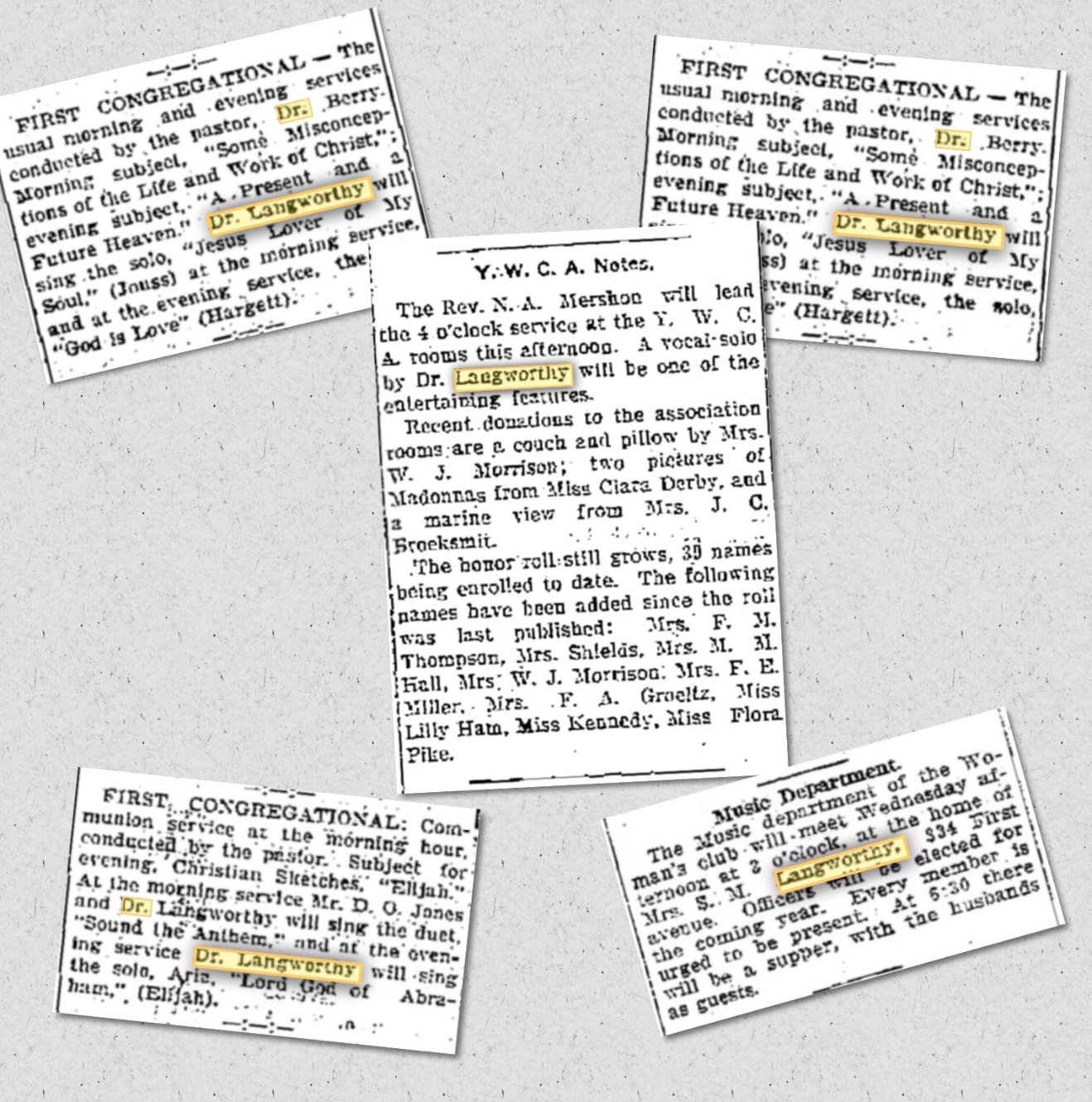
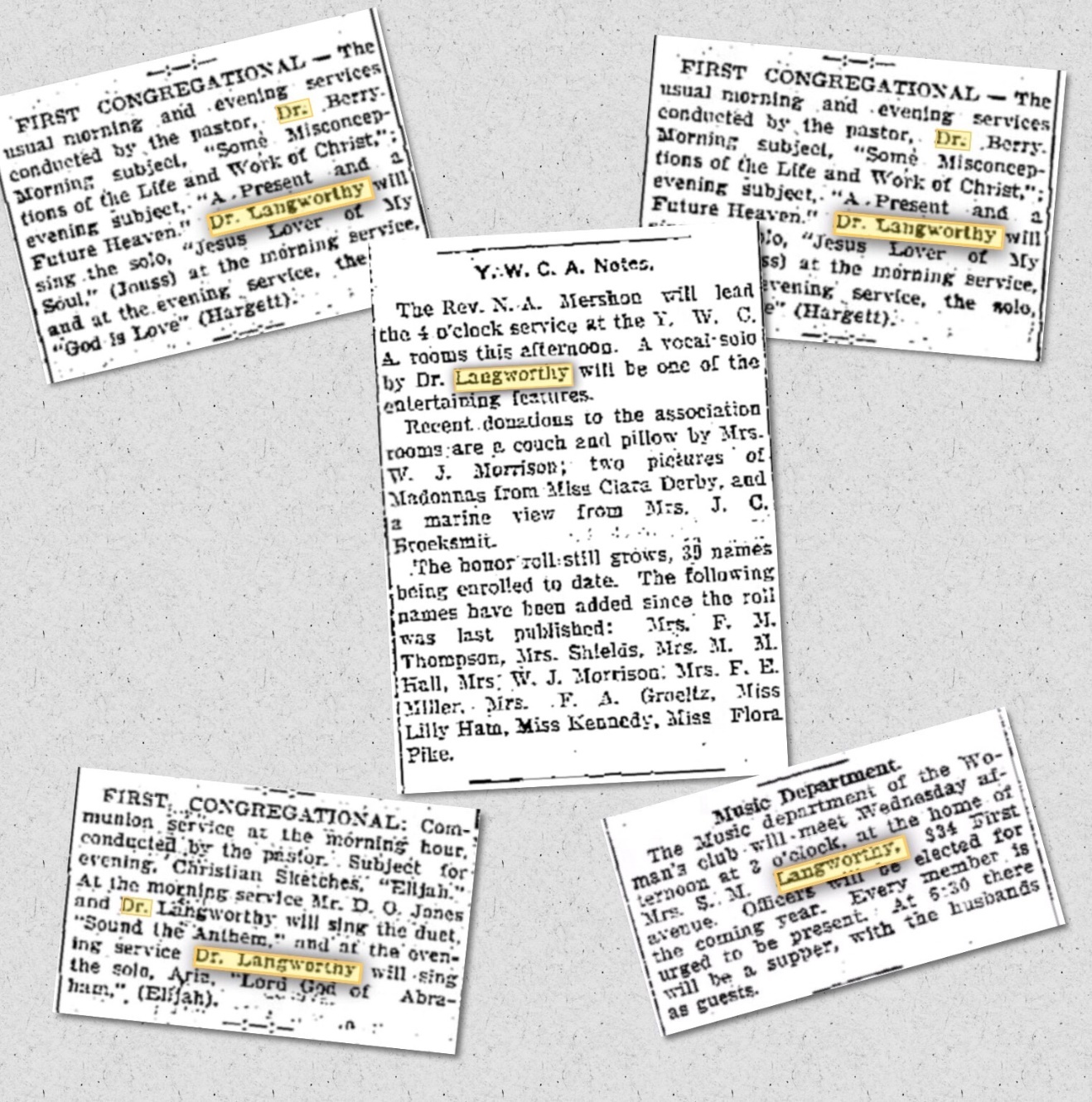
The couple was gifted with musical skills. Ora May was often the pianist or organist for Women’s Club and church services, and Solon often served as a vocal soloist for church services and other civic meetings. The Cedar Rapids newspapers are filled with notices of the Langworthy’s participation in these events (Figure 1).
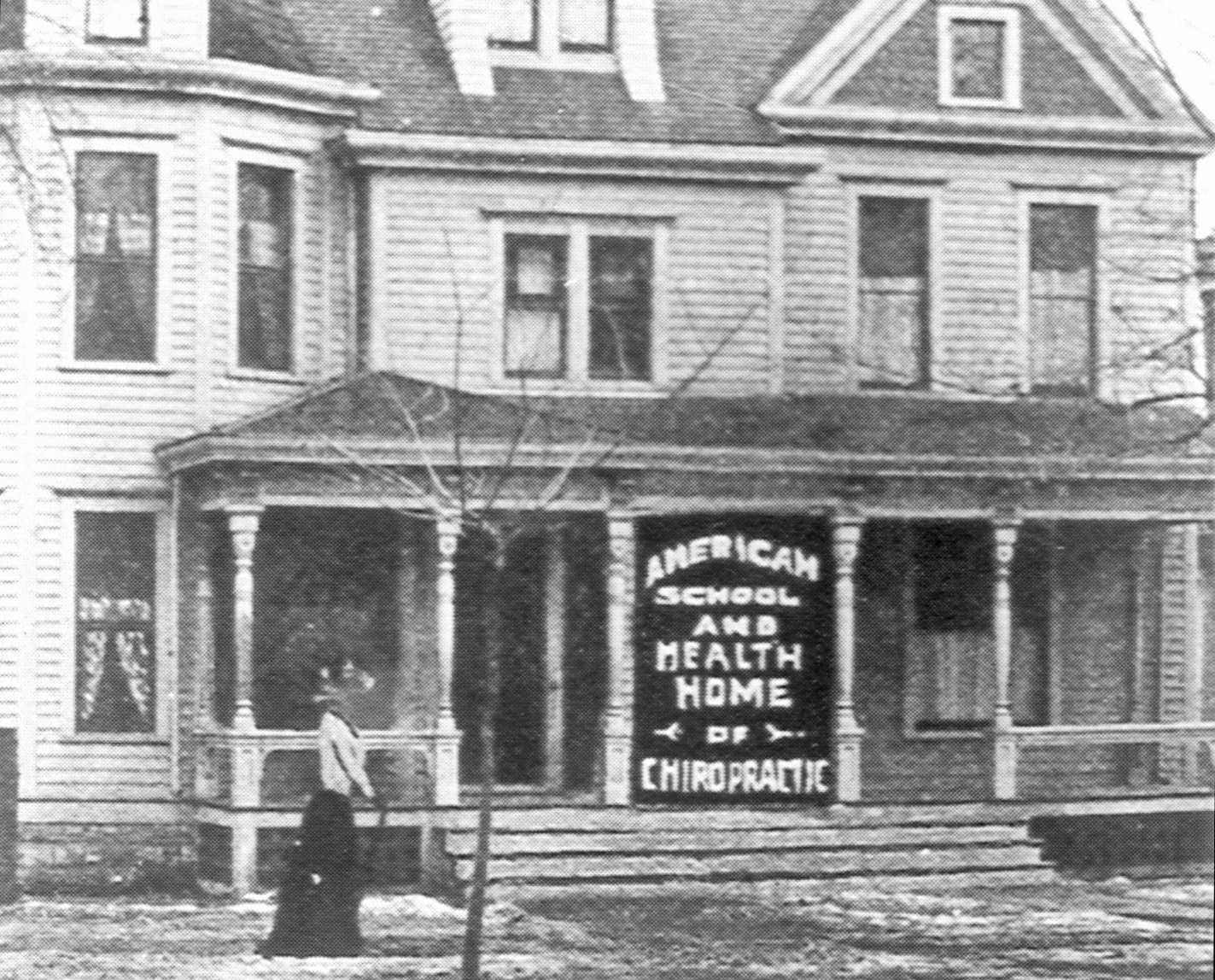
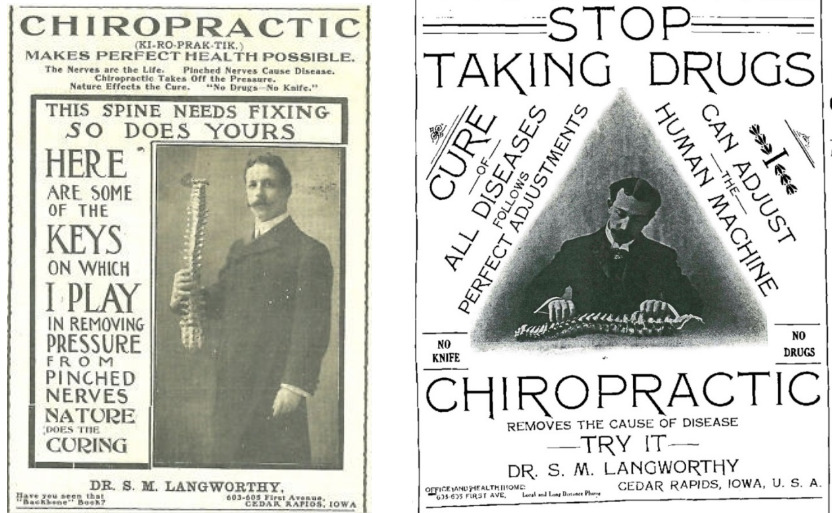
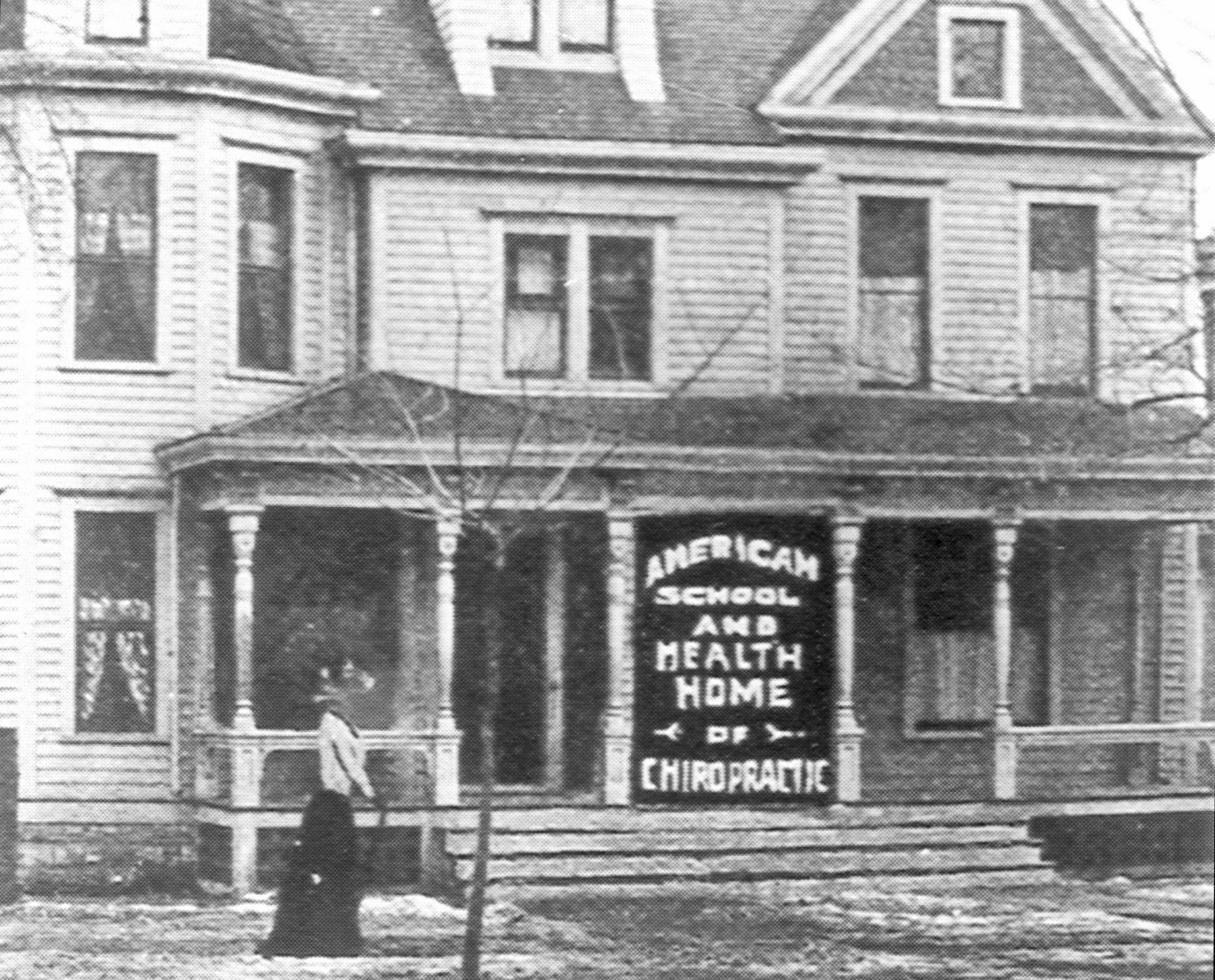
It did not take long for Langworthy to find a location to live and practice. 603-605 First Avenue, a large Victorian home, became the site for his practice, and the self-promoting businessman engaged in aggressive advertising to attract patients (Figure 2).
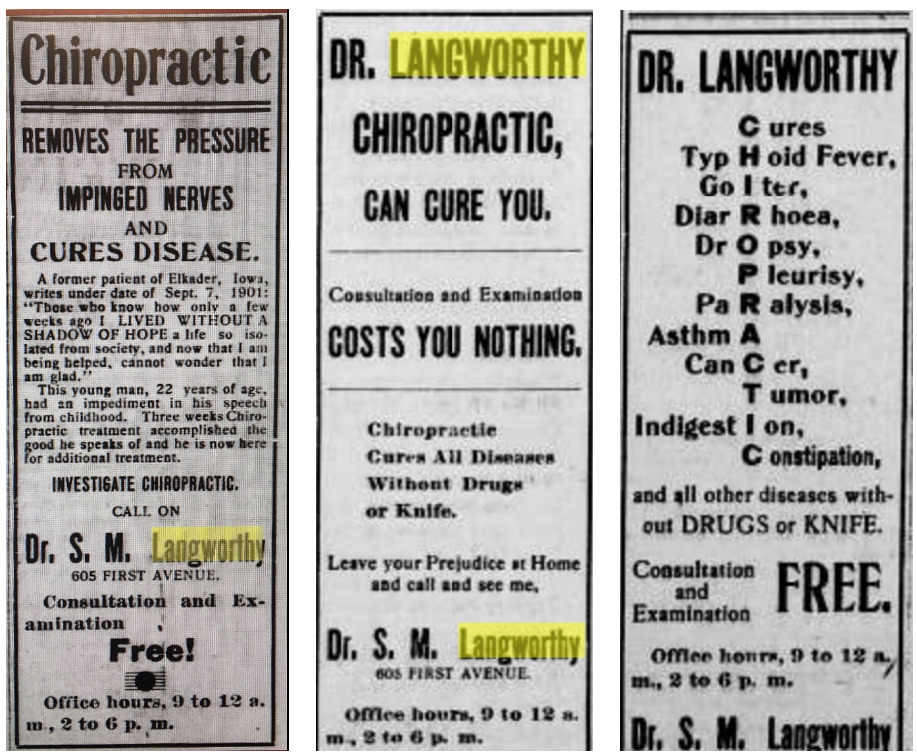
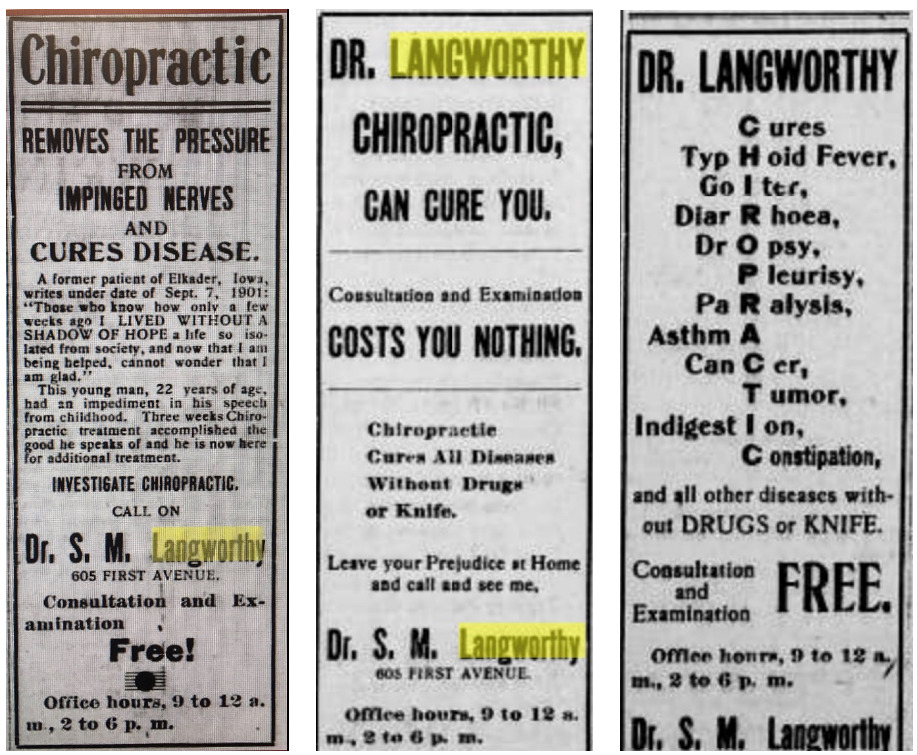
Initially Langworthy produced ads that carried general information about the new healing art such as, “Chiropractic removes the pressure from impinged nerves and cures disease.” Or, these ads listed conditions for which chiropractic might have beneficial effects. He also used a common advertising “hook” that has persisted to the present: the offer of a no-cost consultation and examination for new patients (Figure 3).
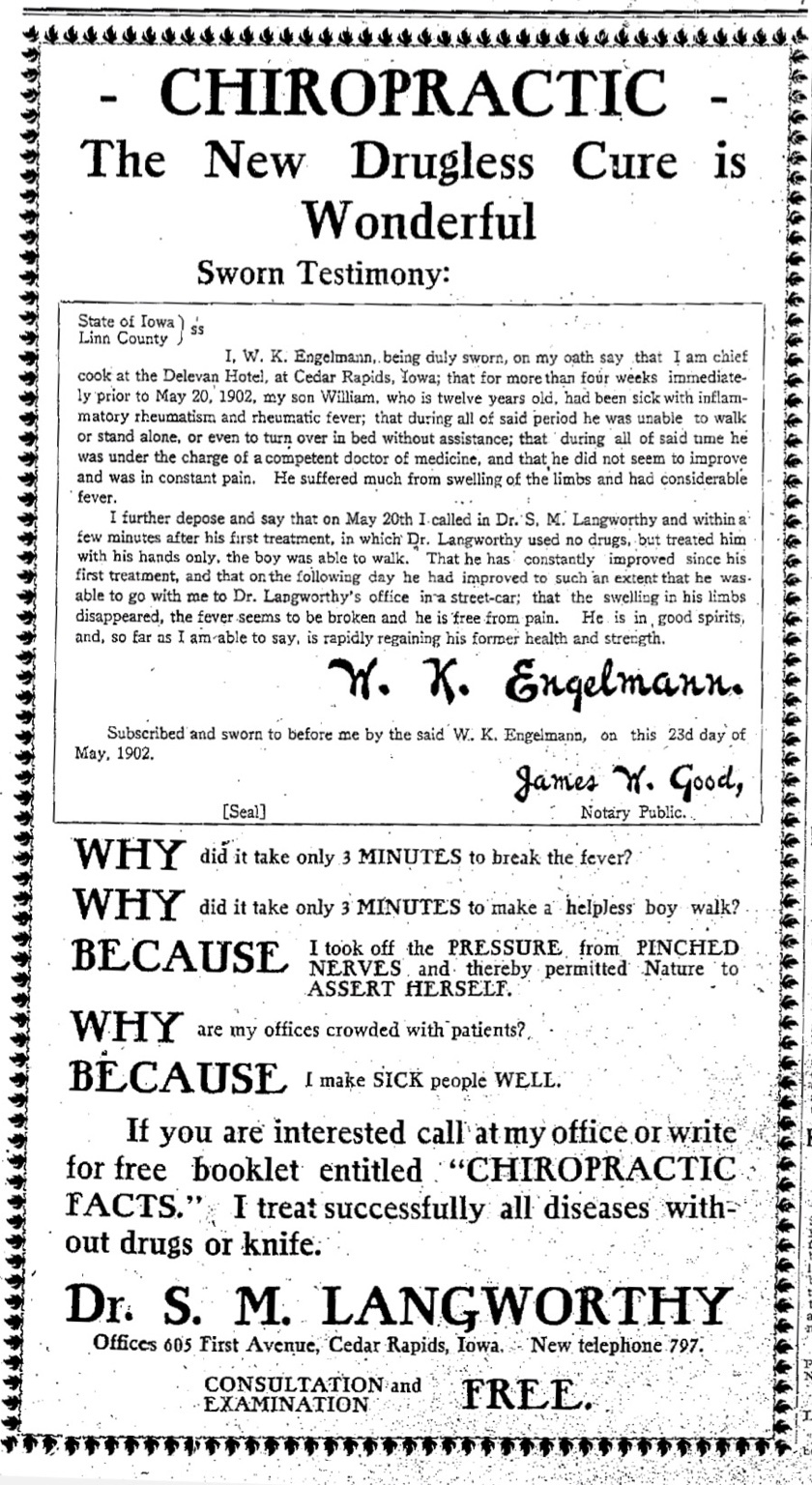
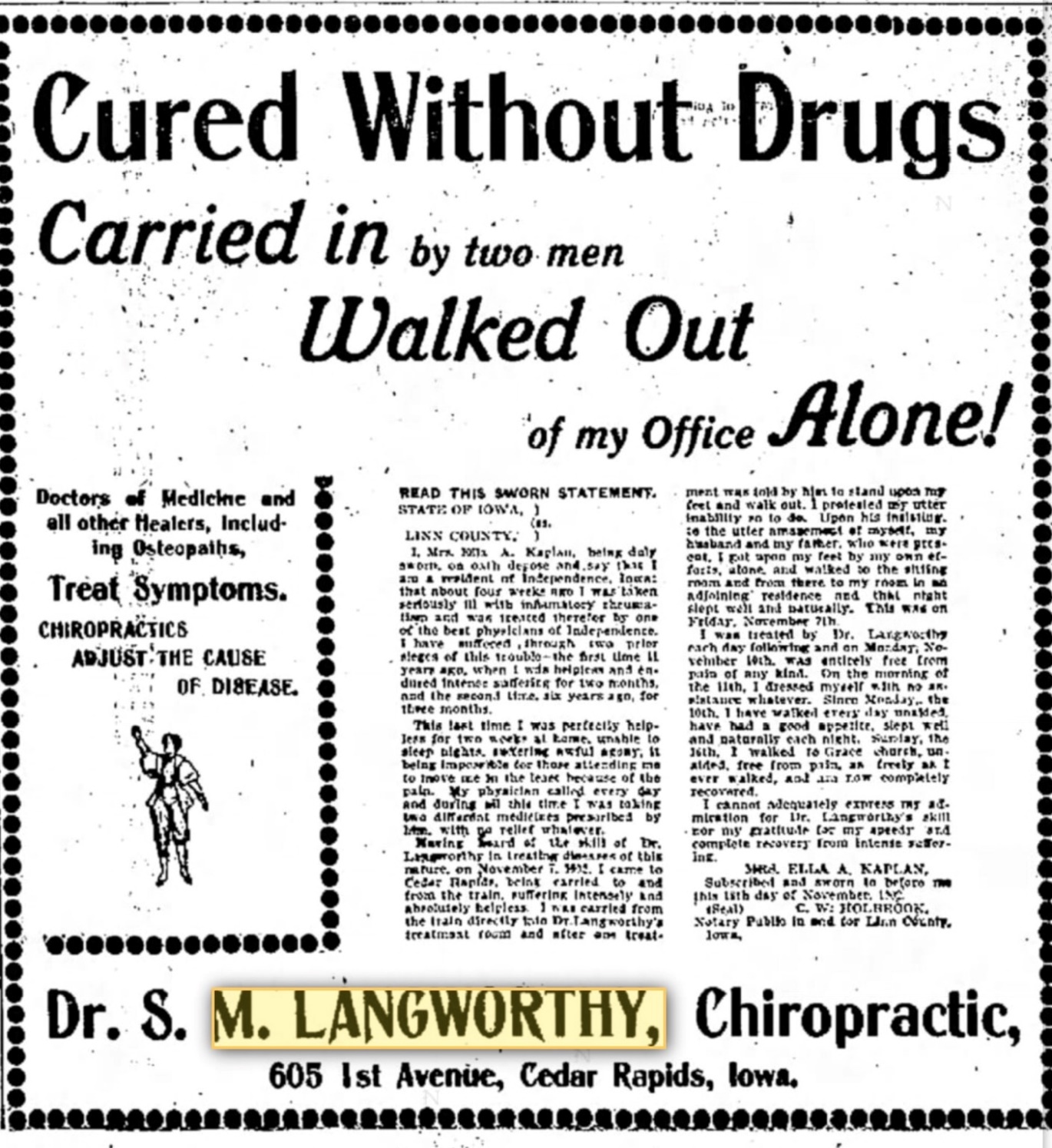
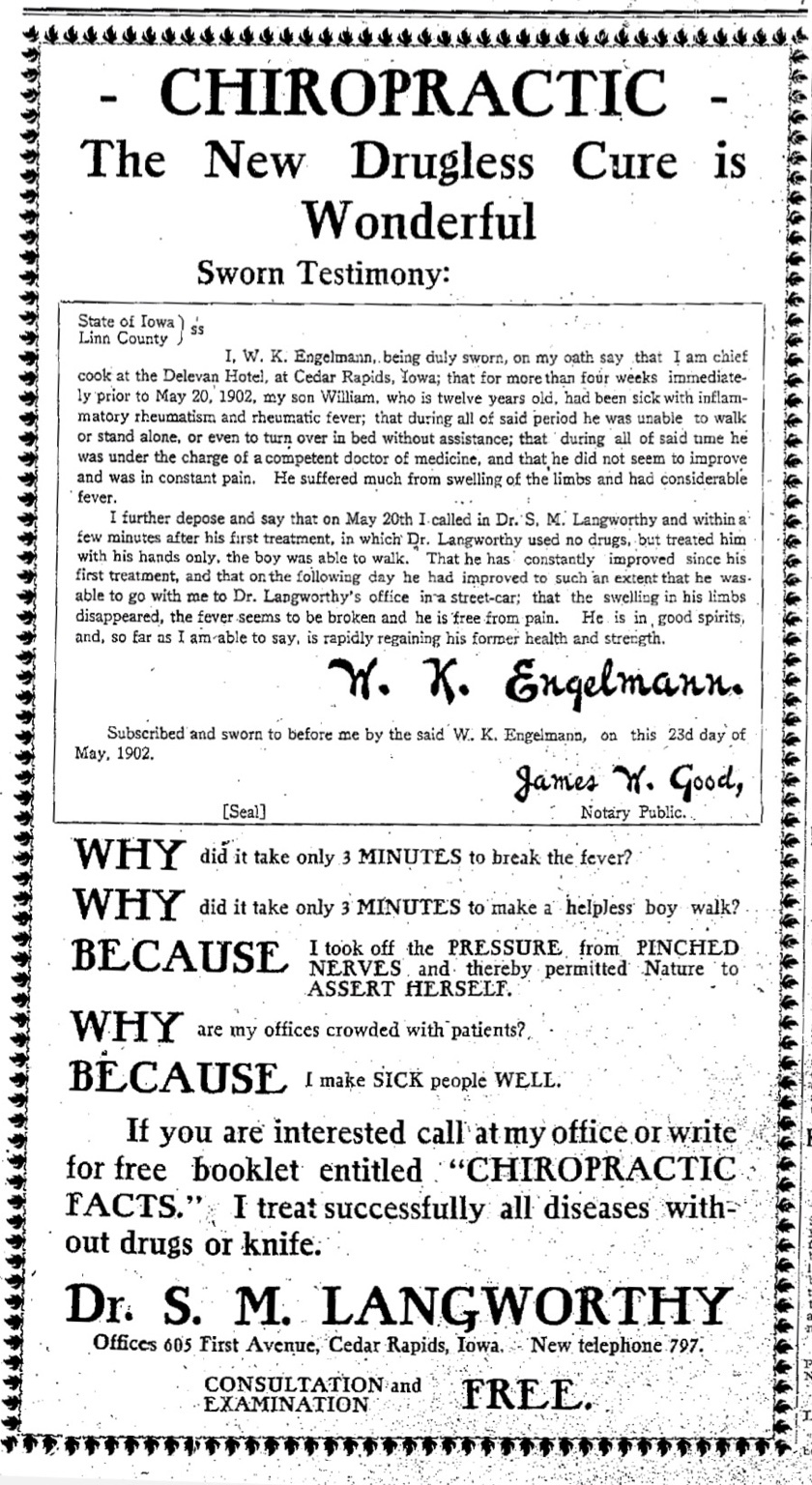
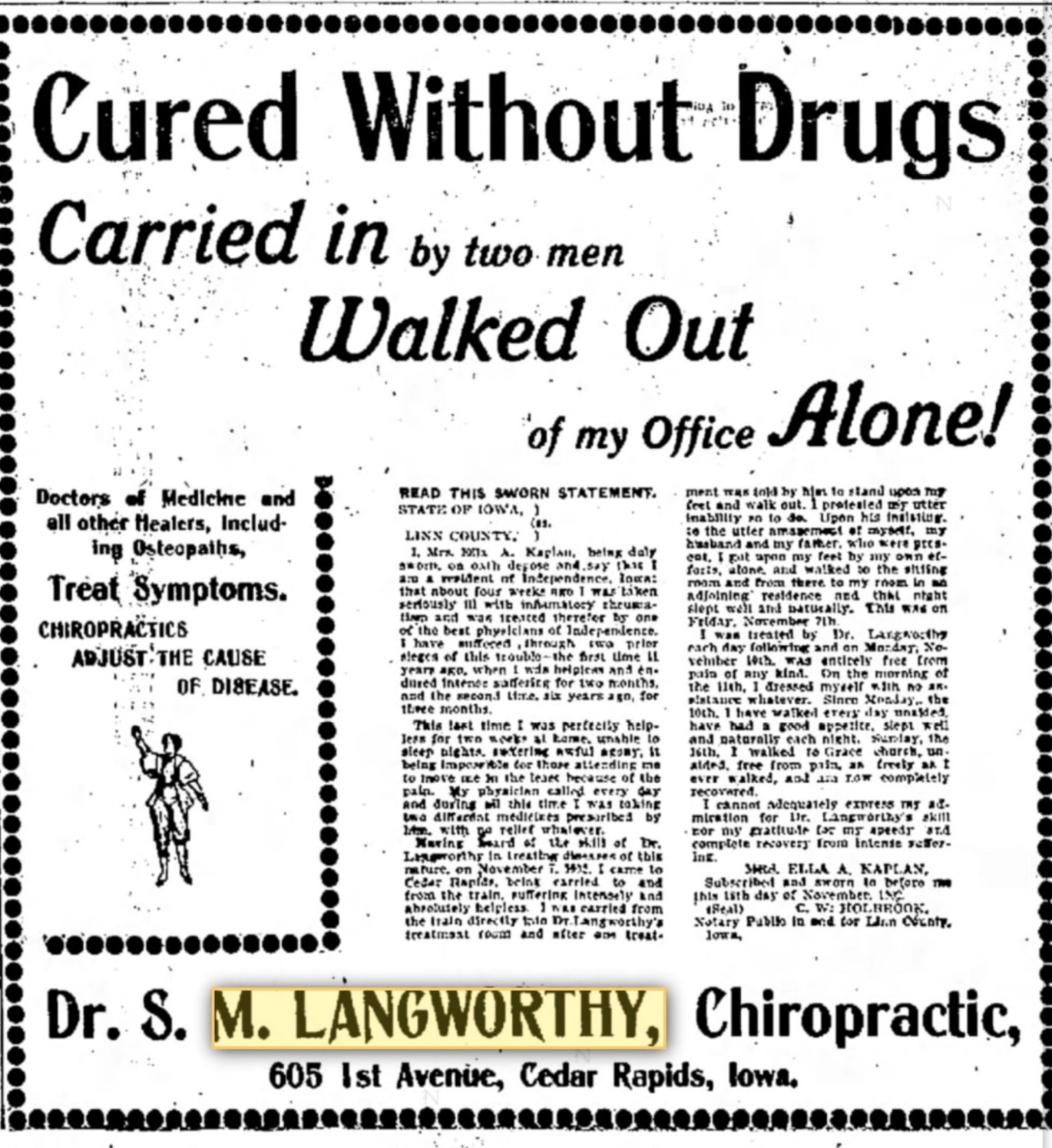
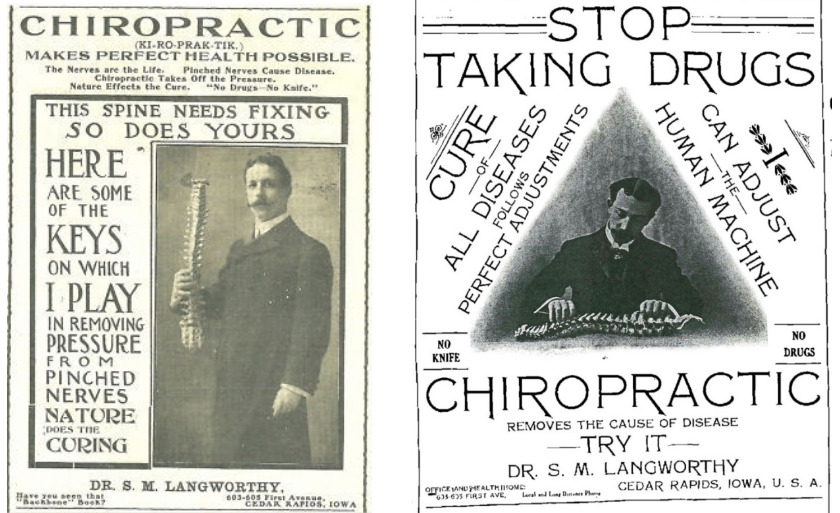
In a foreshadowing of things to come, Langworthy altered the focus of his advertising to emphasize testimonials (Figures 4 and 5) from patients receiving apparently miraculous cures when medical treatment had failed. He was careful to make sure that he had witnessed, sworn, written testimony that he believed might protect him from legal difficulties in the future. Figure 6 demonstrates additional unique Langworthy advertisements.
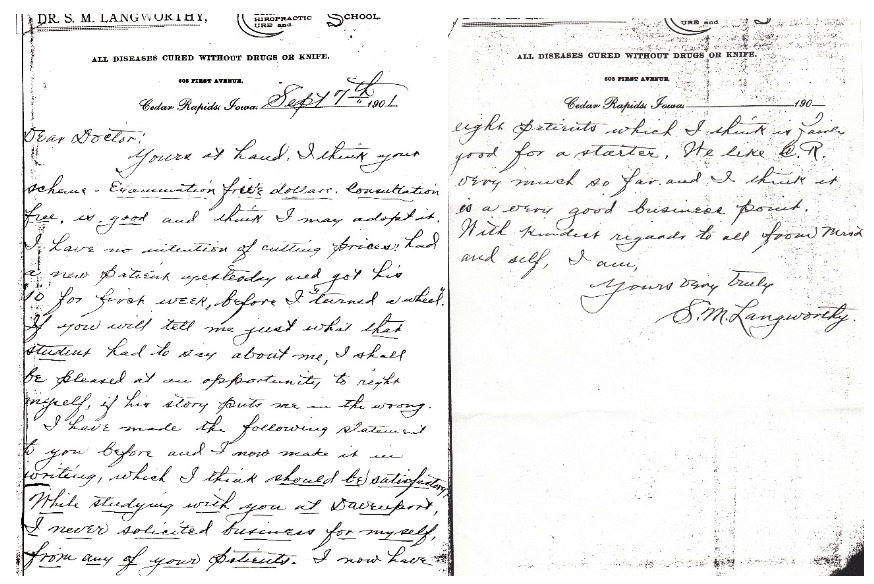
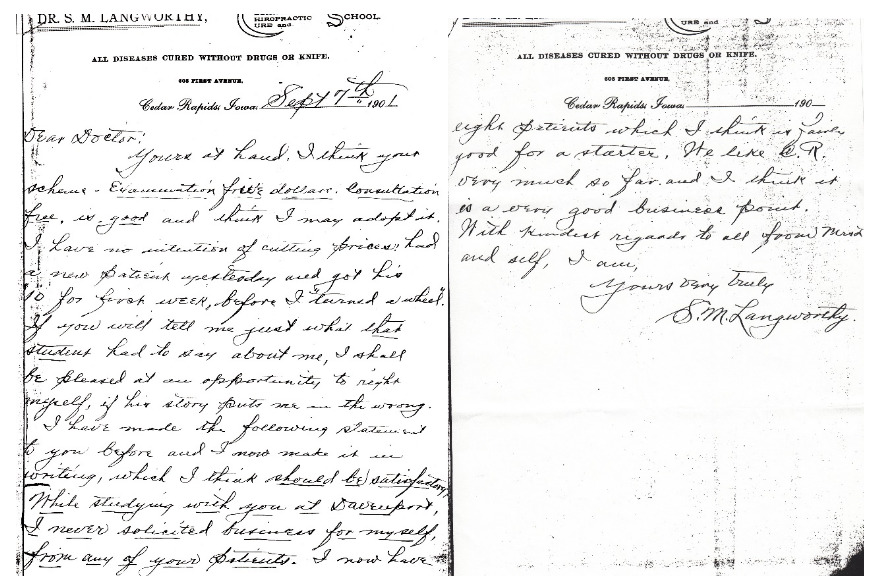
From the beginning of his practice Langworthy kept in touch with “Old Dad Chiro” and his son, B.J. Often the topics of the letters were regarding business tactics and the progress of his practice. From a 7-September-1901 letter (Figure 7) to D.D. Langworthy states:
"Dear Doctor:
Yours at hand. I think your scheme—Examination five dollars, consultation free, is good and think I may adopt it. I have no intention of cutting prices! Had a new patient yesterday and got his $10 for first week, before I “turned a wheel” . . .
. . . I now have eight patients which I think is fairly good for a starter. We like C.R. [Cedar Rapids] very much so far and I think it is a very good business point.
With kindest regards to all from Mrs. L and self, I am,
Yours very truly
S.M. Langworthy"
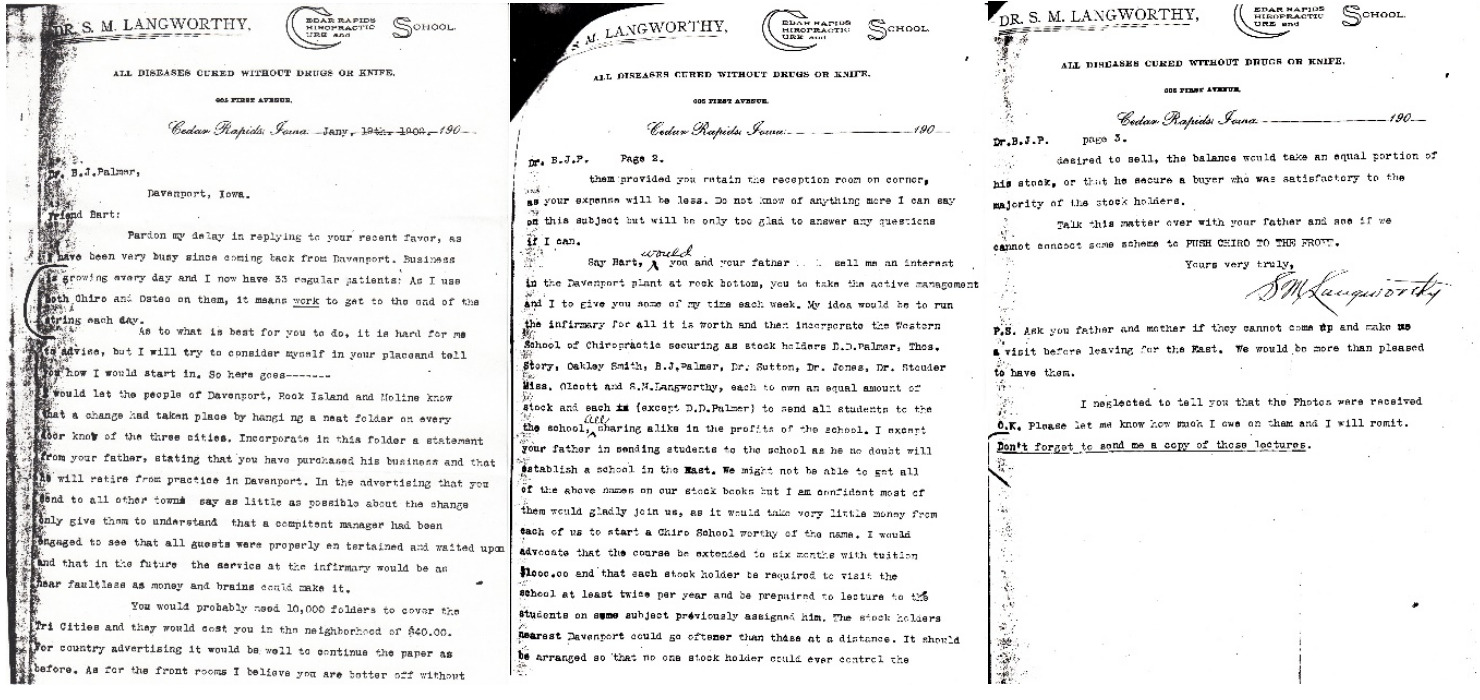
A few months later (19-January-1902), in response to communication with B.J. Palmer regarding his expanding role in the management of the Palmer empire in Davenport, Langworthy offers advice on how to inform the community that B.J. was now in charge in place of his father. Again, Langworthy offers the progress that his practice is making in a personal letter to B.J. Palmer5:
"Friend Bart:
Pardon my delay in replying to your recent favor, as I have been very busy since coming back from Davenport. Business is growing every day and I now have 33 regular patients: As I use both Chiro and Osteo on them, it means work to get to the end of the string each day."
Having excellent clinical skills combined with his business acumen, Langworthy went on to build a large and profitable practice in a short period of time earning the equivalent in today’s currency of nearly a quarter million dollars annually.5 Next, he set his sights on establishing a chiropractic school to elevate chiropractic education from an unstructured apprenticeship to that of a first-rate education with a broad scope of practice curriculum.
. . . and to Teach. But, Why? Follow the Money Trail
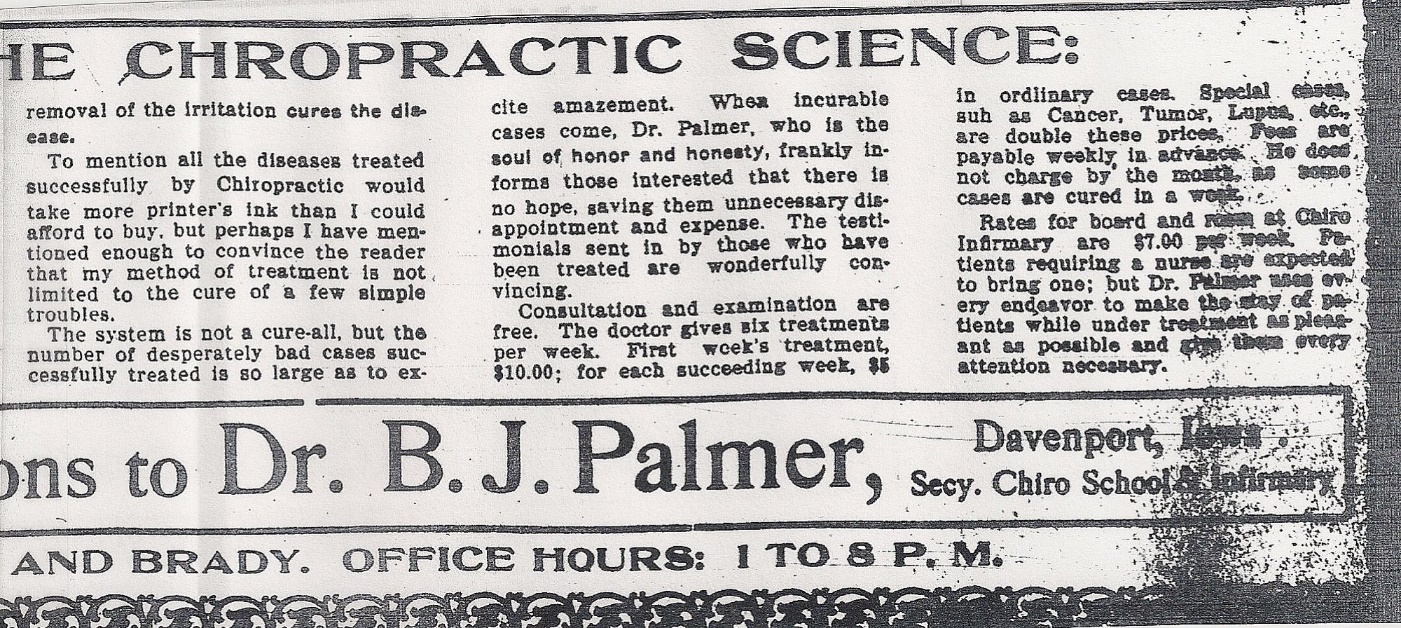
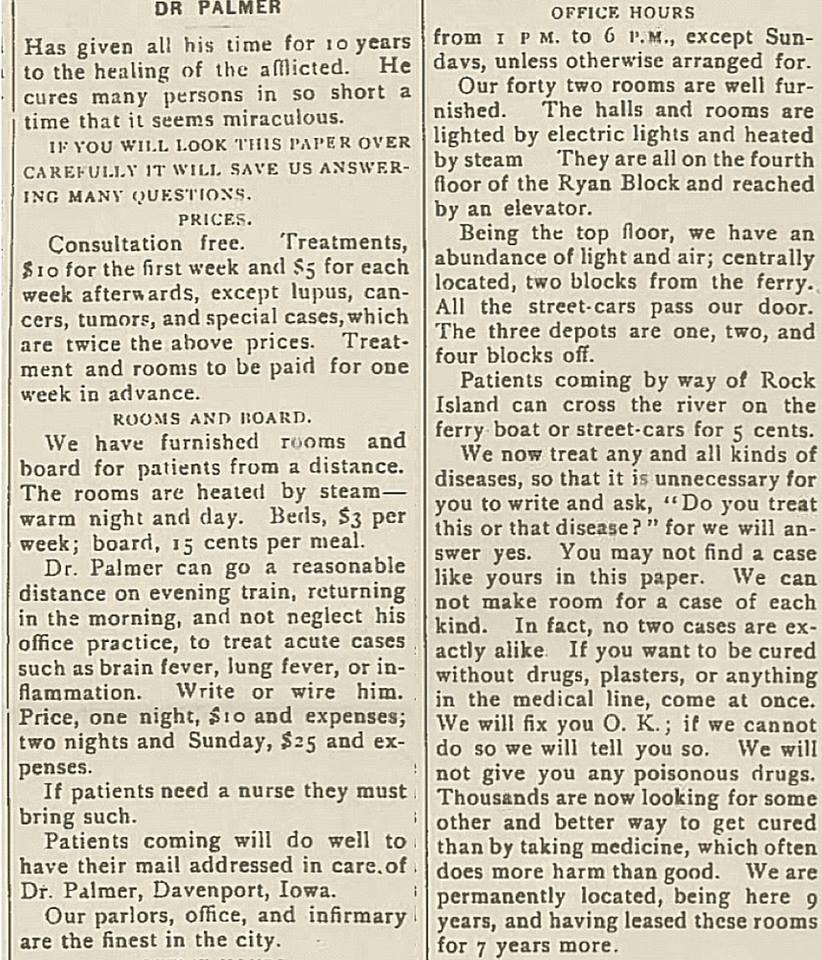
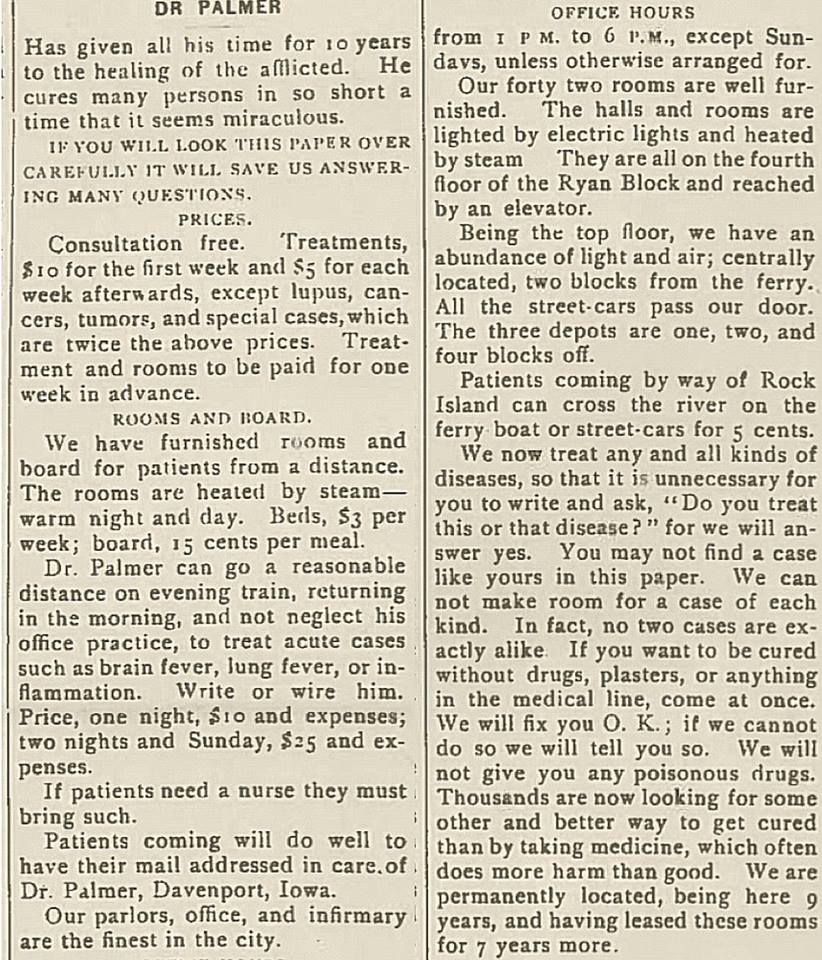
D. D. Palmer maintained an in-patient facility with forty-two rooms. Meals were also provided for many of his patients at a cost of 15 cents each. In 1897 he charged $3.00 for a weekly stay in one of his furnished rooms.6 By 1902 he charged a global fee of $7.00 per week for both room and board (Figure 8).7
Consultation with the doctor was free and treatment was charged by the week—essentially a case fee:
“Treatments, $10 for the first week and $5 for each week afterwards, except lupus, cancers, tumors, and special cases, which are twice the above prices. Treatment and rooms to be paid for one week in advance.”6
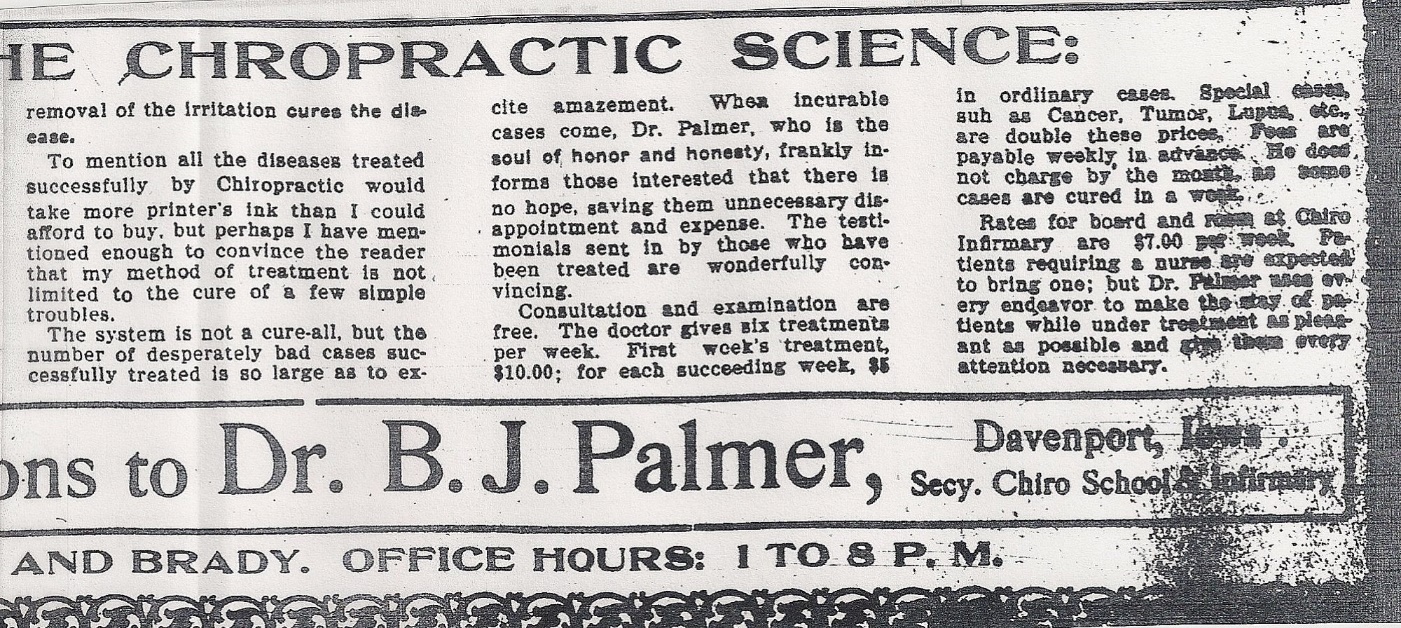
In 1897, Old Dad Chiro kept his office hours to the afternoon and evening, typically seeing patients from 1:00pm to 6:00pm.6 By 1902 he had expanded his adjusting hours to 1:00pm to 8:00pm.7 He adjusted patients 6 times per week Monday through Saturday (Figure 9).
At six adjustments per week, at a cost of $10 per week, results in a per adjustment fee of $1.67. In today’s dollars that would amount to about $275/week. Health insurance would not be available until the 1920s to defer health care costs.
Additionally, he did not typically offer lengthy treatment plans. A review of his advertising broadside, The Chiropractic, contains many testimonials and case reports where the treatment is only one or two treatments to resolve a patient’s condition.
B.J. Palmer, at least initially, maintained a similar treatment regimen:
“The osteopaths charge by the month. Why do I charge by the week? Because the Chiropractic cures many in one or two weeks. It would not be justice to charge such for a full month. Our patients average about two weeks’ treatment.”8
It appears that Dr. Langworthy found the case fee system utilized by D.D. Palmer acceptable and chose to adopt it. In a personal letter (7-September-1901, Figure 7) from Langworthy to Palmer he states:
"Dear Doctor:
Yours at hand. I think your scheme—Examination five dollars, consultation free, is good and think I may adopt it. I have no intention of cutting prices! Had a new patient yesterday and got his $10 for first week, before I “turned a wheel” . . ."
How much did it cost to obtain a chiropractic diploma in the early years of the profession and how long did it take to earn that diploma? D.D. Palmer gives us the answer:
“What will it cost to learn? To any one who we consider has the ability to learn and make it a success we will teach all we know and make him able to do all we can for $500. In one to three months our students will know one hundred times more of the cause and cure of disease than the medical man who spends three to five years’ time and from $1,000 to $3,000.”9
To determine the relative profitability of teaching students as compared to treating them is simple. At the rate described above of $1.67 per adjustment, one would need to provide 299 adjustments to make the equivalent for one student’s tuition of $500. Or, stated another way, at those rates one would need to provide 50 weeks of care at the $10/week rate to make the same amount of money one could receive for minting a new chiropractor in four to twelve weeks!
It would be surprising if these financial realities were lost on the businessman Solon Massey Langworthy. Soon he would be in the Chiropractic school business and create an institution that would rival the establishment in Davenport, Iowa.
Sowing the Seeds for a Competing School
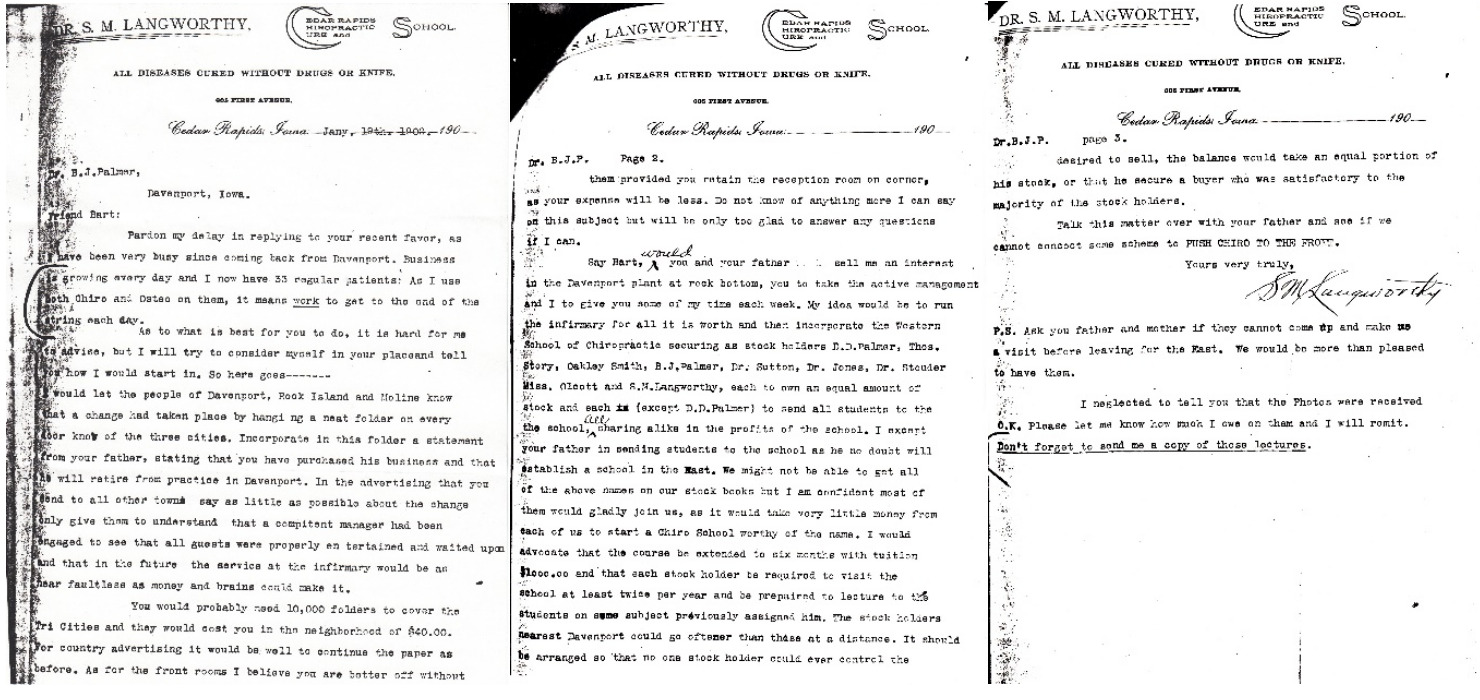
Langworthy kept in touch with the Davenport Palmers as he worked his practice in Cedar Rapids. The young B.J. Palmer would seek Langworthy’s council regarding his own business interests, knowing that Langworthy had experience in commerce that he himself lacked. In a January 1902 correspondence, Langworthy offers B.J. advice on how to inform the Davenport, Rock Island and Moline citizens that his father was no longer handling the day to day affairs of the Palmer Infirmary and School.
Later in the January 19th letter (Figure 10), Langworthy proposed the establishment of a partnership between the Palmers and other early chiropractors:
"Say Bart, would you and your father sell me an interest in the Davenport plant at rock bottom, you to take the active management and I to give you some of my time each week. My idea would be to run the infirmary for all it is worth and then incorporate the Western School of Chiropractic securing as stock holders, D.D. Palmer, Thos. Story, Oakley Smith, B.J. Palmer, Dr. Sutton, Dr. Jones, Dr. Strouder, Miss. Olcott and S.M. Langworthy, each to own an equal amount of stock and each (except D.D. Palmer) to send all students to the school, all sharing alike in the profits of the school. I except your father in sending students to the school as he no doubt will establish a school in the East. We might not be able to get all of the above names on our stock books but I am confident most of them would gladly join us, as it would take very little money from each of us to start a Chiro School worthy of the name. I would advocate that the course be extended to six months with tuition $1000.00 and that each stock holder be required to visit the school at least twice per year and be prepared to lecture to the students on some subject previously assigned him. The stock holders nearest Davenport could go oftener than those at a distance. . .
Talk this matter over with your father and see if we cannot concoct some scheme to PUSH CHIRO TO THE FRONT.
Yours very truly,
SM Langworthy"
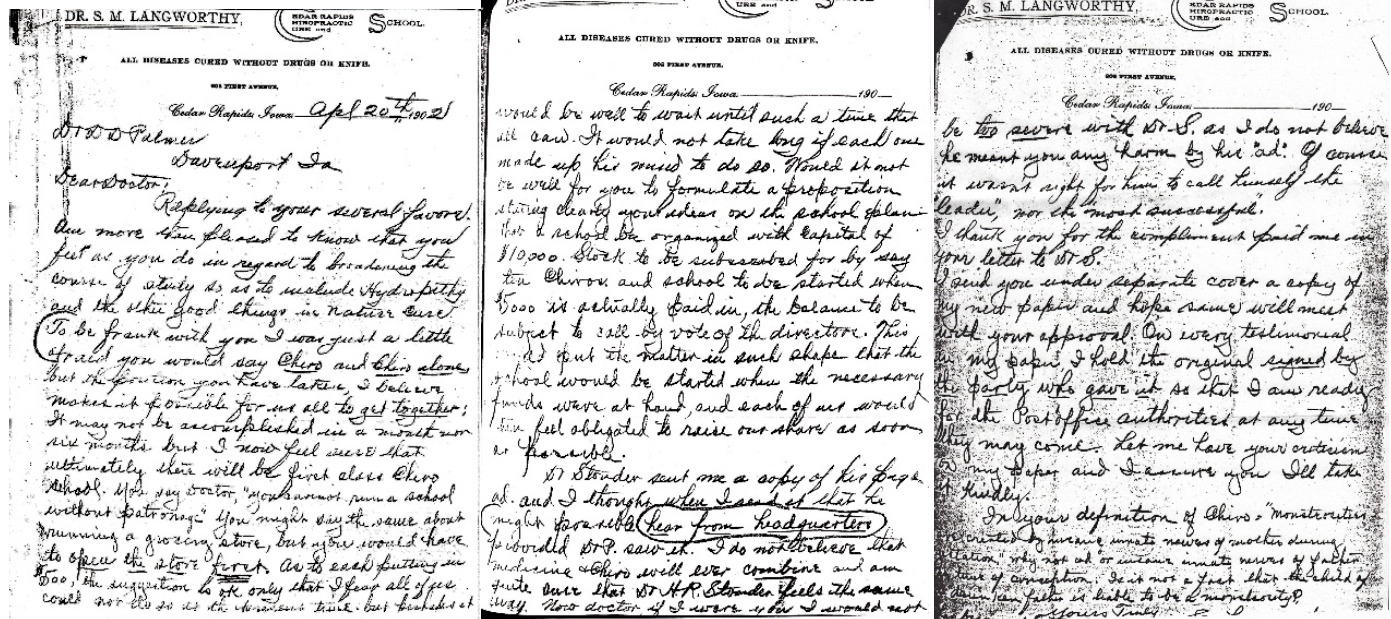
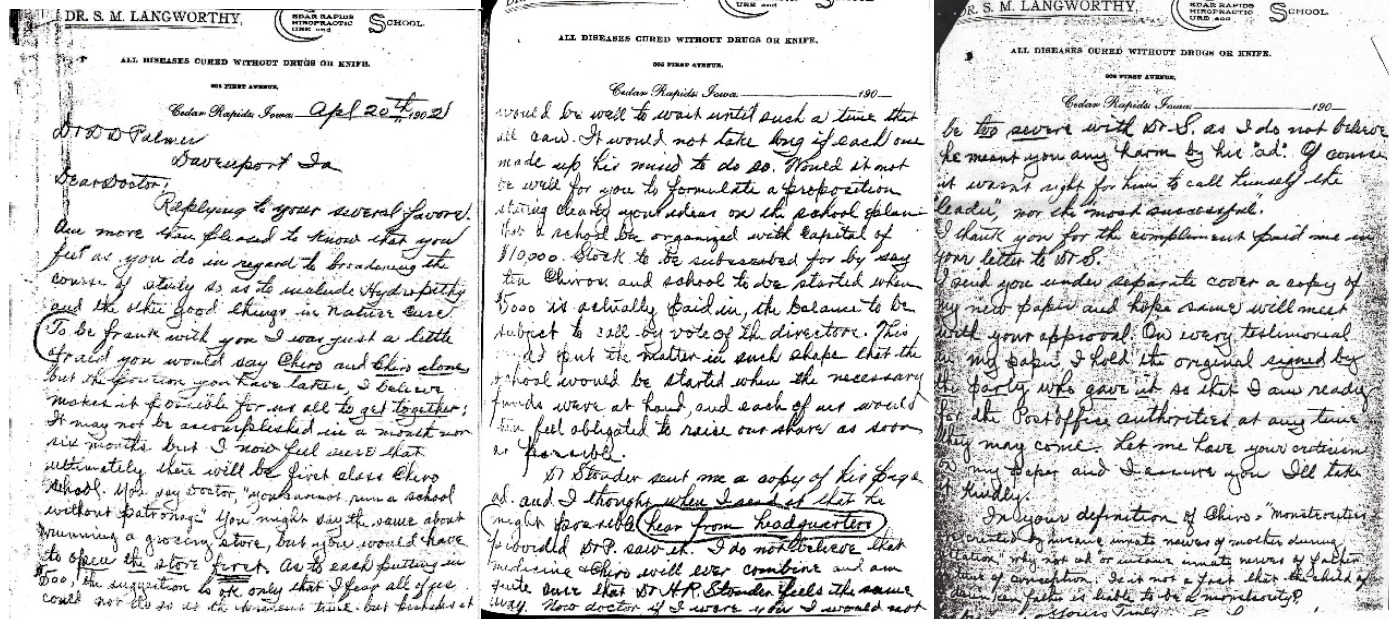
Discussions ensued between Langworthy and the Palmers regarding the joint chiropractic school venture. During these negotiations Langworthy proposed broadening the scope of the school to include “nature cure.” (Figure 11)
The Seedling Sprouts
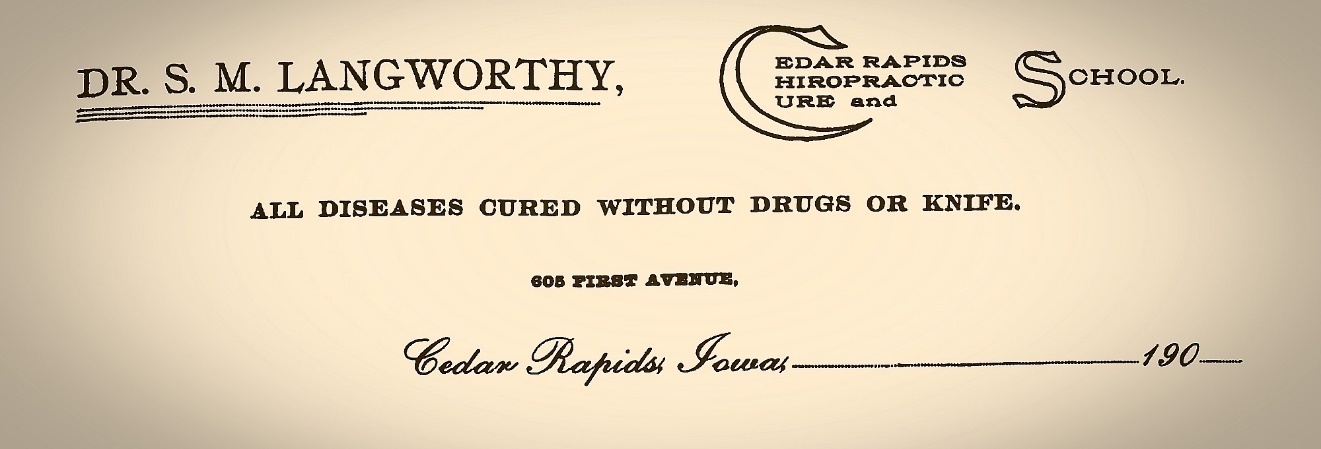
Upon his arrival in Cedar Rapids Langworthy set about the task of establishing his practice. As part of these duties he designed and had letterhead printed for his personal correspondence. Figure 12 is that letterhead and demonstrates his clear desire to not only practice but to teach chiropractic, as well.
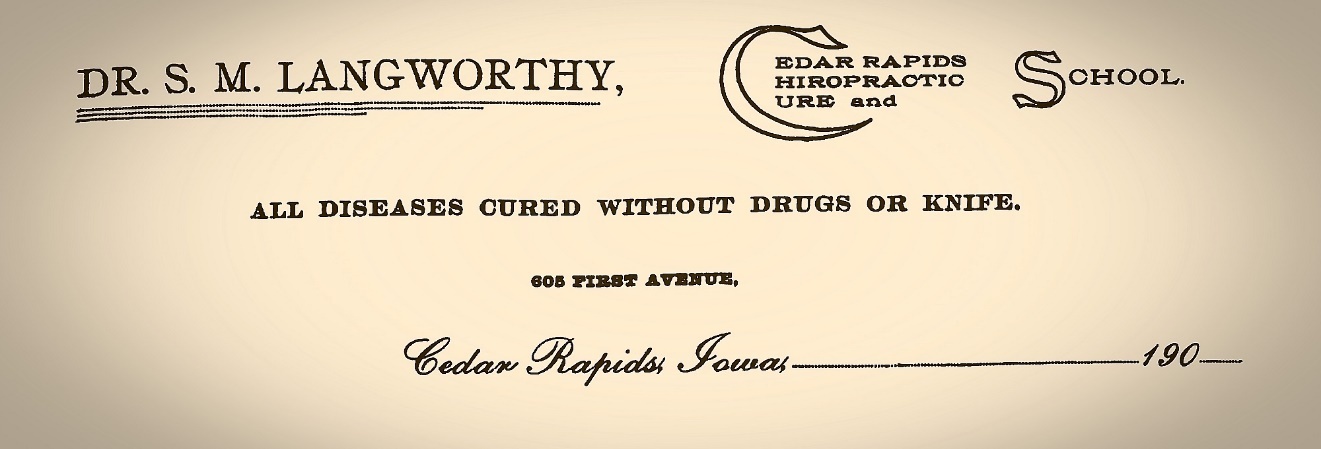
A promotional brochure titled, “Cause and Cure of Disease Made Plain”10 was produced by Langworthy at this time that had the same letterhead logo along with the location of the practice, the doctor’s name, address, office hours (9 to noon; 2 to 6 p.m.) and the advertising hook that consultation and examination were free.
Additionally, Faulkner10 discovered a newspaper advertisement for Langworthy’s initial educational institution from December of 1901. The advertisement states:
"LEARN DRUGLESS HEALING–
Chiropractic is a new system of drugless healing, a step in advance of osteopathy. We teach it to men and women. If you desire an honorable profession which will make you a fortune and have $500 cash or bankable paper to pay tuition, write us for further particulars. Ours is no fake mail course and we do not claim to make you a full-fledged doctor in two weeks. If you have brains and ambition we can and will teach you the cause and cure of all diseases in four to six months. We do not deal in hypnotism or occult forces. Diploma freely given when you qualify, but not for sale at any price. If you have any disease and want to be cured without drugs or knife write to us, Chiropractic School and Cure, Cedar Rapids, Ia."
Although these documents indicate the presence of a school, there is no evidence of any students until later in 1902. In a personal letter in August of 1902 to his friend and colleague, Dr. Oakley Smith, Langworthy states he had at least one potential student and demonstrates his desire to have Smith involved in the school business10:
". . . Have closed with one student and have good reason to expect more. Wish I had your help on the school business. Big money can be made out of it if it is worked right.
In haste,
Langworthy"
In December of 1902 Langworthy again asked Smith to join him in Cedar Rapids to help teach patients:
"I am now working the school business to quite an extent. Now have three students and hope to graduate 20 or 30 during 1903. Wish I had you with me on the school deal as I will certainly need help if business keeps up . . .
I am, Very truly yours,
S.M. Langworthy"
This correspondence would be a foreshadowing of things to come.
The Seedling Grows to a Sapling
In 1902 Langworthy would publish his first written announcement for his educational venture called the American School of Chiropractic and Nature Cure. The announcement described basic information about the chiropractic profession. This would include the profession’s focus on the nervous system rather than the blood/circulatory system as in osteopathy. The treatise also described why “Nature Cure” was included in the course of study:
“We have good reasons for combining Nature Cure with Chiropractic. Let us first define disease, and then consider what part Nature Cure must play in its cure. Disease is a unit, its location gives it a name. Nerve pressure is the primary cause, the result of which is depositing of foreign matter in the body. Chiropractic (taking off the pressure) turns off the faucet which supplies the foreign matter. Nature Cure assists nature in eliminating the pent up foreign matter or poison from the body through the excretory organs. Many cases have been cured by the use of Chiropractic alone, but we consider it best that the practitioner be qualified to meet all emergencies, hence by combining our courses of Nature Cure with Chiropractic we give our students the most advanced system of drugless healing.”5
The announcement went on to describe the course work including anatomy, physiology, diagnosis, hygiene, dietetics, symptomatology, gynecology, nature cure and chiropractic. The course work would last from two to six months depending on the level of education of the student. That is to say that students already having degrees in allopathic or osteopathic medicine would be able to finish the course work in abbreviated fashion.
Tuition was $500. The school offered a home study option where a student would pay $100 and receive by mail the didactic portion of the coursework. When completed, the student would then have to complete the clinical portion of the curriculum in person and the balance of the tuition paid in full.
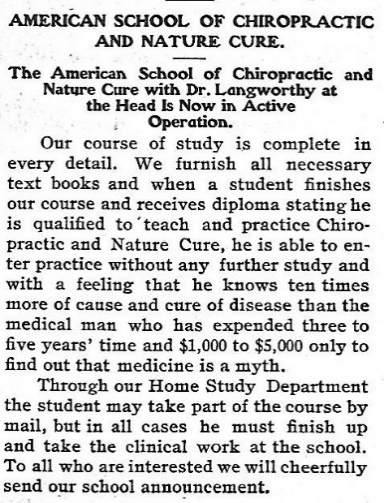
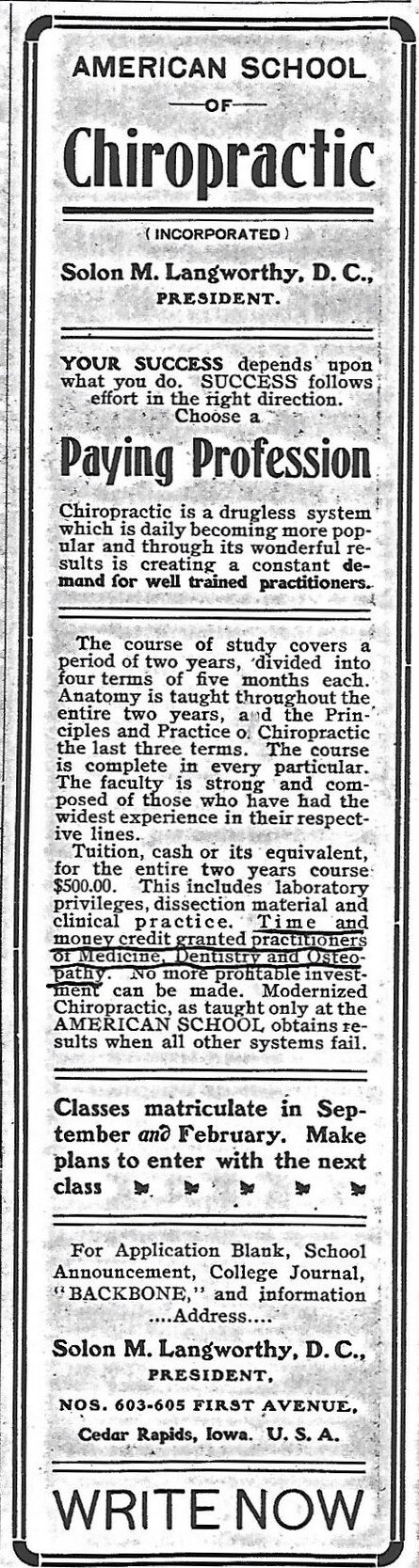
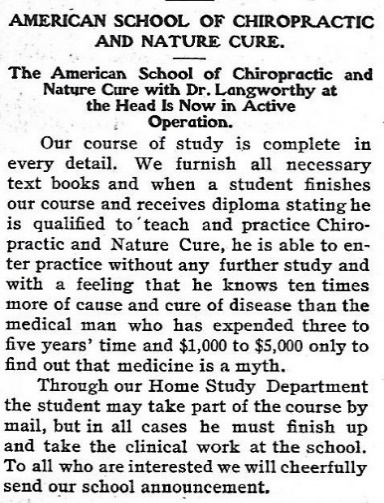
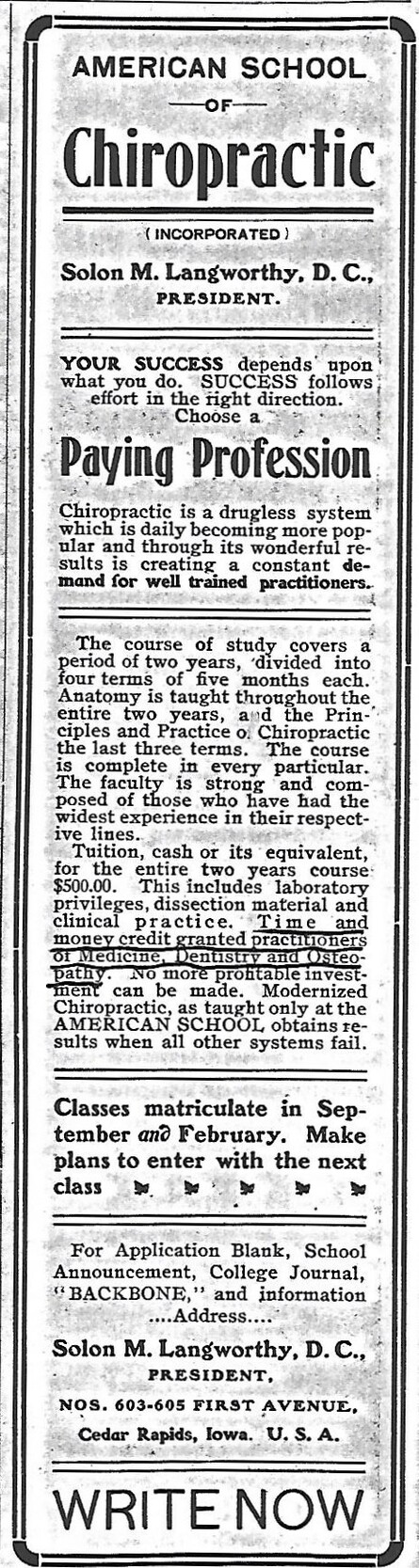
Soon Langworthy would be aggressively advertising for students. He produced a series of advertising booklets titled “Chiropractic Facts.”5 In Chiropractic Facts he would publish multiple testimonials about the effects of chiropractic treatment on a wide variety of human ailments, general information about the chiropractic profession and his practice. Photographs of his office, treatment rooms and equipment adorned the publication. He began to refer to his method of chiropractic care as “Modernized Chiropractic.” Finally, Chiropractic Facts was used to promote his new school (Figures 13 and 14).
The Sapling Matures Into a Tree
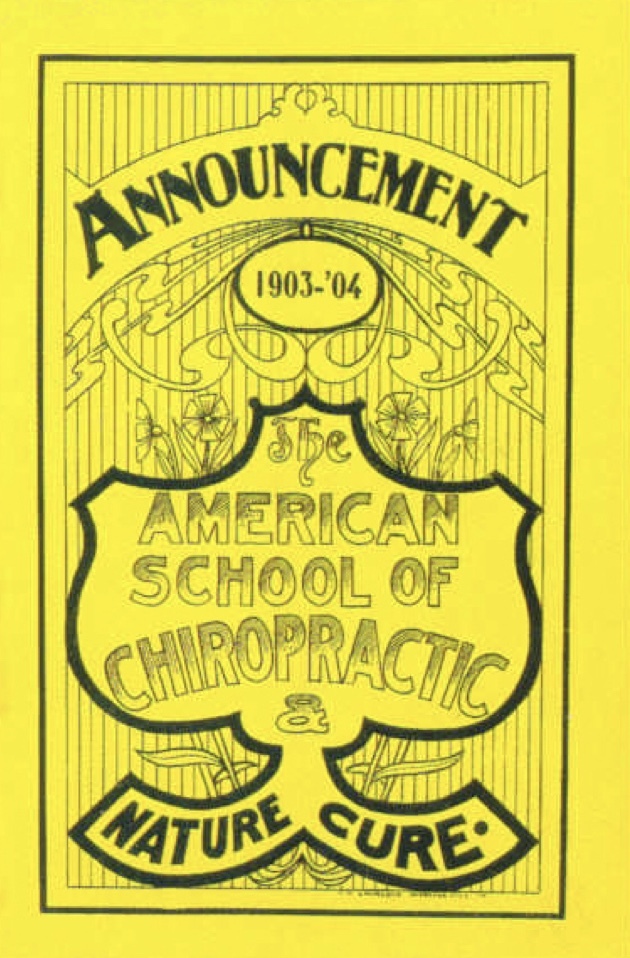
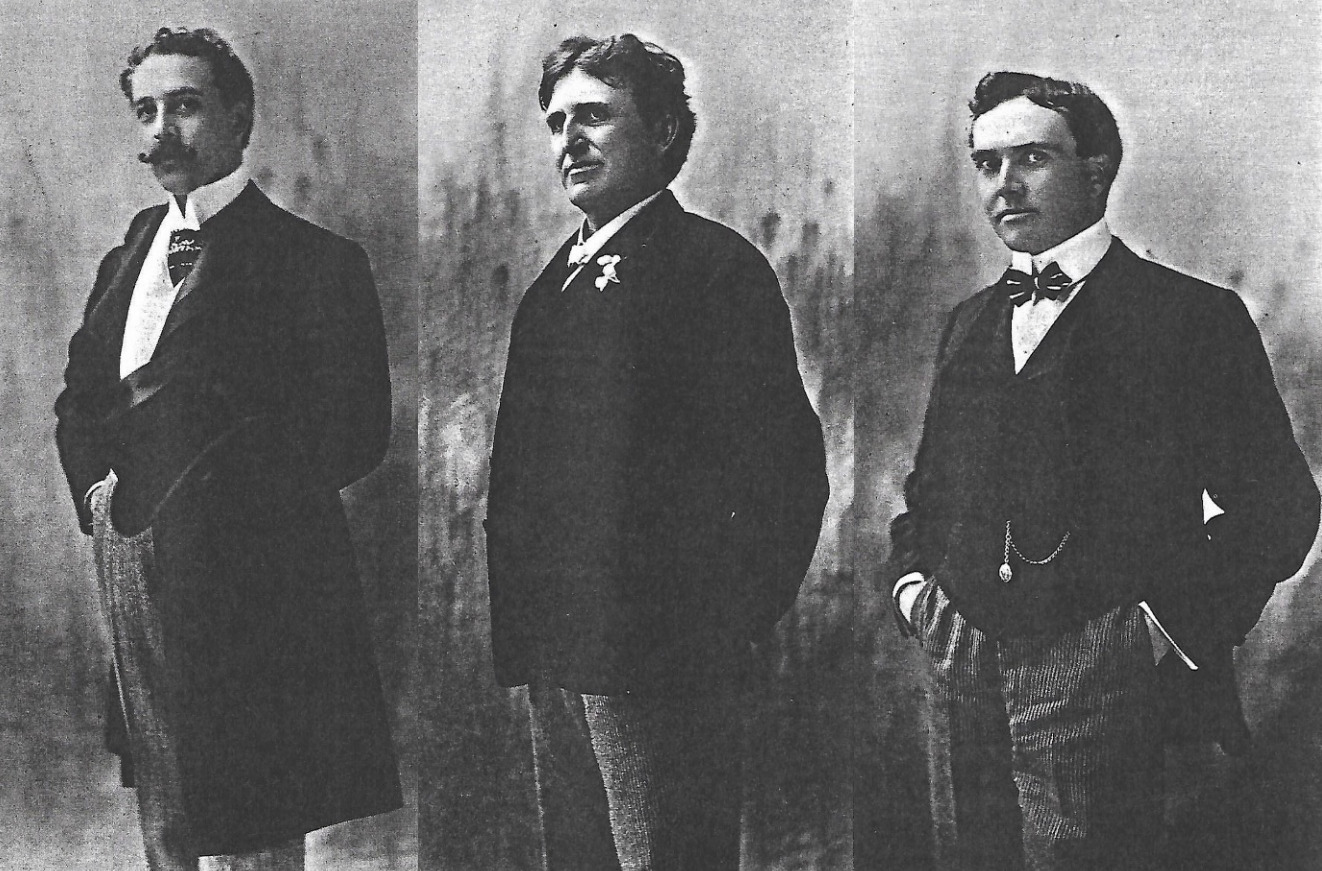
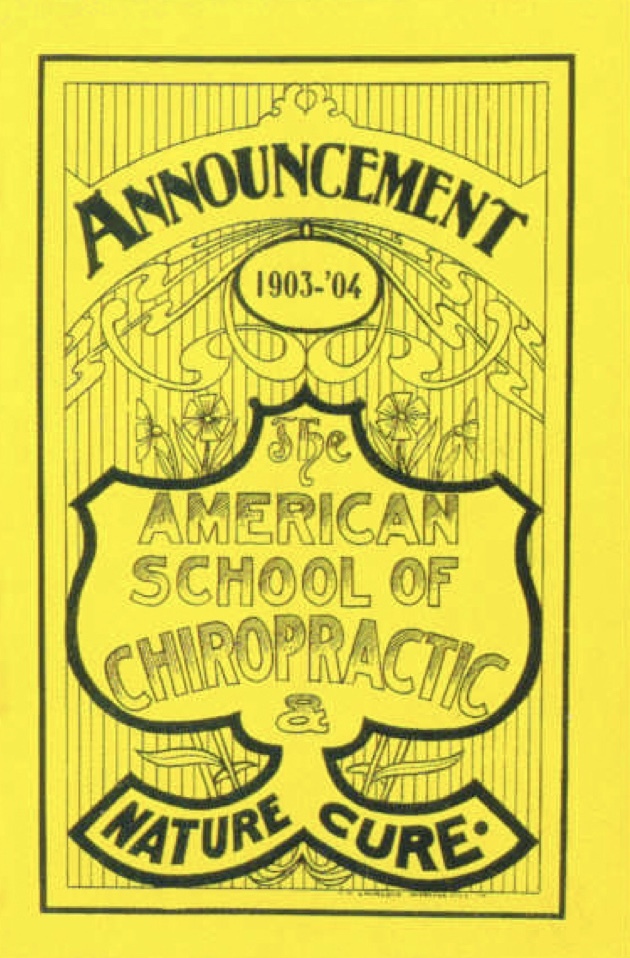
By 1903 the American School of Chiropractic and Nature Cure11 had arrived (Figure 15). Faculty was added to augment the teaching of Langworthy’s chiropractic diagnosis and clinical applications. Robert J. Brown, D.C., was the lead instructor in anatomy, physiology, psychology and kinesiology. Carroll W. Burtch, D.C., covered special anatomy, physical development, hygiene, symptomatology and dietetics (Figure 16). The curriculum was altered and expanded on a regular basis over this time period to reflect the seriousness of the endeavor and Langworthy’s commitment to improve the quality of chiropractic education and the caliber of the practitioner produced.
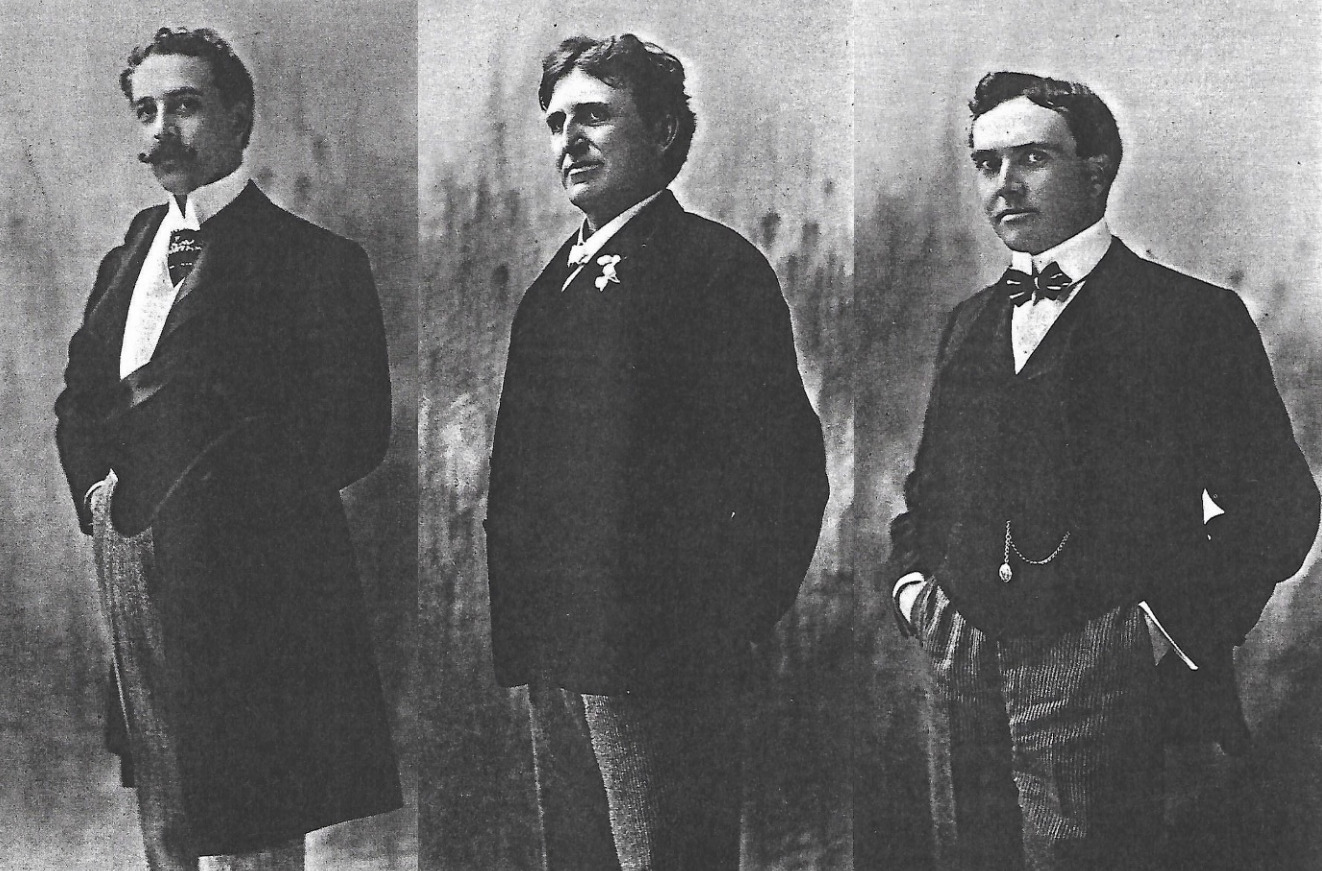
Oakley Smith, one of the earliest graduates of the Palmer School of Chiropractic was an important pioneer chiropractor. His life has been thoroughly investigated and reported upon by Faulkner.10 In summary, Smith graduated from the Palmer School in Davenport in 1899, spent an extraordinary amount of time studying with The Founder and developed a relationship with him that was more like father and son than teacher and pupil.
Smith would follow D.D. to California to work with him in the chiropractic school he started in Santa Barbara and then to Chicago, Illinois in 1903 to start yet another practice and school there.
Minora Paxson was an Illinois native. She was an educated woman who taught grammar in the public school system in Illinois including the cities of Sycamore, Bloomington and Evanston where she rose to the position of principal. Eventually, she would study chiropractic under D.D. Palmer in Santa Barbara, California and, along with Oakley Smith, follow D.D. to Chicago, Illinois to participate in a joint venture of chiropractic practice and the potential establishment of a chiropractic school.12
Both Smith and Paxson took additional training in anatomy and related subjects at Harvey Medical College in Chicago. Together they took the examination to obtain a license in Illinois for drugless healers and were awarded those licenses in April of 1904.10,12 The obtained licenses would allow them to practice chiropractic in the state of Illinois unmolested by political medicine.
Their partner in the Chicago venture, D.D. Palmer, refused to take the Illinois exam for drugless healers. This once again placed him under the microscope of the law. Proving himself an unreliable and unworthy business partner, Smith and Paxson likely became disgusted with Old Dad Chiro and considered their next move.
Langworthy had twice made overtures to Smith to convince him to join Langworthy in Cedar Rapids in the “school business”.10 Now the timing was right and both Smith and Paxson would abandon the erratic and irascible D.D. Palmer for the stability and sound business practices of Solon Massey Langworthy in Cedar Rapids. They would join the faculty at the American School as professor of anatomy, physiology and pathology (Smith) and professor of gynecology, obstetrics, symptomatology and tracing (Paxson).
Legitimizing Chiropractic Education
A legitimate faculty and staff having been assembled, the curriculum would be expanded in terms of content and length.13 The course of study would be lengthened to two years with the following topics:
Anatomy
Histology
Physiology
Inorganic & Organic Chemistry
Pathology
Dissection
Urinalysis
Hygiene & Dietetics
Symptomatology
Obstetrics & Gynecology
Chiropractic Principles
Chiropractic Technique
Nerve Tracing
Clinical Diagnosis
Fractures & Dislocations
Bandaging
Jurisprudence
Tuition remained at $500 for the two-year course of study. From the 1904-05 American School of Chiropractic announcement11:
"In the early days of the investigation of Chiropractic, Dr. Solon M. Langworthy located his private practice in Cedar Rapids, Iowa. He had at that time no definite plan for a school, but in his innermost consciousness cherished the hope that some day the time would come when there could be established a well equipped school where chiropractic could be taught in a systematic method and not the desultory way heretofore. His practice grew to such an extent that the fame of Chiropractic became wide spread and he received so many inquiries in regard to teaching Chiropractic that his secret desire seemed almost absolutely forced to the front. He fully realized that to teach Chiropractic in a manner worthy of recognition by an educated public, it must be placed before them on an educational basis. A school must be established that could stand as the peer of any college teaching drugless healing. He knew that school must be founded by Chiropractors, who fully appreciated the system from a scientific viewpoint and comprehended the exigencies of the demand, and at the same time possessed the scholarly attainments requisite to place it where its merits would be recognized and accepted. Dr. Oakley G. Smith, the next to the oldest practicing Chiropractor, had always entertained the ambition of a well organized school of Chiropractic, and to be one day associated with such an institution. He was especially gifted in the teaching art, and as an investigator and student, he ranked among the ablest. Dr. Smith had been intimately associated with Dr. Paxson while studying. Together they worked along Chiropractic lines and at the same time studied in medical colleges and private institutions, so they had an excellent understanding of both systems of healing. They passed the State Board examination and enjoy the distinction of being the first Chiropractors to meet the educational requirements and receive a license to legally practice Chiropractic. They had formulated plans wholly in harmony with those of Dr. Langworthy. Dr. Paxson, a woman of unusual executive ability, had had extended experience along educational lines and in organizing schools. It was most fitting that three such earnest workers—philanthropists, you might say—should meet and recognizing at once their unity of purpose, should almost immediately form the determination to unite forces and gather around them a faculty that would meet the necessities of the advanced educational demand for a Chiropractic School; one which would graduate students fitted to pass the State Board examination and comply with the law in every particular. Thus was formed the nucleus which made possible the heretofore impossible. The American student of science has long been clamoring for a Chiropractic School that will fit him to conquer disease and to meet the educated public as the exponent of an honorable, dignified profession, worthy of the highest place in the confidence of the people. Such a school having for its founders the most advanced thinkers in the field of Chiropractic, has at last been established and incorporated under the laws of the State of Iowa. This being the first legally recognized school of its kind in the world it has been thought fitting to give it a name in which all can take an equal pride The American School of Chiropractic. (Author’s emphasis)
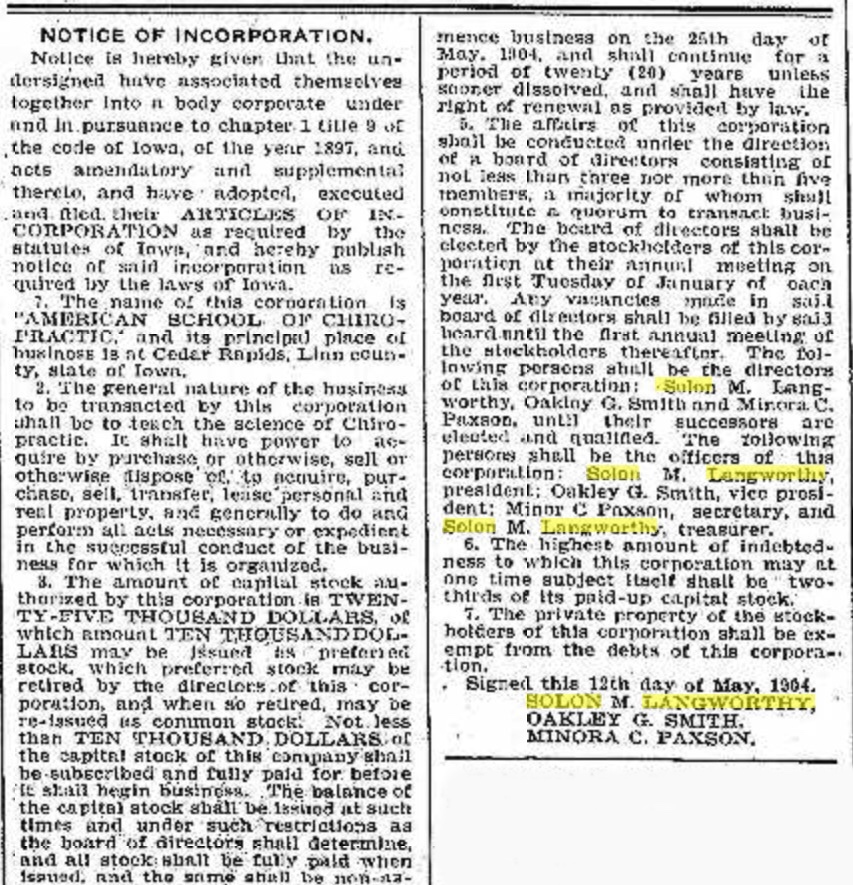
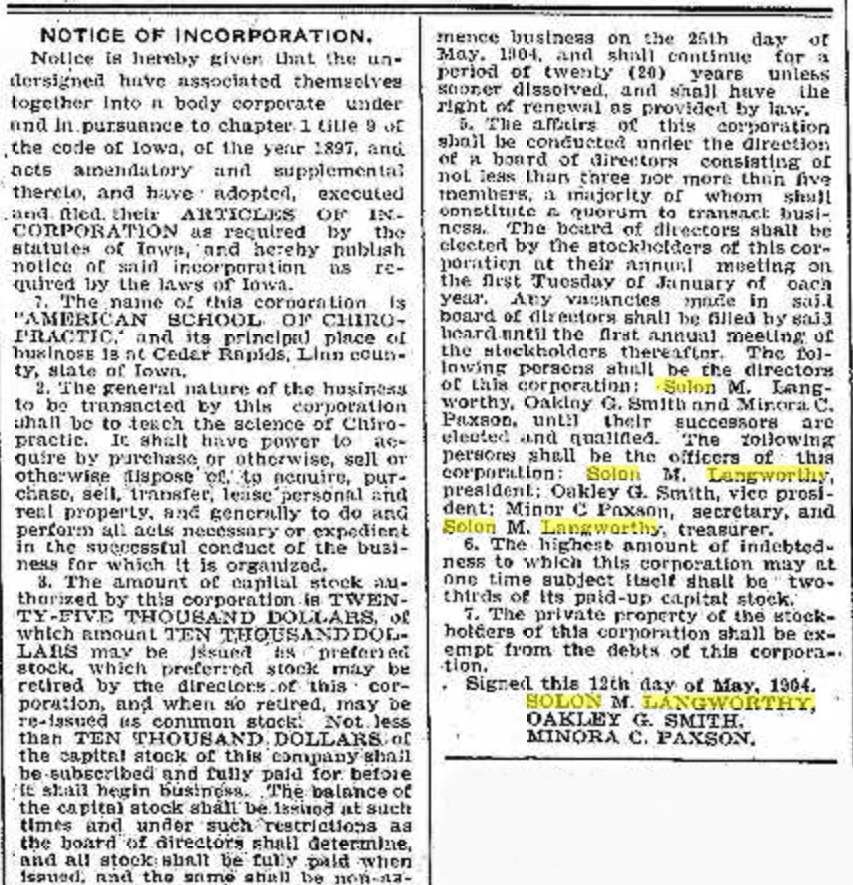
The papers were filed with the State of Iowa to form the American School of Chiropractic corporation and the proper public notice was placed in the Cedar Rapids newspapers (Figure 17).
Conclusion
Solon Massey Langworthy entered the field of chiropractic in 1901 and within a year established a thriving practice. He parlayed that success into other ventures, specifically the establishment of a first-rate chiropractic educational institution with a two-year broad scope curriculum. He was successful in attracting the best the profession had to offer in terms of executive and teaching abilities. Langworthy’s successes in these areas would be the start of an ongoing rivalry with the Davenport Palmers for the heart and soul of the profession.