INTRODUCTION
Neck pain is a significant global problem in society and is the most common musculoskeletal condition after low back pain.1–3 This condition is costly due to treatment costs, impaired work performance from presenteeism, and absenteeism.1,4,5 Neck pain disproportionately affects females and results in more years lived with disability.6–9 Risk factors for developing neck pain include being female, low social support, older age, history of previous neck pain, lack of physical activity, duration of computer use, working in awkward sustained postures, and high perceived stress level.10–14 Furthermore, neuromuscular disorders to include cervical radiculopathy, cervical spondylosis, and whiplash-associated disorders have all been identified as causes of neck pain.15–19
Acute and chronic neck pain have both been associated with significant impairments in postural stability and balance.2,20–22 Patients experiencing neck pain may suffer from some of the following leading to decreased functionality: sensory input disturbances,23–28 decreased localized muscle endurance,27,29,30 trouble regulating head motions,25,31 aberrant muscle activity,29,32–35 range of motion restrictions,29 and decreased visuomotor reaction time.20 These factors have been theorized to increase the likelihood of falls, fall-related injuries, and kinesiophobia amongst patients with neck pain.36–40
Spinal manipulation has been used as a modality to address neck pain in many studies1,41–44; however, there is conflicting evidence supporting the degree of its positive impact. Four systematic review articles from 2020 to present support the use of cervical manipulation to improve neck pain and disability.45–48 However, A 2019 systematic review article by Coulter et al found only low to moderate quality of evidence that spinal manipulation could reduce chronic neck pain and improve function compared to other interventions.49 Similarly the 2023 systematic review by Minnucci et al found very low to low certainty of evidence that cervical spinal manipulative therapy was superior to recommended interventions at improving pain and disability short-term with recent or persistent neck pain.50 Further studies of the impact of spinal manipulation for neck pain patients is warranted.
Research demonstrating a clear relationship between spinal manipulation and balance parameters is limited, with some research demonstrating a positive impact,51–62 and other research demonstrating no impact.63,64 Systematic reviews suggest manual therapy, to include spinal manipulation, may be able to improve balance.65,66 Evidence is suggestive that the decrease in localized pain intensity may be correlated with improvements in balance performance.65,66 In the 2020 systematic review by Kendall et al on the impact of spinal manipulation for individuals with musculoskeletal pain they found spinal manipulation could improve stability in the short-term, but not long-term.67 Cervical SMT for individuals with neck pain is believed to decrease localized pain, restore accurate proprioceptive communication between the neck and brain, reestablish mechanical range of motion, and enhance vestibular and visual integration.53,68–71
The main study objectives were: 1) Determine if SMT to the cervical spine of individuals with neck pain improves their dynamic balance Demonstrate that SMT to the cervical spine of individuals without neck pain resulted in no negative impact on dynamic balance. The hypothesis was: H1: SMT to the cervical spine of individuals with neck pain would acutely lower their neck pain level resulting in a small transient improvement in dynamic balance.
METHODS
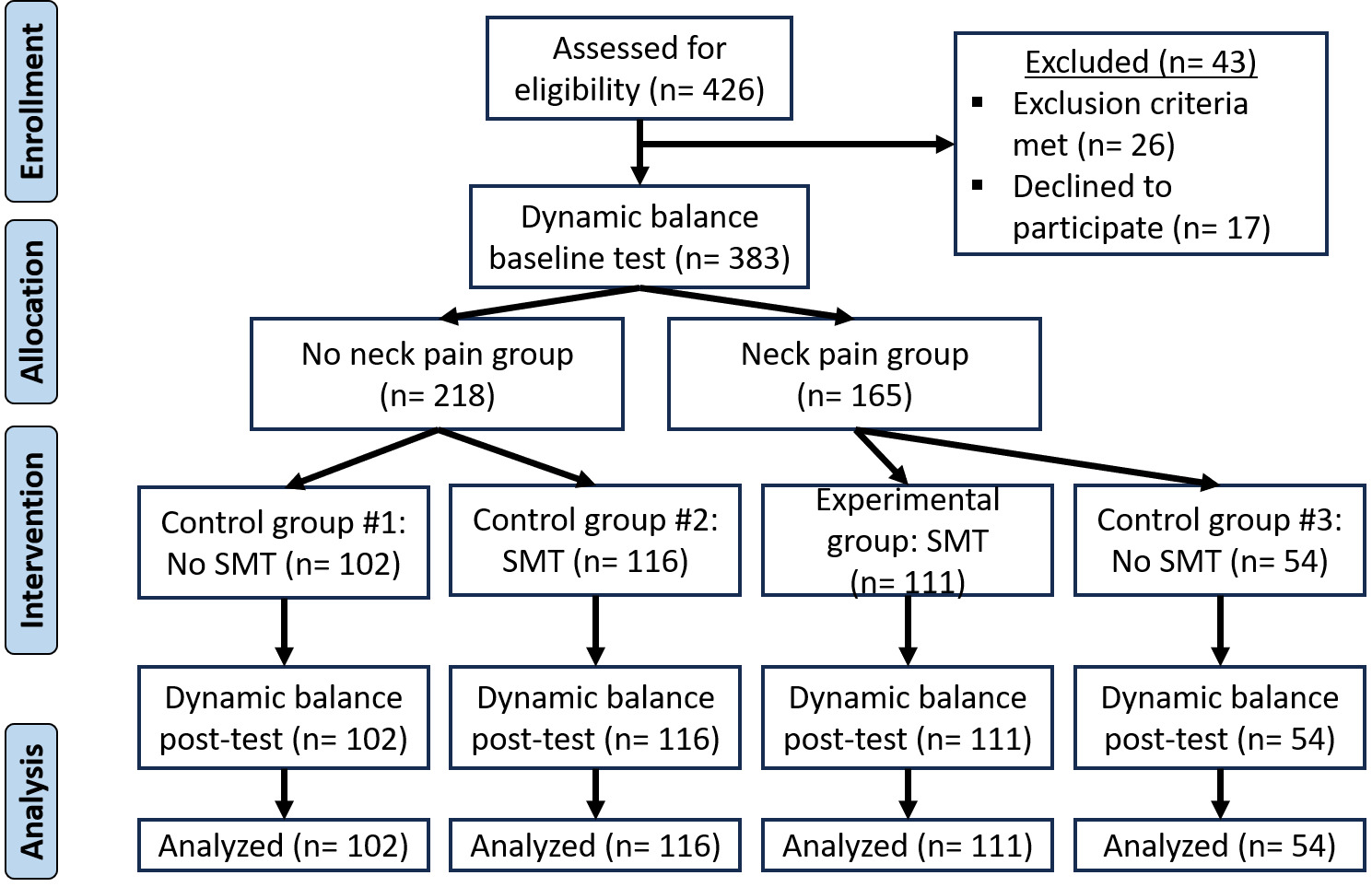
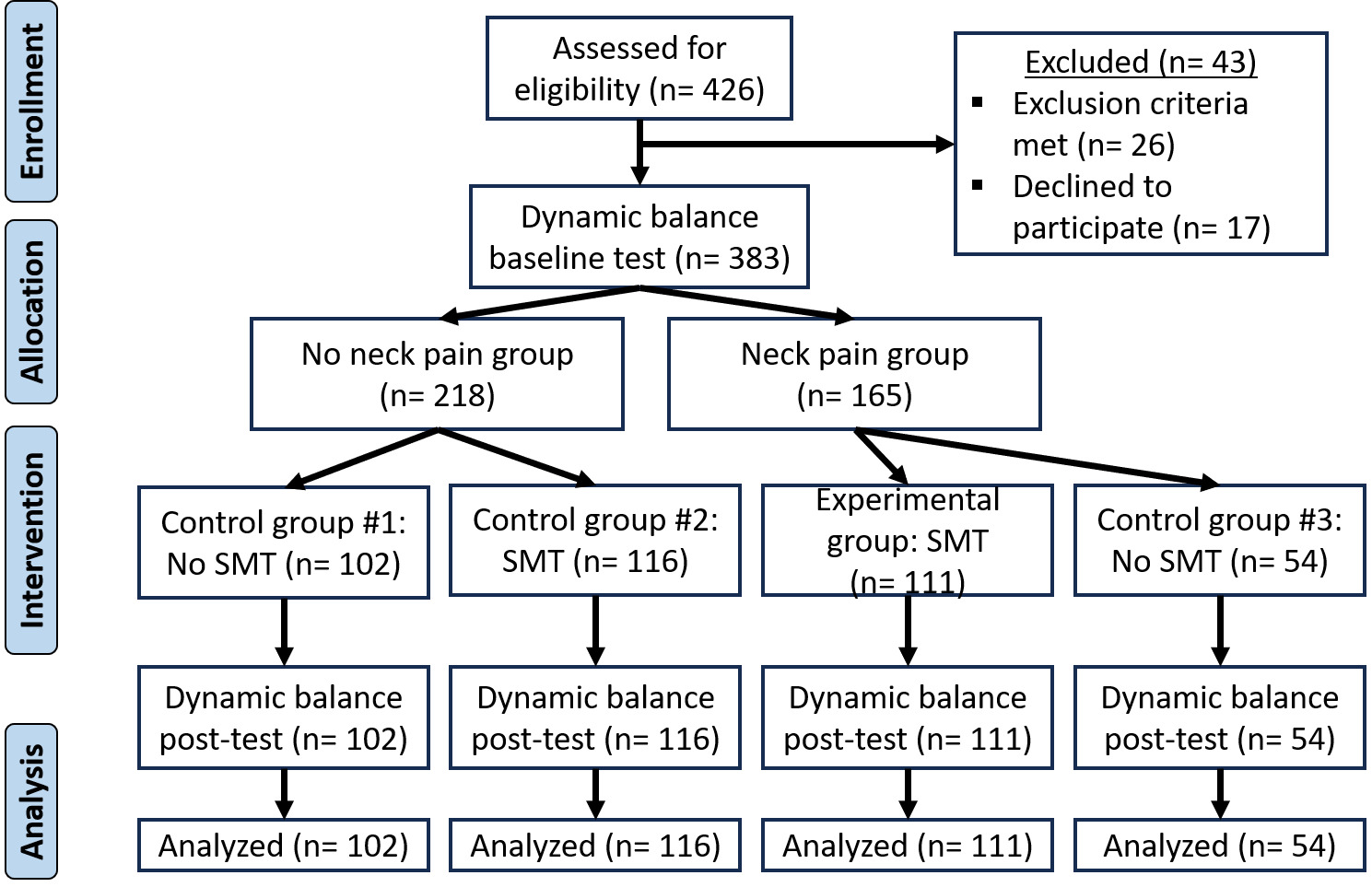
This randomized controlled trial was reviewed and approved by the college’s Institutional Review Board for human subjects in accordance with the Declaration of Helsinki. Multiple faculty from the first year of the chiropractic college program announced the research study was ongoing and to contact the research lead if students were interested. Once participants contacted the lead they were scheduled a timeslot to meet in the lab to review the informed consent. Chiropractic college students read and signed an informed consent and were then screened against study inclusion and exclusion criteria as shown in the study flow diagram (figure 1).
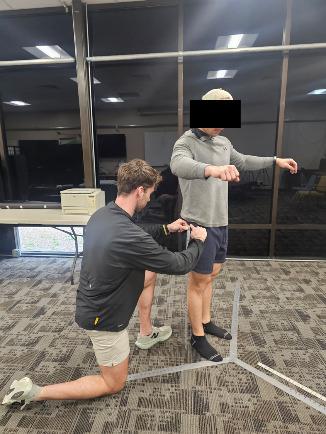
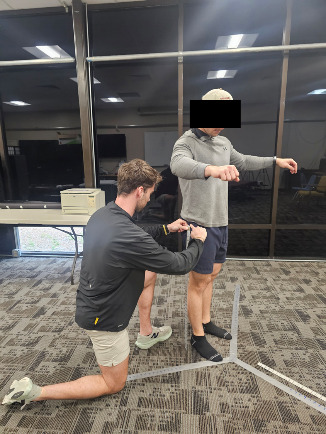
Study inclusion criteria were: be a chiropractic college student with or without self-reported neck pain. Minimum neck pain NRS for inclusion in the neck pain groups was a 1/10. Study exclusion criteria included pregnancy, spine or lower limb surgery, sprained ankle, or some other condition that would make standing still on 1 lower limb excessively difficult. Participants were screened against any contraindication to spinal manipulation (fractures, dislocations, bone cancer, joint infection, stroke, osteoporosis, ligamentous rupture, ankylosing spondylitis, rheumatoid arthritis, spine surgery, anticoagulant therapy, etc.). Next participants had their height, weight, age, neck pain level, neck pain duration (in months), and lower limb length recorded at baseline (figure 2).
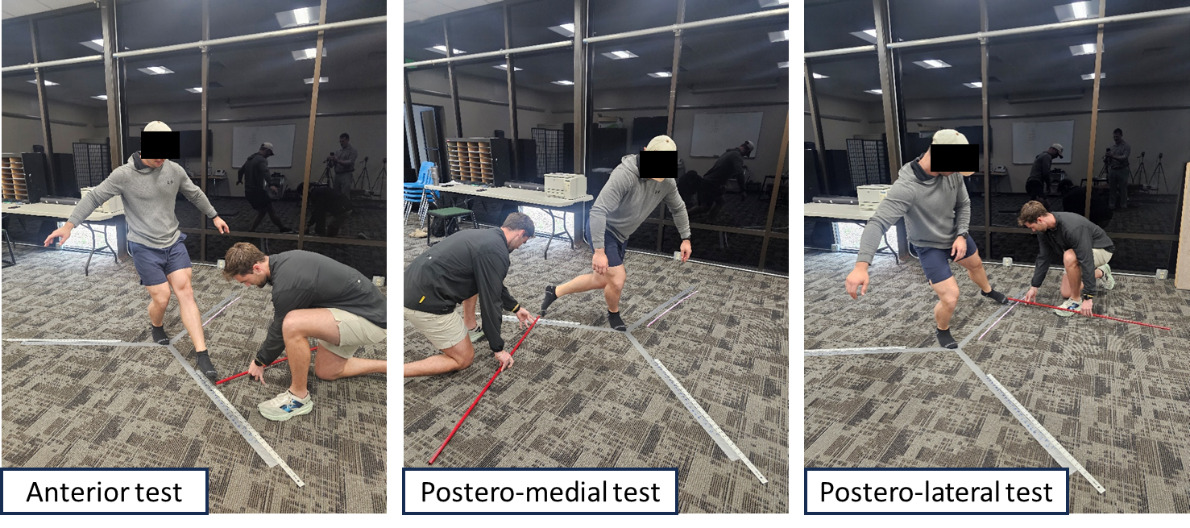
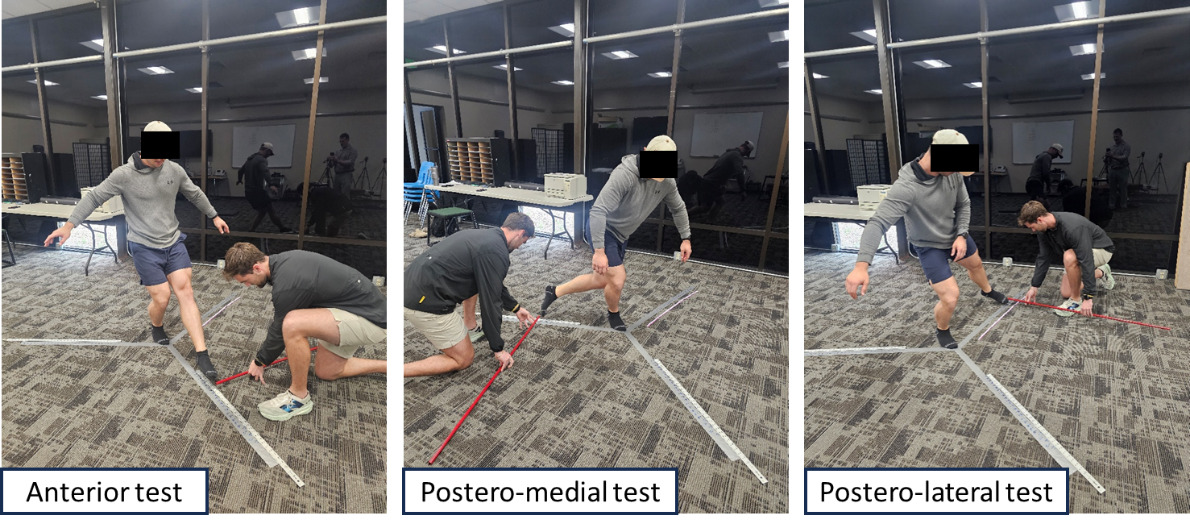
Then participants performed their baseline Y-balance test (figure 3) and their absolute reach distance (ARD)72 and relative reach distance (RRD)73 were determined.
Lower Limb Length Measurement
As shown in figure 2, the distance from the greater trochanter of the femur to the ground in centimeters was recorded for a lower limb using a metal yardstick ruler. This value represented the lower limb length value used in the relative reach distance (RRD) value calculations. The RRD formula normalized the reach distance of a person to their own lower limb length and is an additional way to present Y-balance test data.
Y-Test Measurement
For the Y-balance test two 4’ pieces of duct tape were placed on the floor at a 90-degree angle in relation to each other. A third 4’ piece of tape was then placed extending away from their intersection to create a Y-shape and form two 135-degree angles as shown in figure 3. A line was drawn at the center of the Y where participants would place the front of the toes of their standing lower limb for the Y-balance test. The participants’ other lower limb was picked up off of the ground. They were then instructed to reach as far as they could and hover their toes an inch off of the tape anteriorly, postero-medially, and postero-laterally without falling over. The distance in centimeters they were able to safely reach and hover over the tape on the ground was recorded in each direction. If they lost their balance that attempt would not count. This procedure was then repeated with the other lower limb to garner 6 total measurements. The ARD in centimeters was determined by the following formula: ARD = (Left Ant. Reach 1 + Left Post. Med. Reach 2 + Left Post. Lat. Reach 3 + Right Ant. Reach 4 + Right Post. Med. Reach 5 + Right Post. Lat. Reach 6)/6. The RRD formula used in this study is as follows: RRD = (ARD/limb length) * 100.
The Y-balance test and its variables ARD and RRD were chosen as a simple low-tech method of measuring dynamic balance pre and post for participants that has been used in several research studies.72,74–77 Individuals with neck pain have been shown to have impairments in their Y-balance test results.76,77 The test-retest reliability of the Y-balance test to measure dynamic balance is considered to be excellent, with intraclass correlation coefficients ranging from 0.93-0.95.78
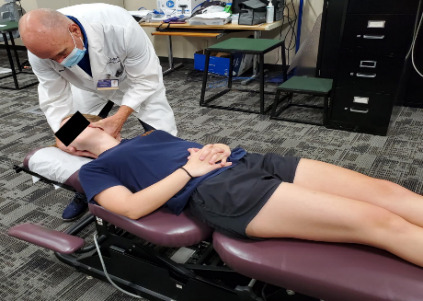
Next participants were randomized to either receive cervical spinal manipulative therapy (SMT) or no SMT (figure 4), yielding the 4 following comparative groups: 1) no neck pain- no SMT (control group 1), 2) no neck pain-SMT (control group 2), 3) neck pain-SMT (experimental group), and 4) neck pain- no SMT (control group 3). Randomization occurred using a pre-generated list that would designate incoming participants to receive SMT or no SMT.
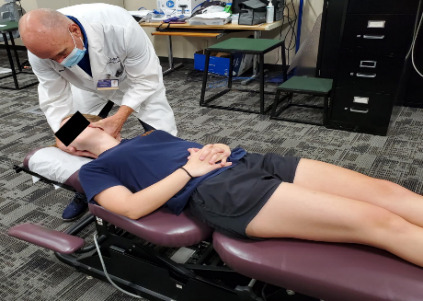
The no neck pain-SMT group was meant to show if there were any short-term deleterious effects of cervical spinal manipulation to individuals without neck pain. The neck pain-no SMT group was meant to be a direct comparison for the neck pain-SMT group on any possible SMT impact on dynamic balance. This study used a convenience sample with the intent of recruiting at least 50 participants per compared group of the 4 study groups over a 3-year data collection window and did not follow an a priori power analysis. Participants that did not receive cervical spine SMT waited standing for approximately 1 minute. After SMT or lack thereof, participants then performed a post-test Y-balance test identical to their baseline test. Data collection took place in a quiet research lab room with the ambient room temperature set at 76°F.
Cervical Spinal Manipulative Therapy Intervention
Cervical spinal manipulation was performed supine by a state-licensed chiropractic doctor with 25 years teaching experience at a chiropractic college. When the doctor performed the singular spinal manipulation on a participant in the neck pain group, he would determine the most hypomobile region of the cervical spine where the participant felt pain. For the no neck pain group the doctor would perform spinal manipulation at the most hypomobile cervical segment he could find. A diversified supine index pillar push manipulation as described by Bergmann and Peterson was performed on participants that were randomized to receive SMT (as shown in figure 4).79 The SMT used was a high-velocity low-amplitude thrust in a Posterior-to-Anterior, Medial-to-Lateral, and Superior-to-Inferior direction, performed with the participant in a supine position on an adjusting table (Ergostyle 2000; Chattanooga Group Inc, Hixson, TX).
Statistical Analysis
Pain group data and no pain group data were independently analyzed with a mixed-design two-way repeated measures ANOVA using SPSS version 20.0 (IBM, Armonk, NY, USA). The between-subjects factor had 2 levels: SMT or no SMT. The within-subjects factor was time with 2 levels (dynamic balance pre-test and dynamic balance post-test). Results were reported as mean + standard deviation (SD) unless otherwise specified. The alpha level of p < 0.05 was considered statistically significant for all measured variables.
RESULTS
Our team assessed 426 potential participants; 26 met the exclusion criteria and were excluded for the following reasons: pregnant,2 spine surgery,3 and lower limb surgeries.21 An additional 17 declined to continue with the study. Therefore, 383 were determined to be eligible and underwent the dynamic balance test at baseline. Of those, 165 reported neck pain and were randomized to either receive SMT (n=111) or to not receive SMT (n=54). Of 218 participants without neck pain, participants were randomized to either receive SMT (n=116) or to not receive SMT (n=102). See Figure 1 for additional details, and Table 1 for demographic information (sex, age, body mass index, height, and reported levels of pain). No participants in the study demonstrated any contraindications to spinal manipulation. Participant attributes are listed in table 1.
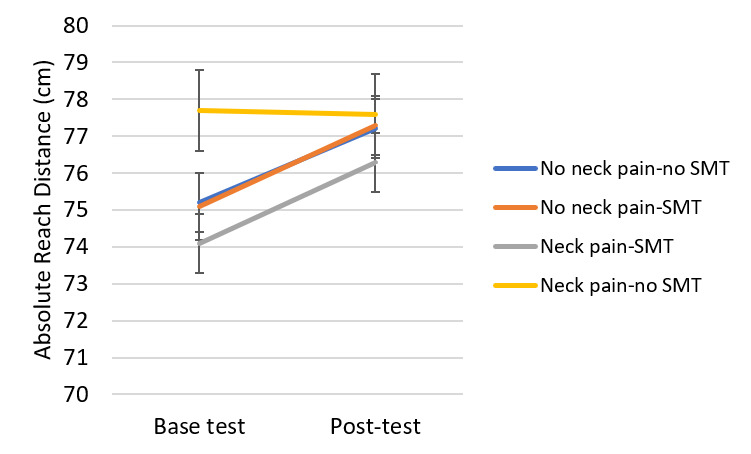
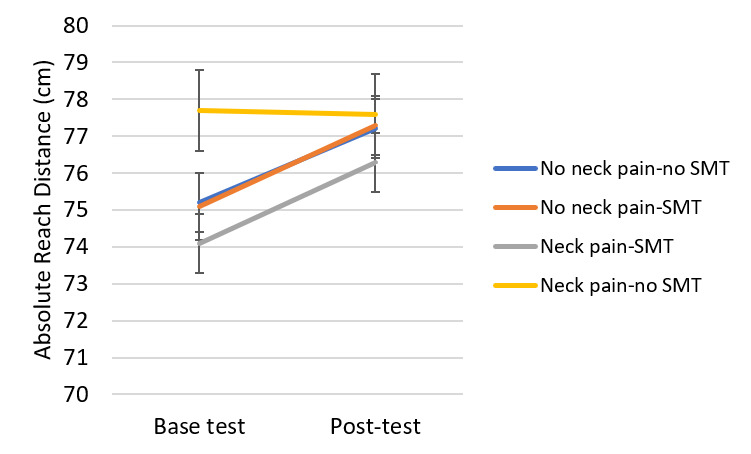
The statistical analysis of the study data revealed that 3 of the 4 study groups improved by post-test, but the neck pain-no SMT group did not. Skewness and kurtosis for ARD were excellent to acceptable for the no pain and pain groups. For the ARD no pain groups, Box’s test of equality of covariance matrices was not statistically significant, thus the assumption of equal covariance matrices was true. The test of within-subjects effects for the ARD no pain groups demonstrated time (baseline test to post-test results) was statistically significant (p=0.000, partial eta squared 0.276), but the interaction between time and group was not (p=0.540). Levene’s test of equality of error variances was not statistically significant for the ARD no pain groups. Thus, the assumption of homogeneity of variance was met for the test.
For the ARD pain groups, Box’s test of equality of covariance matrices was not statistically significant. The test of within-subjects effects for the ARD pain groups demonstrated time was statistically significant (p=0.000, partial eta squared 0.139) and the interaction between time and group was statistically significant (p=0.000, partial eta squared 0.145). Levene’s test of equality of error variances was not statistically significant for the ARD pain group.
There was a statistically significant interaction between time and group for ARD pain groups, F (1.0,163.0) = 27.54, p = .000. Follow-up tests of the estimated marginal means revealed that the neck pain-SMT group showed a significant increase from Pre (MEMM= 74.1 cm, SE= 0.8) to post (MEMM= 76.3, SE = 0.8) test, p < .001, whereas the neck pain-no SMT group showed no significant change.
Table 2 demonstrates the data trends overall. Figure 5 illustrates the estimated marginal means profile plots. No adverse events were noted in the study in response to SMT.
DISCUSSION
Three of the four groups increased their dynamic balance by post-test, but the neck pain-no SMT group remained relatively the same. The improvement in the no neck pain groups most plausibly were due to the “practice effect” seen in research experiments where the exact same test is repeated.79–82 The neck pain group that received SMT mirrored the trend in improvement that the no neck pain groups demonstrated at post-test. There appeared to be a short-term benefit for SMT for the neck pain group in that their data trends resembled that of the groups that did not have neck pain, but the improvement did not surpass the likely practice effect seen from test repetition in the no pain groups. The minimally clinically important difference (MCID) for the Y-balance test suggests a normalized reach distance must exceed a 3.5% threshold to detect meaningful clinical improvements following injury.83 None of the study groups demonstrated this level of improvement by post-test.
Existing neck pain treatment guidelines support the use of spinal manipulation to lower the degree of neck pain and improve function.84–87 The 2020 treatment guideline for neck pain by Childress and Stuek state that spinal manipulation may provide short-term reduction to pain, but its long-term benefit is unclear.85 The guidelines suggest that SMT in addition to other modalities is more effective than SMT alone.84,87
Research findings suggest that SMT may be able to positively affect balance of patients with neck pain. Strunk et al engaged in a feasibility study of the impact of spinal manipulation on balance with 19 participants. Most patients improved their balance and showed reductions in dizziness and neck pain.53 Ndetan et al analyzed data from the 2008 National Health Interview Survey and found that the respondents with head or neck trauma, those reporting neurological muscular conditions, and those 65 years and older perceived their balance or dizziness problems improved with chiropractic treatment.54 Vining et al performed a study involving 110 active duty military members and found that four weeks of chiropractic care resulted in improvements in balance with eyes closed.55 Our study adds to the very limited volume of research on the relationship between cervical spine manipulation for neck pain and balance parameters. This provides normative data future studies on this topic can be compared against involving chiropractic patients.
The benefit of SMT on balance may be small and require future researchers to approach the assessment through varied designs to include analyzing the impact of SMT as a treatment for neck and low back pain combined. Jørgensen et al demonstrated that cleaners with concomitant neck and low back pain were most likely to express postural instability than participants with only neck or low back pain.88 Another consideration is to use control methods to stress the vestibular system further in response to balance testing to magnify possible improvements. The ocular system has been found to contribute significantly to balance and can overcome impairments in proprioception to a degree.89 By having research participants close their eyes during various types of balance testing it can place the vestibular system under greater stress making improvements in some dimensions of balance parameters more evident.25,88,90,91
Lastly, measuring cervical joint position sense (JPS) or other more technologically advanced methods of analyzing balance may be a more optimal way to measure the impact of cervical SMT on balance parameters. Cervical JPS is defined as the ability to reposition the head without using visual input.92 It can be tested with 3D motion analysis technology. Patients with persistent whiplash related-pain and neck trauma have been shown to have significant errors in JPS.93–95
Strengths and Limitations
One limitation of this study is that it did not set a particular cut-off limit for inclusion for the neck pain group (e.g., only include participants with a neck pain of 4 or greater). Research shows greater impairment in balance with higher neck pain levels.96,97 The degree of neck pain, 2.7 in this study in the SMT group, may have been too low to significantly have been impacted by SMT in terms of balance change. Actual patients in a clinical setting on average would be older and may have higher levels of degeneration, suboptimal balance and stability, and/or comorbidities.
Another limitation is that since the participants in the study were chiropractic college students they typically would receive SMT more often than the general population. This could have negatively impacted the external validity of this study. SMT occurred between the hours of 7-8 AM for all participants that were designated to receive SMT. Thus, it occurred after a night of rest. A related limitation of this study with using chiropractic college students is expectancy effects cannot be ruled out. Engaging in a similar study with the general population may have resulted in differing results.
A third limitation of the study was recruitment imbalance. Initially when the study began a pre-generated randomization list was developed that would determine if an incoming participant would receive SMT or no SMT. However, since recruiting for the study was open for a few years more participants were recruited in the neck pain SMT group instead of the no neck pain SMT group.
Furthermore, this study did not follow an a priori power analysis.
Future Directions
Some possible future directions that can extend from this study would be to 1: perform a similar study in multiple chiropractic doctors’ offices to enhance external validity and pool the findings, 2: perform a similar study in a research lab setting using participants that may be at higher risk for falls (e.g., older adults),98,99 and 3: perform a similar study involving cervical and lumbar SMT for participants with pain in both regions to see if lowering pain in both areas would result in greater impact in dynamic balance.
CONCLUSION
Dynamic balance did not improve to a clinically significant level following one-time cervical SMT for chiropractic college students with low levels of neck pain. SMT to the cervical spine of chiropractic college students with neck pain did have a small transient positive impact on dynamic balance in relation to the no SMT pain group, but the impact did not reach MCID. These findings are suggestive that neck pain participants that received SMT slightly improved their balance in a similar fashion as individuals without neck pain at post-test. Future studies are warranted to corroborate these findings on the general population to determine the one-time and repeated SMT impact on balance parameters.
Further this study serves two additional functions. One, it describes a low-tech way to measure balance that could be replicated easily by other researchers in a clinical setting. Two, it provides normative data that general public neck pain patients could be compared against in future chiropractic SMT studies.
FUNDING AND CONFLICTS OF INTEREST
This study received no funding, and the authors declare no conflicts of interest.