INTRODUCTION
Healthcare systems across the world are experiencing strain driven by rising chronic disease prevalence, escalating costs, widening inequities, and persistent gaps in patient engagement. The United States exemplifies this crisis. Despite investing more in healthcare than any other nation, outcomes remain comparatively poor, particularly for chronic musculoskeletal conditions, mental health, and lifestyle related diseases. (1-3) These trends reflect an overreliance on reactive, disease centered care models that insufficiently address behavioral, social, and environmental determinants of health.
Musculoskeletal pain, one of the most common and disabling health conditions globally, illustrates the limitations of traditional biomedical approaches. Patients often cycle through fragmented care pathways involving primary care, specialty care, imaging, pharmacologic management, and procedural interventions, frequently without meaningful improvements in function or quality of life. This fragmentation contributes to unnecessary utilization, patient frustration, and provider burnout. Clinicians across disciplines report moral distress as they attempt to deliver person-centered care within systems that prioritize throughput over therapeutic relationships and long-term wellbeing.
Whole Health has emerged as a transformative response to these systemic challenges. Originating within the Veterans Health Administration, Whole Health reframes clinical care around the individual’s Mission, Aspiration, and Purpose (MAP), emphasizing empowerment, intrinsic motivation, and whole person flourishing. (4) Rather than centering care on disease labels, Whole Health centers care on what matters most to the patient, integrating lifestyle medicine, behavior-change science, complementary and integrative health (CIH), and evidence-informed clinical care within a coherent, person-centered model.
Chiropractic is uniquely positioned to advance Whole Health in community settings. Chiropractors serve as conservative, nonpharmacologic, first-contact providers for musculoskeletal conditions. They maintain longitudinal therapeutic relationships, deliver exercise and rehabilitation, provide lifestyle counseling, and operate within practice environments conducive to integrative whole person care. Recent work in chiropractic education demonstrates that Whole Health principles can be systematically embedded within chiropractic curricula and institutional culture, establishing a foundation for broader professional adoption. (5) Extending these concepts into clinical practice represents the next essential step in chiropractic’s contribution to Whole Health transformation.
The purpose of this paper is to present the Whole Health Chiropractic Implementation Framework (WHCIF), a conceptual model describing how Whole Health can be operationalized within everyday chiropractic practice. (6) Conceptual frameworks play a critical role in clarifying theoretical structure and guiding practical application within complex systems. (7) The framework integrates theoretical foundations, clinical workflow design, interprofessional collaboration, lifestyle medicine, behavior change science, and community engagement into a unified model that can guide clinicians, educators, researchers, and healthcare leaders.
DISCUSSION
Model Description
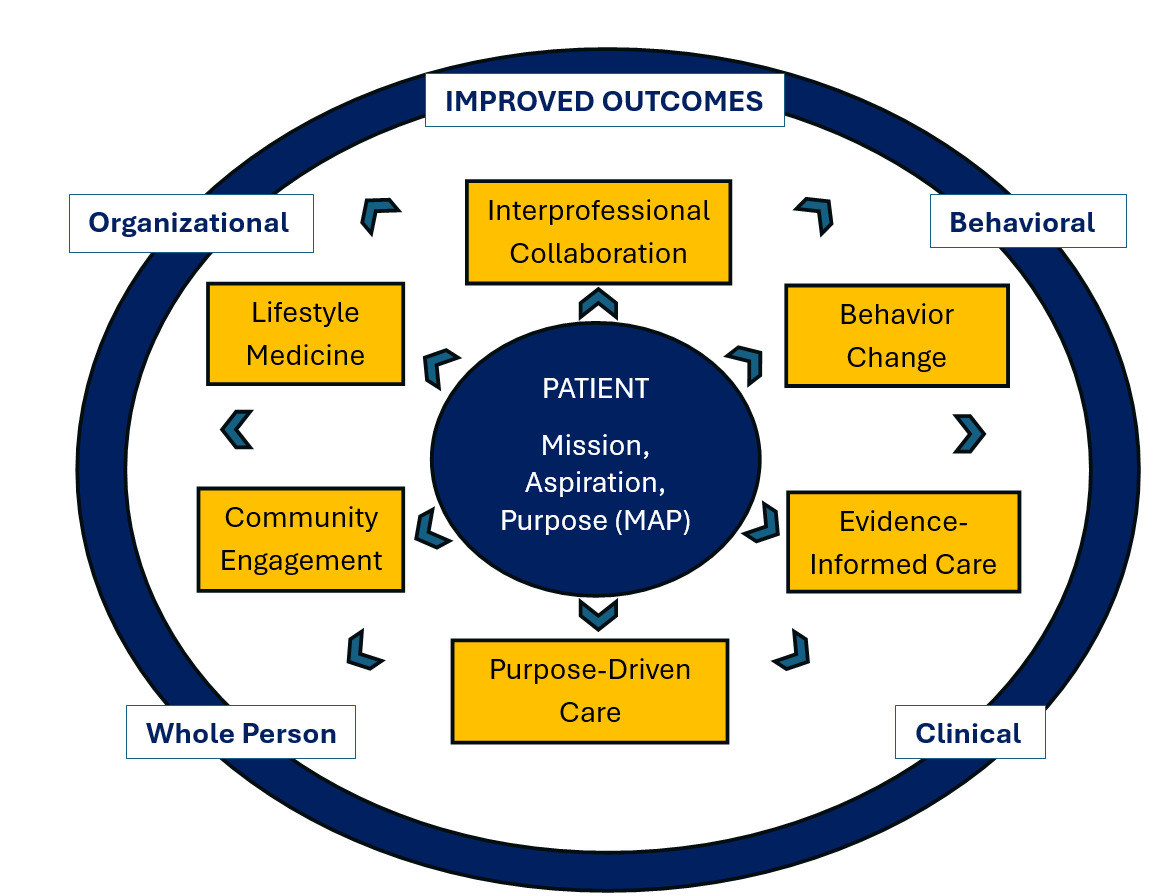
The WHCIF is a conceptual model designed to integrate Whole Health principles into chiropractic practice. The model centers care on the patient’s MAP, which serves as the motivational anchor for clinical decision-making, behavior change, and long-term engagement. Surrounding MAP are 6 interdependent pillars that operationalize Whole Health delivery within chiropractic settings: Purpose-Driven Care, Lifestyle Medicine, Evidence-Informed Conservative Care, Behavior Change, Interprofessional Collaboration, and Community Engagement.
Purpose-Driven Care aligns clinical goals with meaningful life activities identified through MAP conversations. Lifestyle Medicine incorporates physical activity, sleep, stress management, nutrition, and social and nature connection- domains strongly associated with musculoskeletal and whole-person health. Evidence-Informed Conservative Care includes manual therapy, rehabilitation, movement coaching, and patient education.
Behavior Change integrates principles from self-determination theory (SDT) and motivational interviewing (MI) to strengthen intrinsic motivation and support sustained adherence. Interprofessional Collaboration expands the clinic’s capacity through coordination with massage therapy, acupuncture, physical therapy, mental health services, and other CIH providers. Community Engagement connects patients with group classes, social support resources, and wellness activities that reinforce Whole Health principles.
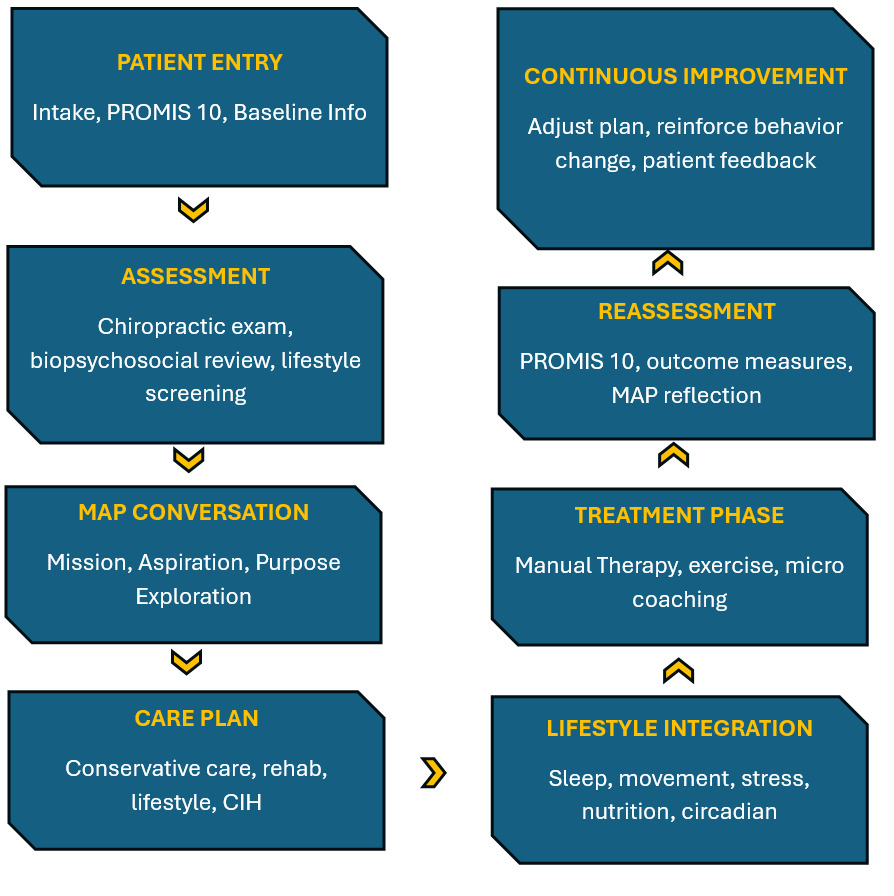
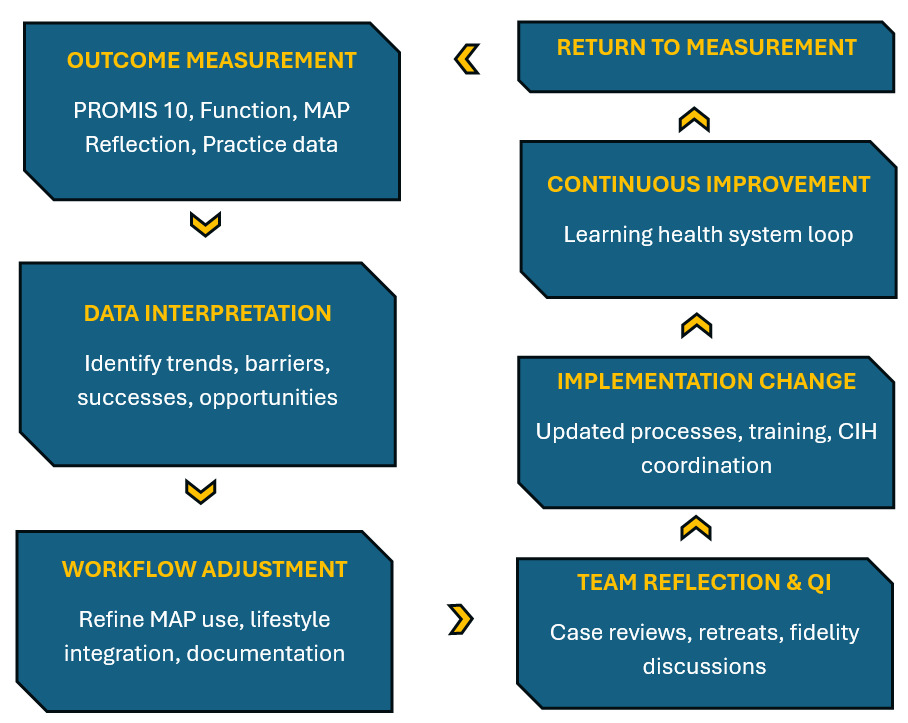
WHCIF also includes a conceptual clinical workflow that begins with patient entry and intake, progresses through assessment and MAP exploration, and continues through care planning, lifestyle integration, treatment, reassessment, and continuous improvement. Figures and tables included in this manuscript illustrate the conceptual architecture of the model (figure 1 and table 1), the clinical workflow (figure 2 and table 2), implementation timelines (figure 3 and table 3), and recommended outcome measures (table 4). These visual elements serve as theoretical guides for how WHCIF can be implemented in chiropractic practice.
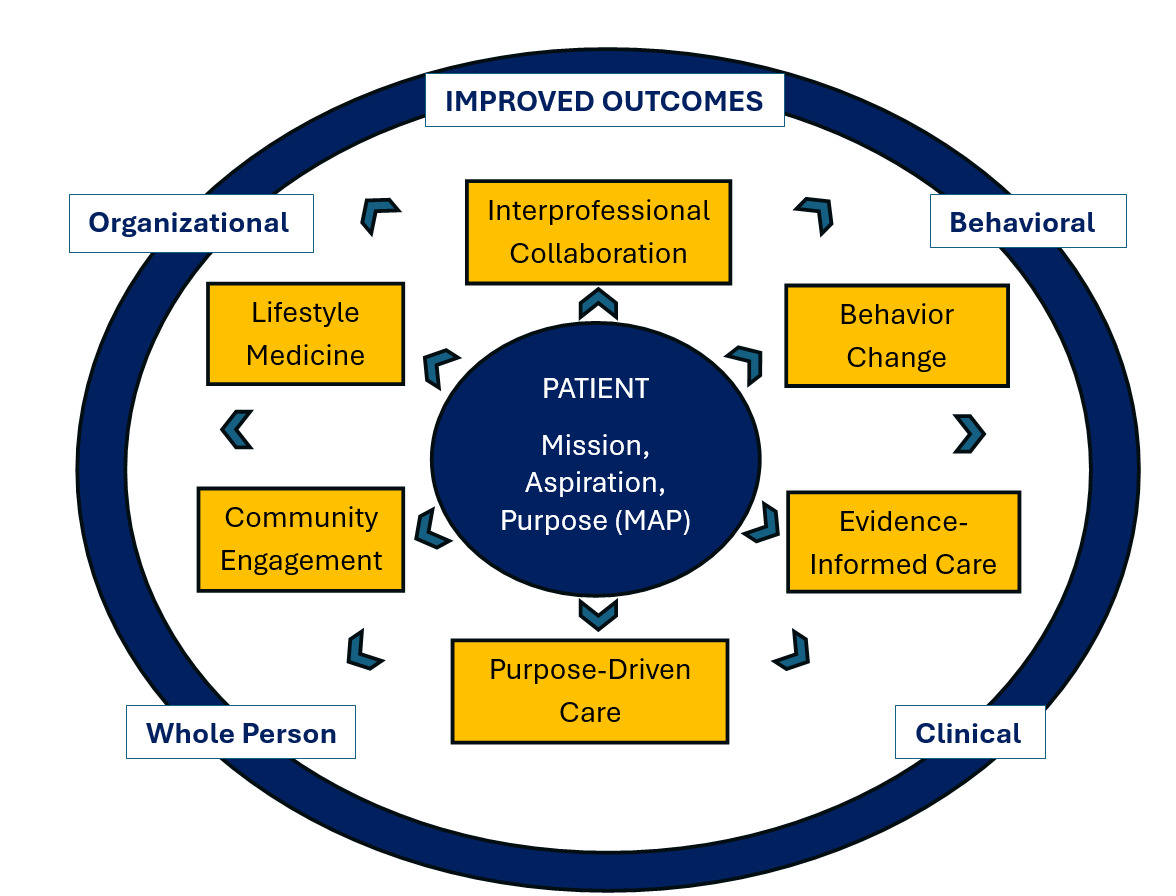
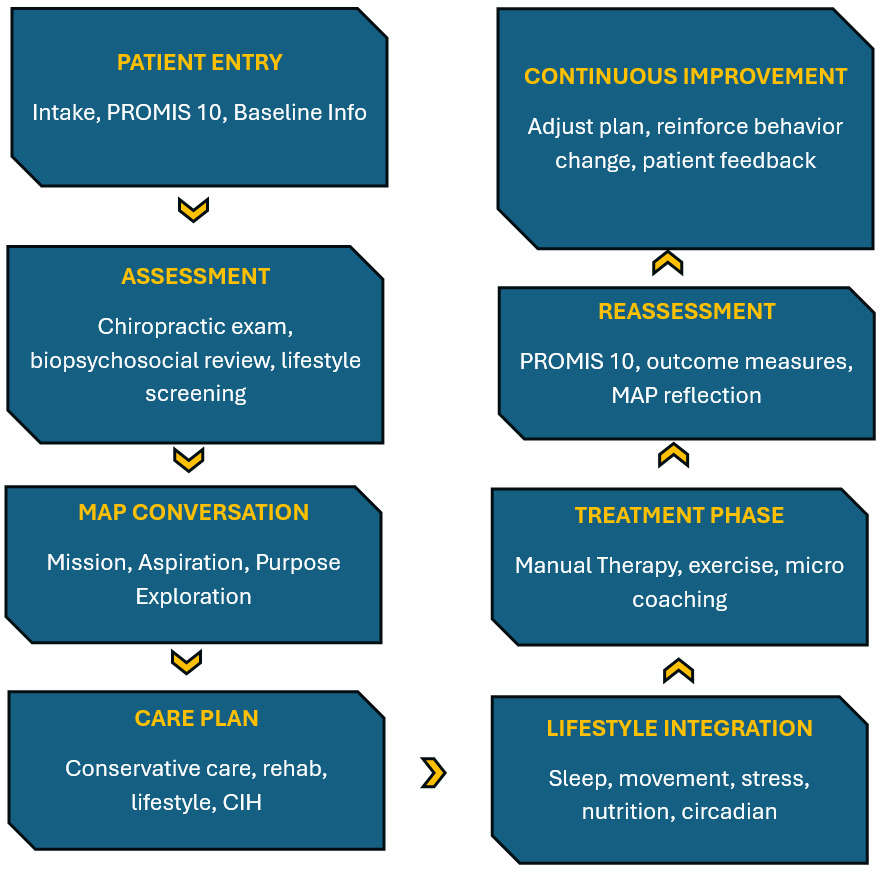
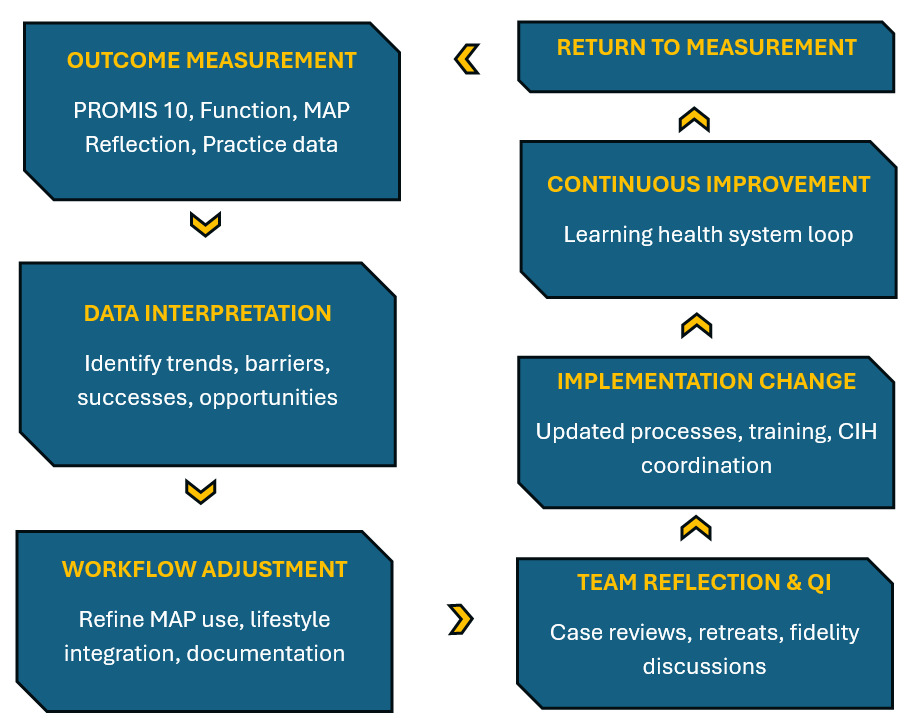
The Whole Health Chiropractic Implementation Framework (WHCIF) provides a structured model for integrating Whole Health principles into chiropractic practice. By centering care on the patient’s Mission, Aspiration, and Purpose (MAP), the framework aligns chiropractic’s conservative, movement-based, patient-centered orientation with national initiatives emphasizing empowerment, lifestyle, and whole-person flourishing. Existing literature supports the model’s core components, including purpose-driven care, lifestyle medicine, behavior change science, and interprofessional collaboration.
Implementation of WHCIF requires organizational readiness, leadership engagement, and cultural alignment. Gradual implementation, rapid-cycle testing, and fidelity monitoring can support successful integration, consistent with established implementation frameworks such as RE-AIM (Reach, Effectiveness, Adoption, Implementation, Maintenance). (8) The model’s adaptability allows clinics to tailor implementation based on resources, staffing, and patient needs, reflecting principles described in PRISM (Practical, Robust, Implementation, Sustainability, Model). (9)
Lifestyle medicine domains such as physical activity, sleep, circadian rhythm, stress management, and nutrition are well-established determinants of musculoskeletal and whole-person health. (11) Chiropractors frequently address these areas informally; WHCIF provides a structured method that enhances consistency and documentation. Behavior change science further strengthens the model. Self-Determination Theory and Motivational Interviewing have demonstrated effectiveness in improving adherence and promoting long-term behavior change across multiple health contexts. (10,12) Chiropractic’s high-frequency visits create ideal conditions for repeated micro-interventions that reinforce progress and refine goals.
Interprofessional collaboration is also supported by evidence. Integrative health models within the Veterans Health Administration have shown that coordinated care involving chiropractic, acupuncture, massage therapy, mental health services, and lifestyle programs can improve outcomes and patient satisfaction. (13) These findings reinforce the value of WHCIF’s collaborative structure.
The model’s emphasis on provider wellbeing is similarly grounded in empirical research. Shanafelt and Noseworthy reported a 7% reduction in physician burnout following organizational changes that prioritized wellbeing, despite an 11% national increase during the same period. (15) This demonstrates the potential impact of structured wellbeing initiatives, such as those embedded within WHCIF’s learning-health-system approach.
CONCLUSION
The WHCIF offers a coherent, theoretically grounded approach for operationalizing Whole Health within chiropractic practice. By placing the patient’s MAP at the center of care, the framework provides a practical structure for integrating lifestyle medicine, evidence-informed musculoskeletal care, behavior change strategies, and interprofessional collaboration into routine clinical workflows.
Chiropractic’s conservative orientation, emphasis on movement-based interventions, and longitudinal therapeutic relationships make the profession well suited for Whole Health adoption. WHCIF supports this alignment by offering clear guidance for MAP conversations, care planning, outcome measurement, and continuous improvement within a learning-health-system environment.
Future research should examine WHCIF’s feasibility and impact across diverse practice settings. Pragmatic trials, multicenter studies, fidelity assessments, and cost-effectiveness analyses will be essential for validating the framework and informing broader implementation. WHCIF provides a foundation for advancing Whole Person Health within chiropractic practice and contributes to the national movement toward purpose-driven, lifestyle-oriented, integrative care.
Conflict of Interest
The author declares no conflicts of interest related to the content of this manuscript.
Funding
This research received no specific grant from any funding agency in the public, commercial, or not-for-profit sectors.
Disclaimer
The views and opinions expressed in this manuscript are those of the author and do not necessarily reflect the official policy or position of Southern California University of Health Sciences.