INTRODUCTION
Chiropractic is one of the most used alternative health care systems for pregnancy-related complaints.1 Among the various conditions associated with pregnancy, pubic symphysis pain (PSP) is a frequent complaint. It is characterized by pain and dysfunction at the pubic symphysis.2 During pregnancy, more than two-thirds of women experience low back pain, and one-fifth experience pelvic pain.3 The symptoms can range from mild to severe debilitating pain.4 The condition can result in considerable physical and emotional distress, affecting a patient’s ability to perform daily activities, maintain mobility, and obtain adequate sleep.5,6 PSP can negatively impact a patient’s quality of life as it is often exacerbated by weight-bearing, walking, climbing stairs, and other daily activities.2
Although this condition causes considerable pain and dysfunction, it is often underreported and underdiagnosed.7 The pain can be due to skeletal changes such as exaggerated spinal curves and ligament laxity as the pregnancy progresses.1 Hormonal relaxation of the pelvic ligaments along with these altered biomechanics during pregnancy can cause potential dysfunction of the fibrocartilaginous pubic symphysis.1,2,8 Other factors, including metabolic, enzymatic, traumatic, and degenerative changes, have also been implicated as a cause of this condition.7
Without treatment, symptoms tend not to be resolved until the baby is born.9 Conventional management of PSP often includes rest, physical therapy, and supportive devices, such as sacroiliac belts.6 Studies from the osteopathic and chiropractic professions have shown more favorable outcomes in labor and delivery, as well as decreased pain during pregnancy, with spinal manipulation.1 Chiropractic care, particularly the Webster Technique, offers a low-risk, conservative approach to managing PSP.5
This case highlights the successful application of the Webster Technique in managing PSP in a pregnant patient. It also demonstrates its potential as an addition to prenatal care, contributing to the growing body of evidence supporting low-risk alternative treatments.
CASE REPORT
A 28-year-old gravid female, 21 weeks gestation, came in on crutches with complaints of anterior pelvic pain localized to the pubic symphysis region. The pain began earlier that day and had worsened over the course of that day. The patient rated the pain as 8/10 (0 being no pain and 10 the worst pain experienced) on the Visual Analog Scale and noted it was aggravated by walking, standing, and rolling over in bed. She described the pain as sharp with movement and a constant dull ache. She reported significant difficulty performing daily activities and relied on crutches for mobility. She had not tried any other treatments or seen any other healthcare professionals for this condition.
Clinical Findings
She had an antalgic gait and had significant difficulty bearing weight on her lower extremities due to pain. Her temperature was 97.8 degrees F, heart rate 75 bpm, blood pressure 126/64 mm Hg, resting respiration 16 bpm, height 66.5 in, weight 232.4, and her BMI was 36.64. There was marked tenderness to palpation over her right pubic symphysis and sacroiliac joint, indicative of localized inflammation and irritation. Range of motion assessment demonstrated limited and painful pelvic mobility, particularly during hip abduction. Iliopsoas, hip adductors, hip abductors, and hip flexor strength tests produced pain with hip flexion against resistance. Orthopedic tests, including Patrick’s (FABER) test and the active straight leg raise (aSLR) test, were positive and provoked the patient’s symptoms, indicating possible sacrum and lumbar disc involvement. Functional evaluation highlighted difficulty maintaining pelvic stability during weight-bearing tasks. Further examination identified decreased fluid motion in the right sacroiliac joint and hypertonicity of the right psoas muscle.
Diagnosis and Management
She was diagnosed with symphysis pubis dysfunction (SPD) with associated lumbar muscular hypertonicity. She was prescribed a treatment plan consisting of daily visits for 1 week, followed by twice-weekly visits for 3 weeks. Informed consent included the options to pursue other approaches, including pelvic floor therapy and a sacroiliac support belt. She declined the alternatives and chose to begin chiropractic care.
Therapeutic intervention
The chiropractic intervention focused on applying the Webster Technique, a gentle, pregnancy-specific approach, complemented by supportive measures to address the patient’s pain and dysfunction. The pelvis was assessed using the sacral leg check. Specific HVLA adjustments to the pelvis and sacrum were performed with the assistance of the drop table. The treatment also included targeted soft tissue work to address tension in the round ligament, which contributed to uterine strain and pelvic discomfort. Attention was given to the hypertonicity of the right psoas muscle through myofascial release techniques, helping to alleviate associated muscular tension. Additionally, specific adjustments were given to the pubic symphysis with the Activator, if indicated. The patient was advised to modify activities to minimize symptom exacerbation, including avoiding unilateral weight-bearing activities. Over the course of 3 weeks, she received 10 chiropractic adjustments, with progress closely monitored. Each session focused on reassessing the pelvic alignment, addressing new or persistent areas of tension, and reinforcing the patient’s ability to perform daily activities without discomfort.
Follow-up outcomes
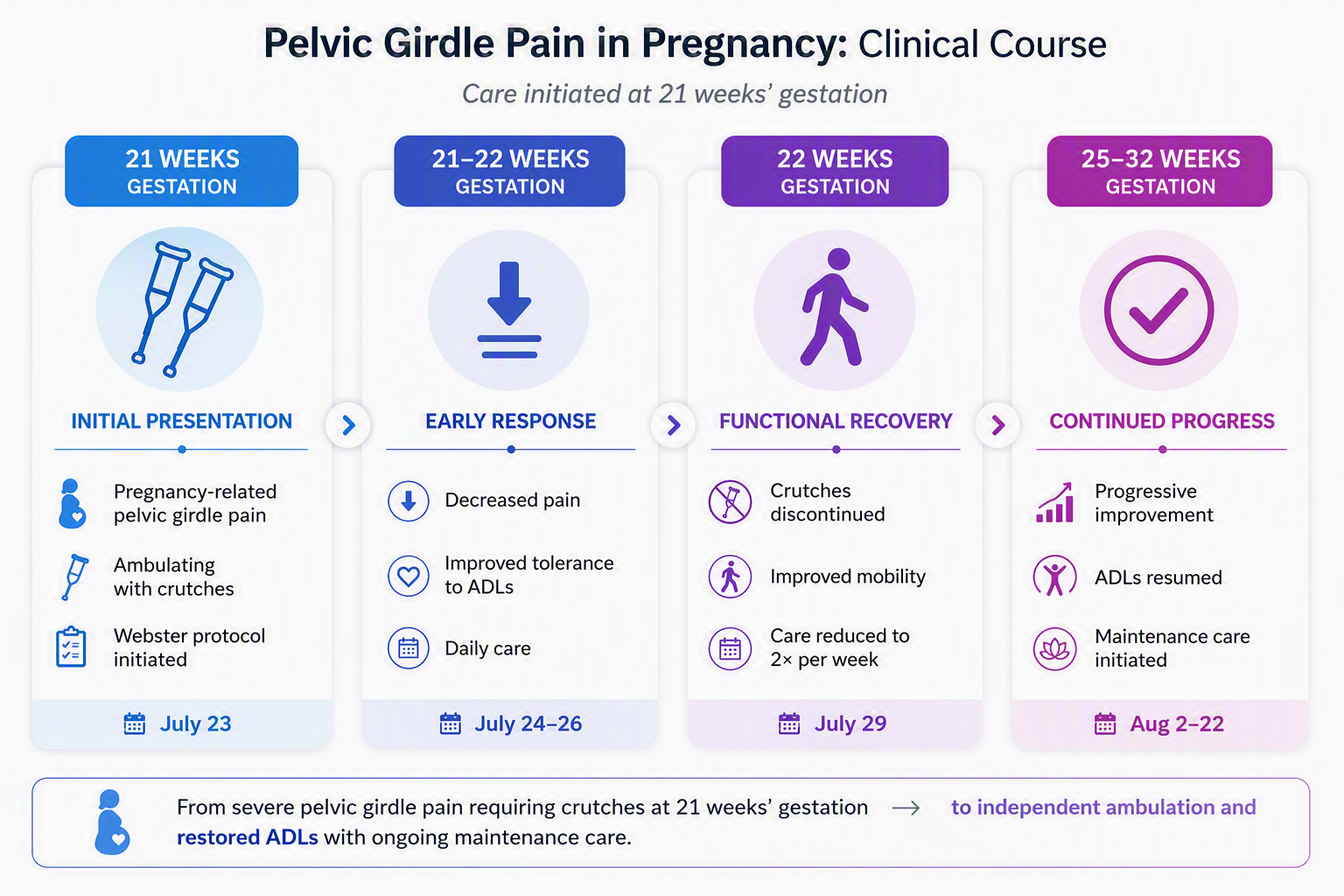
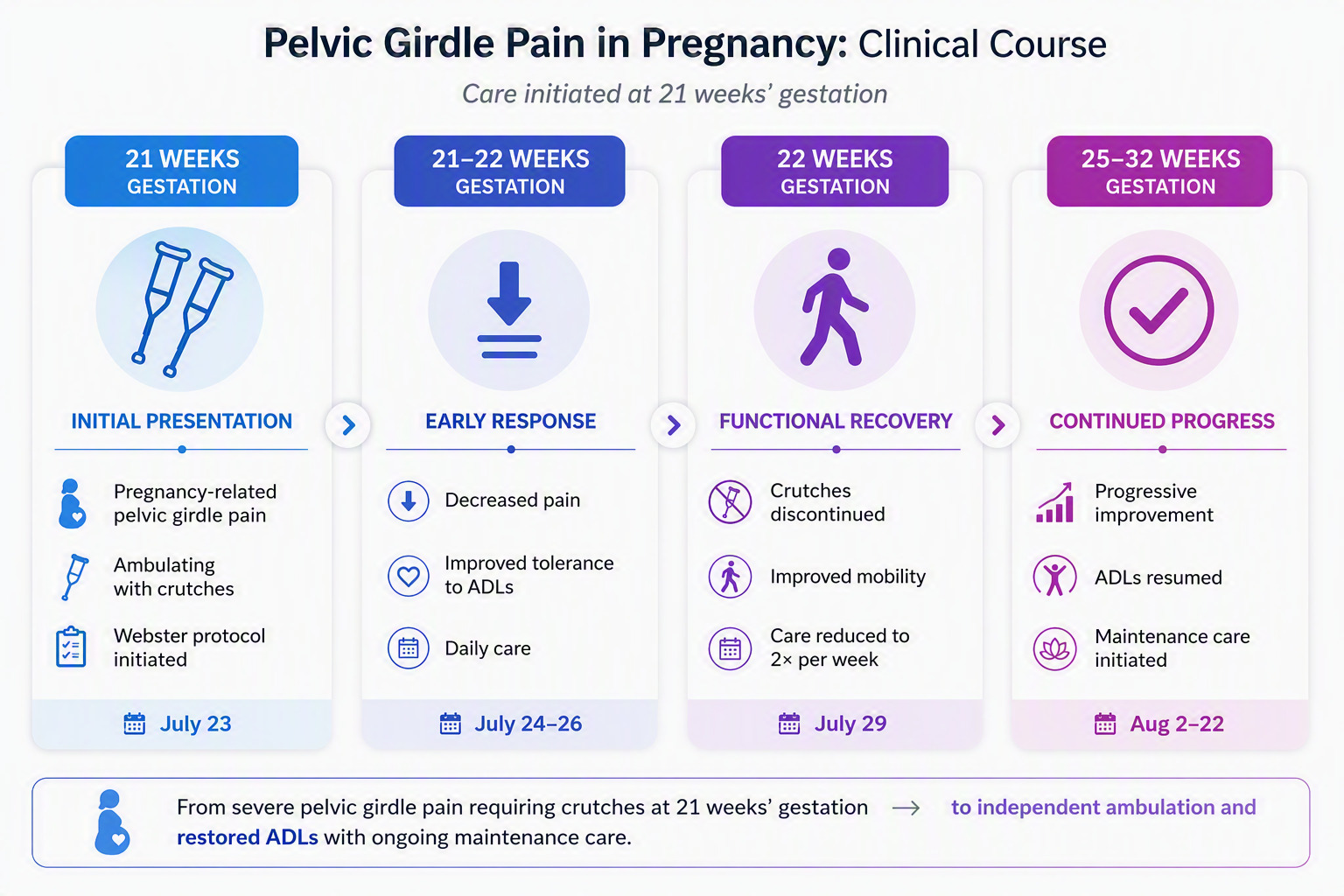
By the end of the 3 weeks, she reported significant improvement in symptoms. Pain levels decreased to 1/10 on the VAS, and the patient was able to walk without crutches. Functional mobility improved, with a return to normal walking and daily activities without discomfort. A follow-up examination showed complete resolution of pubic symphysis pain, improved pelvic stability, and restored range of motion. Weekly chiropractic adjustments were recommended to monitor and maintain alignment throughout the pregnancy. See figure 1.
DISCUSSION
This case demonstrates that chiropractic care, particularly the Webster Technique, may have alleviated pubic symphysis pain in this pregnant patient.
The condition is diagnosed using a combination of palpation over the joint and surrounding structures and specific orthopedic tests (Trendelenburg’s and Lasegue’s signs and Patrick’s FABER test).3 The positive findings in this case indicated sacrum misalignment (through Webster’s analysis) and weak adductor muscles. We were able to rule out lumbar and hip involvement through orthopedic tests.
Management of PSP remains prognostically uncertain. Traditionally, exercises and support belts are often given to patients for the management of symphysis pubis dysfunction. A 2005 study, however, indicated that the sacroiliac support belt did not significantly reduce the patient’s symptoms.2 A study from 2015 showed osteomanipulative therapy may provide pain relief from pregnancy-related low back and pelvic pain. A Cochrane review combined 34 RCTs, examining 5121 pregnant women at 12-38 weeks gestation. Six studies examined pelvic pain and 13 examined women with both low-back and pelvic pain. The quality of evidence ranged from moderate to low.6 Two case studies concluded that conservative chiropractic management may reduce pain and improve the function of the pubic symphysis.5 In addition to chiropractic manipulation, rehabilitative care may be considered to help restore spinal curves and strengthen surrounding musculature.2 The Webster Technique’s focus on sacral alignment and associated soft tissue work may improve pelvic motion and support a more optimal uterine positioning.4
The patient in this study chose to participate in chiropractic management without the use of a sacroiliac belt because the belt was uncomfortable. She responded very quickly to care, returning to ADLs quickly. The quickness with which the patient responded to care could be due to this being the patient’s first pregnancy, and being relatively young without complicating factors. It could also be due to the frequency of visits, daily at first, and the patient’s adherence to the care plan.
Over 3 weeks, she experienced significant pain reduction, improved mobility, and returned to daily activities without discomfort or the use of crutches. Weekly follow-up care was initiated to continue monitoring and support as the pregnancy progressed.
Strengths and limitations
The strengths of this case study include the timely resolution of the patient’s pain and satisfaction with the outcome. A limitation of this case report is that we did not use a functional outcome assessment to track the patient’s symptoms. After we looked further, we found a scoring system that was specifically developed for symphysis pubis dysfunction, which included 5 essential symptoms (pubic bone pain on walking, turning over in bed, climbing stairs, standing on one leg and history of previous damage to the back or pelvis).10 While we did inquire regarding these ADLs, scoring using this system would be useful in the future to more quantitatively monitor the patient’s symptoms and progress.
CONCLUSION
The findings from this case report suggest that chiropractic care, particularly the Webster Technique, should be considered a viable conservative intervention for pregnant women suffering from pubic symphysis pain and dysfunction. Future studies are needed to further explore the long-term benefits and safety of chiropractic interventions during pregnancy, thereby fostering an integrative approach to prenatal care.
CONSENT
Patient consent provided written consent. IRB approval was also obtained from Palmer College of Chiropractic.